Nonlinear Schrödinger Equation: How Meta’s Muse Spark Closed a 2015 Blow-Up Problem

Nonlinear Schrödinger Equation cover showing a glowing wave collapsing into a bright focal point

For decades, mathematicians have studied a deceptively simple question about nonlinear waves: when a wave keeps focusing, must it collapse in finite time, or can it keep concentrating forever without quite reaching a singularity? A new paper by mathematician Leonard Dinh, developed with Meta’s Muse Spark, settles one version of that question for a specific … Read more

Percolation Theory Breakthrough: What Anthropic’s AI Actually Proved in Lean

Glowing cubic lattice illustrating the Percolation Theory breakthrough proved by Claude in Lean

A decades-old gap in percolation theory now has a machine-checked proof. Anthropic’s Claude models, working under mathematician Justin Leder’s direction, produced a Lean formalization proving that nearest-neighbour Bernoulli bond percolation on (\mathbb{Z}^d) does not percolate at the critical point for every dimension (d \ge 2). The previously unresolved cases were dimensions (3) through (10). That … Read more

SynthID Bio: The Invisible Signature Inside AI-Generated Proteins

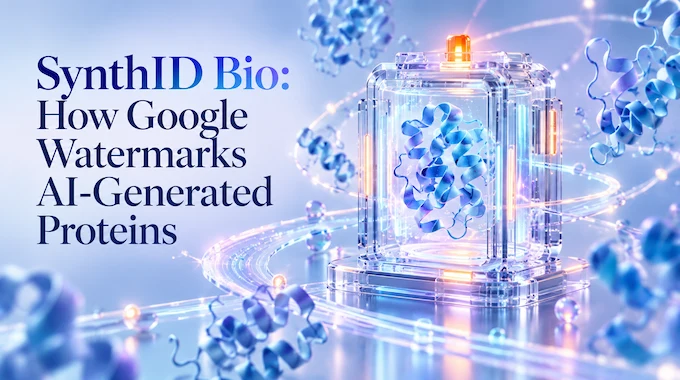
SynthID Bio watermark glowing inside a 3D AI-designed protein structure

An AI-designed protein can look completely novel. That is the point. But novelty creates a provenance problem: once a model-generated sequence leaves the design tool, how can a synthesis company, database curator, or researcher tell where it came from? Google DeepMind’s answer is SynthID Bio, a family of methods for watermarking AI-generated proteins. Instead of … Read more

Gemini 4 Argon: Inside Google’s 1M-Token Output Model, Benchmarks, Pricing and Release Date

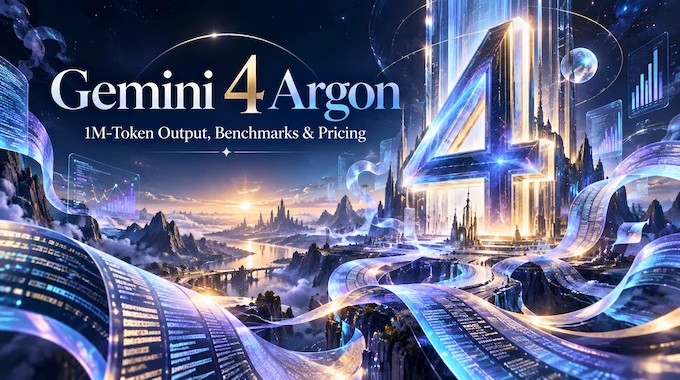
Gemini 4 Argon infographic comparing a short context-window input with a one-million-token output budget

Google’s newest frontier model arrives with an unusual headline: Gemini 4 Argon can produce up to one million output tokens in a single trajectory. That is not just a bigger chatbot reply. Google is positioning the model for jobs that may involve hours of reasoning, tool use, code changes, document analysis and repeated decisions before … Read more

GPT-6.1 Sol: Near-Astra at One-Fifth the Cost, How Close?

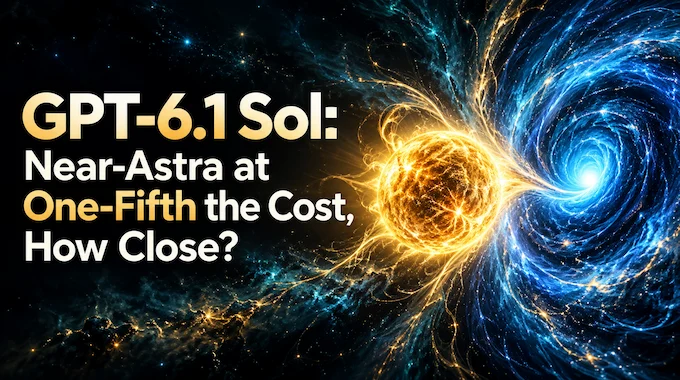
GPT-6.1 Sol as a small amber orb on one coin stack nearly matching Astra's blue orb on five stacks

An AI agent that costs less to run can still be expensive to finish with. A cheap refactor becomes a costly afternoon when someone has to untangle its mistakes. GPT-6.1 Sol makes that tradeoff more interesting. OpenAI’s September 29 release targets complex coding, computer use and sustained work across apps. The company reports performance approaching … Read more