1. Introduction
Biology had a geometry problem for fifty years. We knew the ingredients of life. We could sequence DNA and read the string of amino acids that make up a protein. We had the parts list. We had no idea how those parts fit together.
This was the “protein folding problem.” It stood as a wall between our knowledge of genetic code and our understanding of biological machinery. If you cannot see the shape of the key. You cannot design a lock to fit it. Then DeepMind solved it.
We are now five years past that initial breakthrough. The dust has settled. The hype cycle has spun its course. And the committee in Stockholm has spoken. Demis Hassabis and John Jumper shared the 2024 Nobel Prize in Chemistry for AlphaFold. It is the ultimate validation.
But accolades often obscure utility. You might see the headlines and wonder if this is just another cool tech demo. A party trick for computational biologists. It is not.
Skepticism is healthy. You should look at the breathless press releases with a raised eyebrow. But the data tells a specific story. AlphaFold is no longer just an experiment. It is infrastructure. It has saved hundreds of millions of research years. It has become the Google Maps of biology.
This is not a story about a magic pill. It is a story about how we finally turned the lights on in the basement of biology.
Table of Contents
2. What is AlphaFold? Cracking the Code of Life

Proteins are not static blobs. They are microscopic machines. They pump ions. They catalyze reactions. They build scaffolding. They fight invaders.
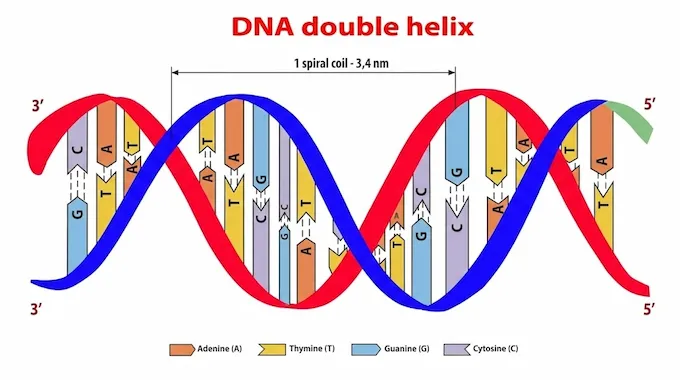
Every protein starts as a 1D string of amino acids. Imagine a long piece of yarn with beads on it. There are twenty types of beads. The sequence of these beads is determined by your DNA. Instantly after creation. This string folds itself into a complex 3D shape.
The shape determines the function. The shape is everything. A protein that folds into a pocket might be an enzyme. A protein that folds into a rigid rod might be structural. If the string folds wrong. You get diseases like Alzheimer’s or Cystic Fibrosis.
2.1 The Old Way vs. The New Way
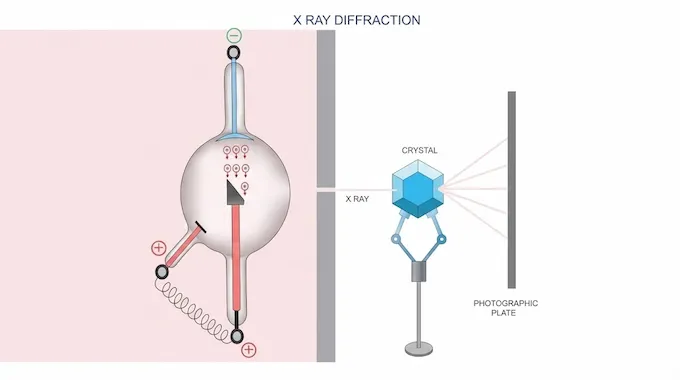
Before protein folding AI came along. We used X-ray crystallography. This involves purifying a protein. Convincing it to form a crystal (which is like herding cats). And blasting it with X-rays. It is slow. It is expensive. It can cost $100,000 and take a year to solve one structure.
AlphaFold treats this as a pattern recognition problem. It trained on the Protein Data Bank (PDB). This is a public repository of all the structures humans had painstakingly solved over decades. About 170,000 of them.
The AI learned the rules of physics and evolution implicitly. It looks at the sequence of amino acids. It compares it to evolutionary history. It predicts the distance between pairs of amino acids. It iteratively refines a 3D model until it settles on a stable shape. It does this in minutes.
3. The Evolution: From AlphaFold 2 to AlphaFold 3
The Nobel Prize largely recognizes the work done with AlphaFold 2. This was the system that shocked the world at CASP14 in 2020. CASP is the Olympics of protein folding. DeepMind entered. They didn’t just win. They broke the benchmark. They achieved accuracy comparable to experimental methods.
But biology is not just proteins floating in a void. Biology is interaction. Proteins bind to DNA to turn genes on and off. They bind to RNA. They bind to small molecules called ligands. Most drugs are ligands. AlphaFold 2 was great at proteins. It was blind to the rest of the cast.
3.1 Enter AlphaFold 3
In May 2024. DeepMind released AlphaFold 3. This is the shift to true “Digital Biology.” The architecture changed. It moved away from some of the specialized “evoformer” blocks of the previous version. It adopted a diffusion approach. Similar to how image generators like Midjourney work. It starts with noise and de-noises it into a structure.
AlphaFold 3 can model the interactions between proteins and DNA. It can model RNA. Most critically for the pharmaceutical industry. It can predict how proteins interact with ligands.
This unlocks the door to AlphaFold drug discovery. You are no longer just looking at the target. You are looking at how a potential drug molecule fits into that target.
AlphaFold Evolution: Technical Feature Comparison
| Feature | AlphaFold 2 (2020) | AlphaFold 3 (2024) |
|---|---|---|
| Core Architecture | Evoformer (Attention-based) | Pairformer + Diffusion Module |
| Scope | Proteins only | Proteins, DNA, RNA, Ligands, Ions |
| Drug Discovery Utility | Limited (Target identification only) | High (Interaction/Binding prediction) |
| Accuracy | ~90 GDT (Global Distance Test) | Improved accuracy on complexes |
| Access | Open Source Code | Server Access (Code recently released) |
4. Beyond the Hype: 3 Real-World Medical Breakthroughs
People are asking “Has AlphaFold actually cured anything?” It is a fair question. The answer is nuanced. AI does not cure diseases. Scientists cure diseases. AI gives them the map to do it faster.
We are seeing the timeline of discovery compress from years to months. Here are three concrete examples where AlphaFold applications moved the needle.
4.1 Liver Cancer and the CDK20 Inhibitor
Insilico Medicine is a biotech company that leans heavily on generative AI. They wanted to target hepatocellular carcinoma (liver cancer). The target was a protein called CDK20.
There was no experimental structure for CDK20. In the old world. The project stops here. You spend two years trying to crystallize the protein before you even start looking for a drug.
Insilico used AlphaFold to predict the structure of CDK20. They fed that structure into their own chemistry AI. They identified a hit molecule. They went from zero to a novel hit in 30 days. They synthesized the molecule. It worked in the lab. This is the velocity of modern biotech.
4.2 The Malaria Roadblock
Oxford University researchers were working on a malaria vaccine. They were targeting a protein on the surface of the parasite called Pfs48/45. They were stuck. They could not solve the structure of the protein. It was a “blob” in their data. They had struggled with it for years.
When DeepMind released the AlphaFold predictions. The Oxford team looked up Pfs48/45. The prediction was clear. It showed them exactly how the protein folded. It highlighted the domains they needed to target.
This unblocked the research immediately. It allowed them to design antibodies that could bind to the protein and block the parasite’s transmission cycle.
4.3 Antibiotic Resistance and the Silent Killer
Burkholderia pseudomallei is a nasty bacterium. It causes Melioidosis. This disease kills 89,000 people a year. Mostly in developing nations. It is resistant to many antibiotics.
Researchers at the National University of Malaysia needed to understand how this bacteria survives. They used AlphaFold to map the structures of its virulence factors. These are the proteins the bacteria uses to attack host cells.
They are now using these maps to find new weaknesses. They are designing drugs that target these specific proteins. This is research that was previously too expensive for many labs in the developing world to conduct.
5. The AlphaFold Protein Structure Database (AFDB)
If you are a biologist. The most important thing DeepMind did was not the paper. It was the database. They partnered with EMBL-EBI to create the AlphaFold DB. They didn’t just release the code. They ran the code on everything.
They predicted the structure of nearly every protein known to science. That is over 200 million structures.
5.1 The Democratization of Biology
This is the “Google Maps” moment. Before this. If you were a researcher in a small lab in Brazil or India. You could not afford a cryo-electron microscope. You were locked out of structural biology.
Now you just go to the website. You type in your protein sequence. You get the 3D model.
The stats back this up. There are over 1 million users from low-and-middle-income countries accessing the AlphaFold DB. This is a massive leveling of the playing field. It shifts the bottleneck from “access to data” to “quality of ideas.”
6. Isomorphic Labs and the Business of Drug Discovery
Demis Hassabis did not stop at Google DeepMind. He launched a spin-off called Isomorphic Labs. The goal here is commercial. They want to use AlphaFold drug discovery workflows to make money. Big money.
The pharmaceutical industry is watching closely. Isomorphic has already signed massive deals.
- Eli Lilly: A partnership worth up to $1.7 billion in milestone payments. $45 million upfront.
- Novartis: A similar deal with $37.5 million upfront.
These companies are not paying for hype. They are paying for speed.
6.1 The Timeline Reality Check
We must be grounded here. AI accelerates discovery. It does not accelerate clinical trials. Finding the key (the drug molecule) is faster now. Testing the lock (the human body) takes the same amount of time. You still have to run Phase I, II, and III trials. You still have to prove safety. You still have to prove efficacy.
AlphaFold might shave three years off the front end of the process. That is valuable. But it does not mean we will have a new cancer pill next Tuesday.
Accelerating Drug Discovery with AlphaFold
| Stage of Drug Development | Traditional Timeline | AI-Accelerated Timeline | Impact of AlphaFold |
|---|---|---|---|
| Target Identification | 1-2 Years | Months | High. Validates targets quickly. |
| Lead Discovery | 2-3 Years | Months | High. Virtual screening on AF structures. |
| Lead Optimization | 2-3 Years | 1 Year | Medium. Predicts binding affinity (AF3). |
| Preclinical Testing | 1-2 Years | 1-2 Years | Low. Biology still happens in mice/cells. |
| Clinical Trials | 6-7 Years | 6-7 Years | None. AI cannot simulate a human trial yet. |
7. Addressing the Skeptics: Limitations and “Hallucinations”
No tool is perfect. We need to talk about where AlphaFold fails. The primary criticism is that it provides a prediction. Not a truth. It is a very good guess. It is usually right. But when it is wrong. It can be misleading.
7.1 The Disordered Problem
Proteins often have “intrinsically disordered regions” (IDPs). These are parts of the string that do not have a fixed shape. They flop around like wet spaghetti. They only take a shape when they bind to something else.
AlphaFold struggles here. It tends to hallucinate structure where there is none. It might predict a neat little helix in a region that is actually a chaotic loop.
DeepMind provides a confidence metric called pLDDT. It tells you how sure the model is. If the pLDDT score is low (below 50). The model is essentially saying “I am guessing here, do not trust me.”
The problem is that users often ignore the score. They see a pretty 3D model and assume it is real.
7.3 The Static Trap
Proteins move. They breathe. They change shape when they do their job. An enzyme might open and close like a Pac-Man. AlphaFold typically gives you one static snapshot. It usually gives you the most stable state. It might not show you the “active” state that is relevant for drug binding.
AlphaFold 3 is getting better at this. But it is still a limitation. We are looking at a statue. We need to see the dance.
8. How to Access and Use AlphaFold (Server & Database)
You do not need to be a computer scientist to use this. For 99% of people. You want the AlphaFold DB.
- Go to the website.
- Search for your protein (by name or gene ID).
- Download the PDB file.
- Open it in a viewer like PyMOL or ChimeraX.
For AlphaFold 3. There is the AlphaFold Server. This is a web interface. You can paste in sequences of proteins, DNA, and ligands. It will run the prediction for you.
There is a catch. The Server is for non-commercial use. If you are a startup making a drug. You cannot just use the free server to print money. You need to look at the open-source code or commercial licenses.
Recently. DeepMind released the code for AlphaFold 3. This allows researchers to run it on their own hardware. It removes the “black box” reliance on Google’s servers. This was a major demand from the scientific community.
9. The Future: AGI, “Digital Biology,” and What Comes Next
Demis Hassabis has always been clear. AlphaFold was never just about biology. It was a stepping stone. It was proof that AI could reason about the physical world. It could understand scientific systems.
We are seeing the family grow.
- AlphaMissense: This tool looks at “missense” mutations. These are single letter changes in DNA. It predicts if a mutation will be benign or if it will cause disease. It has categorized 89% of all possible mutations.
- AlphaProteo: This is the inverse of folding. This is design. You tell the AI “I want a protein that binds to this target.” It generates a sequence that has never existed in nature.
This is the transition from reading biology to writing biology.
10. Conclusion: A New Era for Science
We are living through a phase change. For centuries. Biology was an observational science. We looked at things through microscopes. We drew sketches. We described what we saw. We are moving toward a predictive science. We can simulate the behavior of life’s machinery in silicon.
AlphaFold did not cure cancer overnight. It did not render experimentalists obsolete. It gave us a better map. It turned the flashlight on.
The AlphaFold Nobel Prize is well-deserved. But the real reward isn’t the medal. It is the graduate student in a basement lab right now. Who just downloaded a PDB file. Who just saw a mechanism no one else has ever seen. And who is about to have an idea that will save a life.
That is the best use of our time.
What is AlphaFold and why is it considered a “grand challenge” solution?
AlphaFold is an AI system developed by Google DeepMind that predicts a protein’s 3D structure from its amino acid sequence. It is considered a “grand challenge” solution because it effectively solved the “protein folding problem,” a 50-year-old biological puzzle. Before AlphaFold, determining a single protein’s shape could take years and cost $100,000; AlphaFold does it in minutes with experimental-level accuracy.
Has AlphaFold actually led to any new drugs or cures yet?
While no “AlphaFold drug” is on pharmacy shelves yet (drug trials take 10+ years), it has massively accelerated the discovery phase. For example, Insilico Medicine used AlphaFold to identify a novel hit for a liver cancer target (CDK20) in just 30 days. Similarly, Oxford University researchers used it to unblock stalled research on a malaria vaccine by mapping the Pfs48/45 protein structure.
What is the difference between AlphaFold 2 and AlphaFold 3?
The primary difference is scope. AlphaFold 2 (2020) was specialized for predicting protein structures. AlphaFold 3 (2024) is a “digital biology” evolution that predicts the structures and interactions of proteins, DNA, RNA, and small molecule ligands (drugs). Technically, AlphaFold 3 moves away from some of AF2’s architecture to use a “diffusion model,” similar to AI image generators, for higher accuracy.
Is AlphaFold free to use for researchers?
Yes, but with distinctions. The AlphaFold Protein Structure Database (AFDB) is free for both academic and commercial use (CC-BY 4.0 license) and contains 200 million+ pre-computed structures. The new AlphaFold Server, which allows you to run custom predictions including ligands, is currently free for non-commercial research only.
How did AlphaFold win the Nobel Prize in Chemistry?
In 2024, the Nobel Prize in Chemistry was awarded to Demis Hassabis and John Jumper of Google DeepMind for their work on AlphaFold. The Nobel Committee recognized that their AI model fundamentally revolutionized biochemistry by making it possible to predict the complex 3D structures of life’s molecules, a feat that previously required decades of manual experimentation.