Introduction
Most “AI coding assistants” are fancy autocomplete with a chat box. They speed you up on the easy parts, then tap out the moment the work turns into real engineering: tracing a bug across modules, running tools, chasing flaky tests, and making a change that survives CI.
GPT 5.2 Codex is aimed at that messy middle. It is built to plan, execute, and iterate inside an agent workflow, not just print code. The official addendum to the system card leans hard into the boring details, sandboxing, network controls, and safety training, because that is what separates “cool demo” from “tool you trust on Monday.”
This is the practical guide I wish every launch post shipped with: what changed, what the benchmarks really predict, and how to use the different Codex surfaces without letting an enthusiastic agent torch your repo.
Table of Contents
1. What Codex 5.2 Is, In Plain English
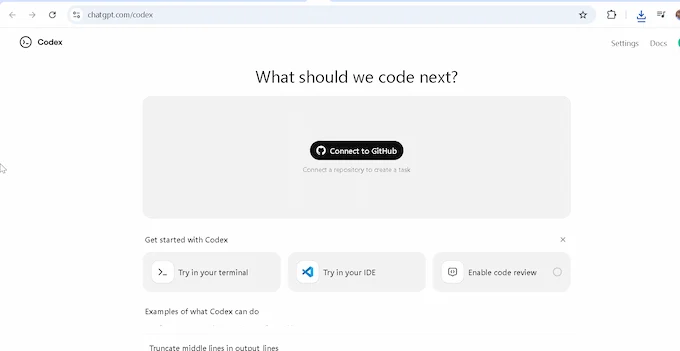
GPT 5.2 Codex is a specialized version of GPT-5.2 optimized for agentic coding, long-horizon tasks, and defensive security workflows. The system card describes it as tuned for project-scale work like refactors and migrations, improved Windows performance, and significantly stronger cybersecurity capability.
That “agentic” label is not marketing. It means the model is expected to:
- Read a real repository.
- Form a plan that spans multiple steps.
- Use tools, including the terminal, rather than guessing from static text.
- Keep moving when the first approach fails.
It also means something else that is easy to miss. OpenAI explicitly says the model is not intended for general-purpose conversational deployment, and will not be shipped as a general chat model. GPT 5.2 Codex is opinionated, it is built to do work.
1.1 Context Compaction, The Feature You Feel After An Hour
Long tasks have a predictable failure mode. The agent starts strong, then the context window fills with logs, diffs, and back-and-forth, and the whole thing drifts.
Context compaction is the fix. In the cyber evaluations, OpenAI calls out compaction as a reason the model can sustain coherent progress across multiple context windows on long-running tasks. In practice, GPT 5.2 Codex keeps more of the plan and the constraints “alive” while it iterates.
2. What Changed In Codex 5.2
The upgrades are less about raw intelligence and more about reliability under pressure.
2.1 More Project-Scale Competence
GPT 5.2 Codex is positioned as better at large code changes, refactors, migrations, and long-running tasks, while staying token-efficient in its reasoning. The practical signal is fewer small failures: fewer forgotten constraints, fewer half-finished edits, fewer plans that collapse the moment a test fails.
2.2 Better Native Windows Behavior
Windows support is where many agents die by a thousand paper cuts. The GPT 5.2 Codex system card describes how local sandboxing works across macOS, Linux, and Windows, including the option to use Windows Subsystem for Linux for Linux-style sandboxing. That matters because Windows is not “an edge case” in enterprise.
2.3 A Sharper Cybersecurity Profile
OpenAI calls this the most cyber-capable model they have deployed so far, while also saying it does not reach the Preparedness Framework threshold for “High” cyber capability. That combination is exactly the posture you want when you are evaluating AI for cybersecurity: measurable gains, plus a clear line about what the evaluations do and do not prove.
3. Benchmarks That Map To Real Work
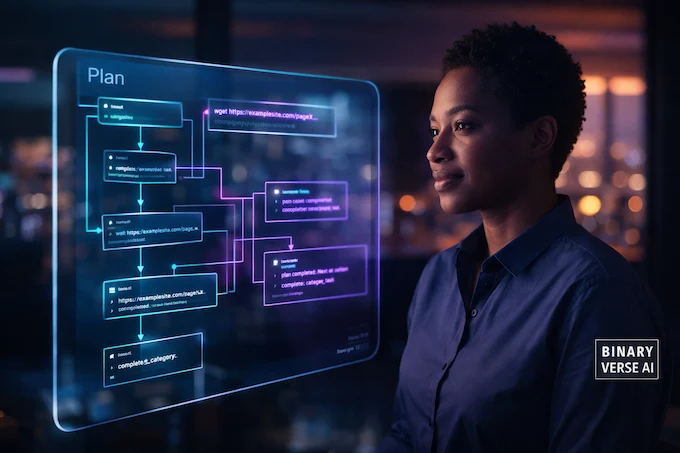
Two benchmarks matter here because they force the agent to act, not just talk.
SWE-Bench Pro is patch-based repo work. Terminal-Bench 2.0 is the “can you operate like an engineer” test, compile, run, install, debug, and adapt in a terminal environment. GPT 5.2 Codex is presented as state of the art on both.
3.1 Performance Summary Table
GPT 5.2 Codex Benchmarks Snapshot
Mobile-friendly comparison across agentic coding, terminal use, and security evaluations.
| Benchmark Category | Evaluation Metric | GPT-5.1-Codex-Max | GPT-5.2-Thinking | GPT 5.2 Codex |
|---|---|---|---|---|
| Agentic Coding | SWE-Bench Pro (Accuracy) | 50.8% | 55.6% | 56.4% |
| Terminal Use | Terminal-Bench 2.0 (Accuracy) | 58.1% | 62.2% | 64.0% |
| Cybersecurity | Professional CTF (Pass@12) | 76% | 82% | 88% |
| Cybersecurity | CVE-Bench Blind 0-day (Pass@1) | 80% | 69% | 87% |
| Cybersecurity | Cyber Range (Combined Pass Rate) | 81.8% | 63.6% | 72.7% |
| AI Research | PaperBench-10 (Pass@1) | 40% | 39% | 43% |
| AI Research | MLE-Bench-30 (Pass@1) | 17% | 16% | 10% |
| Biology (MCQ) | Multimodal Virology (Pass@1) | 38% | 43% | 48% |
| Safety | StrongReject Jailbreak (Not Unsafe) | 0.967 | N/A | 0.933 |
The most important row is Terminal-Bench. Terminal competence is what turns “writes code” into automated software engineering. It is also where the model starts to look like a best LLM for coding 2025 candidate, not because it types faster, but because it closes loops.
One more honest signal is MLE-Bench, where the Codex-tuned model underperforms GPT-5.1-Codex-Max. The LLM math benchmark performance 2025 trends show that the implication is simple. GPT 5.2 Codex is tuned for building and operating software, not for Kaggle-style competition workflows.
4. The React Vulnerability Story, And Why It Matters
Benchmarks are great, but real workflows expose what the model does when reality fights back.
OpenAI describes a case where security researcher Andrew MacPherson used Codex CLI while studying a disclosed React issue known as React2Shell, CVE-2025-55182. In the process of reproducing and studying that issue, the agent surfaced unexpected behaviors that led to additional vulnerability discoveries, which were responsibly disclosed to the React team.
The lesson is not “AI finds bugs.” The lesson is the workflow that worked.
4.1 The Three-Stage Pattern
MacPherson tried a quick, zero-shot analysis. It failed. He tried higher-volume, iterative prompting. It still failed. Then he did the unglamorous thing, he ran a standard defensive process: local environment, hypothesis-driven exploration, and fuzzing with malformed inputs until something broke in a way that was interesting.
That sequence is the right mental model for GPT 5.2 Codex. It is not an oracle. It is a lab assistant with hands. Pair it with instrumentation and discipline, and it can compress weeks of investigation into days using agentic AI tools.
5. Safety, Dual Use, And The “High Risk” Label
The system card is blunt about risk. It treats GPT 5.2 review data and Codex-specific results as High risk in the Biological and Chemical domain, while saying the model does not reach High capability in cybersecurity and does not reach High capability in AI self-improvement.
That can sound counterintuitive until you read the definitions.
5.1 Why “High Cyber Capability” Is A High Bar
OpenAI defines High cyber capability as removing bottlenecks to scaling cyber operations, either by automating end-to-end operations against reasonably hardened targets, or by automating the discovery and exploitation of operationally relevant vulnerabilities.
They break that into three skill requirements:
- Discovery of advanced, operationally relevant exploits.
- Goal-oriented, end-to-end attack automation.
- Consistency in operations that scales damage or avoids discovery.
Then they explain the limits of their benchmarks. CTFs test pre-scripted paths and isolated skills. CVE-Bench focuses on web-app vulnerabilities and is a narrow slice of overall risk. Their internal Cyber Range is more realistic, but still lacks the mess and monitoring of a hardened target.
This is why GPT 5.2 Codex can be “strongest we’ve deployed” and still not be “High.” It does not yet show the consistent, scalable operational profile that the framework treats as the danger zone.
5.2 What The Model Is Trained To Refuse
The system card describes model-level safety training designed to stay helpful on legitimate cybersecurity topics while refusing or de-escalating operational guidance for cyber abuse, including malware creation, credential theft, and chained exploitation. That is a necessary constraint for any OpenAI Codex surface that is powerful enough to matter.
5.3 The “Don’t Delete My Repo” Problem
Agents that can run commands can also make catastrophic mistakes. OpenAI describes a failure mode where vague user instructions hide destructive operations like rm -rf, git clean, or hard resets. They trained the model to avoid reverting user changes and measured destructive action avoidance, where newer Codex models score higher.
Treat that as improved seatbelts, not invincibility.
6. How To Use Codex 5.2 Across The Different Surfaces
OpenAI Codex is a product family. GPT 5.2 Codex is the engine. You pick the steering wheel.
6.1 Surface Selection Table
GPT 5.2 Codex Surfaces: Which One to Use
Quick comparison of workflows, feel, and safety defaults across Codex surfaces.
| Surface | Best For | How It Feels | Safety Defaults |
|---|---|---|---|
| Codex Cloud | PR-first work, refactors, migrations, parallel tasks | Agent works in a remote container, you review diffs | Isolated container, network disabled by default |
| Codex CLI | Local debugging, automation, tight terminal loops | Like pairing with a teammate inside your shell | Sandboxed command execution by default |
| IDE Extension | Interactive edits, code reading, fast iteration | You steer line-by-line | Editor-scoped workflows, backed by local sandbox posture |
| PR Review Bot | Review and QA on pull requests | Cheap second pass | Review-only, no command execution |
6.2 Network Access, Use An Allowlist Or Don’t Use It
Codex Cloud started with strict network-disabled execution. OpenAI then added per-project network controls because users needed dependency installs and doc access. They support allowlists and denylists, and they explicitly warn that internet access increases risk, prompt injection, leaked credentials, and license problems.
A simple rule: default to no internet. When you must enable it, allowlist the minimum set of trusted domains.
7. Codex Vs Claude Code, The Useful Version Of The Argument
Codex vs Claude Code debates usually turn into tribalism. The practical split is simpler.
Claude Code often feels faster at first pass generation. GPT 5.2 Codex tends to win when the job requires persistence: multi-file changes, tooling, tests, and iteration. It behaves more like a reliable partner than a speedy intern.
If your definition of “best AI coding agent” includes “finishes the job,” then GPT 5.2 Codex belongs in the top tier.
8. Pricing And Availability, What You Can Actually Use Today
The launch messaging around GPT 5.2 Codex emphasizes broad access in paid ChatGPT Codex surfaces first, then a gradual expansion toward API availability. That staged rollout matches the safety story in the system card: higher capability gets paired with tighter controls, especially in dual-use domains.
There is also an important subtext for defensive teams. OpenAI describes a trusted access pilot aimed at vetted professionals doing legitimate defensive work. If you are evaluating agentic AI for enterprise inside an organization, that idea matters as much as any benchmark, because access and controls shape what you can safely deploy.
9. Getting Started, The Workflow That Keeps You Safe
Here is the workflow I recommend if you want to install Codex CLI and get value quickly.
9.1 The First Task Template
- Pick a small but real task, a failing test, a lint error, a contained refactor.
- Ask for a plan plus the exact commands it wants to run.
- Let it implement in small steps, then run tests after each step.
- Review the diff like you would review a teammate’s PR.
Once you install Codex CLI, keep approvals conservative until you trust the loop. The sama tweet and CLI demos highlight why this matters: approval modes exist for a reason, and session resume lets you continue work without losing the thread. Use those features. They are the difference between “agentic” and “reckless.”
9.2 The Three Prompting Methods That Work
- Plan-first: demand a plan, files to touch, and a test strategy using tools like AgentKit.
- Diff-first: ask for the smallest safe change, then widen.
- Harness-first: for AI for cybersecurity and reliability tasks, require a repro, logs, and a “done when” gate, like the React story did.
This is how GPT 5.2 Codex becomes leverage instead of noise.
10. Conclusion, The Point Of GPT 5.2 Codex
GPT 5.2 Codex is not trying to be your chat buddy. It is trying to be the tool that survives contact with your actual codebase, your terminal, and your constraints, while staying inside meaningful safety boundaries.
If you are curious, do one thing today. Take the most annoying, medium-sized task on your backlog, a refactor you keep avoiding, a flaky test, a migration step, and run it with GPT 5.2 Codex using the plan-first workflow. Then share what worked and what didn’t. The best feedback loop is real engineers shipping real diffs.
What is OpenAI Codex used for in the GPT-5.2 update?
OpenAI Codex is no longer “autocomplete with manners.” In the GPT 5.2 Codex era, it acts like an agent that can plan, edit across many files, run tests, and drive the terminal, staying coherent across long sessions in real repos.
Is OpenAI Codex vs. Claude Code better for agentic tasks?
Codex vs Claude Code depends on what hurts more, mistakes or waiting. Many developers prefer Claude Code for speed and smooth terminal UX, while GPT 5.2 Codex tends to win when you need reliable repo-scale changes, context compaction, and fewer “almost-right” edits on hard debugging.
Can OpenAI Codex access the internet and terminal safely?
Yes, with guardrails. Codex runs actions inside an Agent Sandbox (workspace-scoped, containerized execution), and network access can be off by default or explicitly approved. That design reduces prompt-injection damage and prevents “oops” commands from leaking into the rest of your machine.
Is GPT-5.2-Codex free for ChatGPT users?
Not free, it’s included with paid plans. GPT 5.2 Codex is available through ChatGPT plans that include Codex (Plus/Pro/Business/Edu/Enterprise). API access is rolling out separately, with availability typically gated behind staged access and waitlists for higher-risk use cases.
How did GPT-5.2-Codex find the React vulnerability?
The key wasn’t a magic “find vuln” prompt. The workflow moved from failed zero-shot reads to an engineering loop: reproduce locally, probe attack surfaces, and use fuzzing-style malformed inputs to surface unexpected behavior. That’s how the React2Shell investigation led to additional, responsibly disclosed issues, including CVE-2025-55182 context.