
Introduction
I have spent more hours than I care to admit staring at cloud dashboards and debugging YAML configurations. If you work in infrastructure or security engineering you know the feeling. The cloud was supposed to simplify things. Instead we got a sprawling infinite graph of microservices, permissions, and ephemeral assets that spin up and die before you can even log their IP addresses.
That is why the market for Cloud Security Posture Management Tools has exploded. It is not just about compliance anymore or checking a box for an auditor. It is about visibility. You cannot secure what you cannot see and in a modern multi-cloud environment you can’t see much without help.
The problem is that the marketing for these tools has become a wall of noise. Everyone claims to use “AI.” Everyone claims to be “agentless.” Everyone promises a “single pane of glass.” When you peel back the sales deck you often find a very different reality.
In this deep dive we are going to look at the state of the market in 2025. We will look at the big three, Wiz, Orca, and Prisma Cloud, and a few specialized alternatives. We will look at how they actually work under the hood and which Cloud Security Posture Management Tools are worth your budget.
Table of Contents
1. What Is Cloud Security Posture Management (CSPM)?
Before we compare the vendors we need to agree on what we are actually buying. In the early days Cloud Security Posture Management was basically a glorified spellchecker for your cloud configs. It would scan your AWS API and tell you that you left an S3 bucket open or that your security groups were too permissive.
That is no longer enough. The landscape has shifted toward what the industry calls CSPM vs CNAPP (Cloud Native Application Protection Platform). The modern requirement isn’t just static analysis. It involves understanding the context.
A vulnerability in a virtual machine that is buried deep in a private subnet with no permissions is low risk. That same vulnerability on an internet-facing web server with admin access to your production database is an emergency. The best Cloud Security Posture Management Tools don’t just list problems. They visualize the relationship between vulnerabilities, identities, and network exposure. They build a graph.
This context is what separates a tool that generates noise from a tool that generates value. We are looking for platforms that can tell the difference between a theoretical risk and a toxic combination that is about to ruin your weekend.
2. The Agentless Lie: A Technical Reality Check

There is a religious war happening in cloud security right now regarding Agentless Cloud Security. On one side you have the purists who hate agents. They argue that installing software on every server is a nightmare to manage. It breaks performace and DevOps teams hate it. Wiz and Orca rose to fame by promising you could secure everything just by connecting an API role.
On the other side you have the runtime defenders. They argue that scanning a snapshot of a disk is like looking at a photograph of a crime scene. It tells you what happened but it doesn’t stop the crime in progress. Here is the truth for 2025: the lines have blurred.
Wiz started as 100% agentless but now offers an eBPF-based runtime sensor. Orca built its brand on “SideScanning” snapshots but now offers a sensor for dynamic analysis. Even the Cloud Security Posture Management Tools that claimed agents were dead have realized that if you want to block a cryptominer in real-time you need code running in the kernel.
When you evaluate these tools do not get hung up on the marketing terms. Ask specifically: Do I need to block attacks in real-time or just detect them? If you need blocking you will likely end up installing something eventually.
3. The Big Three Compared: Wiz, Orca, And Prisma Cloud

If you are shopping for enterprise Cloud Security Posture Management Tools you are almost certainly looking at these three. They dominate the conversation for a reason.
Cloud Security Posture Management Tools Comparison 2025
Side by side view of Wiz, Orca Security, and Prisma Cloud for real world CSPM decisions.
| Feature | Wiz | Orca Security | Prisma Cloud |
|---|---|---|---|
| Core Architecture | Agentless first API plus snapshot with optional eBPF sensor | SideScanning snapshot based with optional sensor | Hybrid API plus heavy Defenders for runtime |
| Data Model | Unified Security Graph | Full Stack Asset Tree | Modular code to cloud model |
| AI Feature 2025 | AI SPM and GenAI remediation that suggests auto fix code | LLM powered search with natural language queries | Code to cloud intelligence and AI risk scoring AIRS |
| Primary Strength | Speed to value and risk prioritization |
Ease of use and 100% coverage | Depth of features and broad compliance support |
| Top Complaint | Expensive with pricing per workload | Runtime blocking is limited | Complex UI and credit based licensing |
3.1 Wiz: The Speed Demon
Wiz is the tool that changed the game. They looked at the market a few years ago and realized that security teams were drowning in deployment tickets. Their pitch was simple: give us read access to your cloud and we will show you everything in fifteen minutes. It worked. Wiz is fast.
The core of Wiz is the Security Graph. It ingests data from everywhere—cloud configurations, vulnerabilities, identity permissions, secrets—and maps them together. This allows it to surface those “toxic combinations” I mentioned earlier. It can tell you “This EC2 instance has a critical vulnerability AND it has a key exposed AND it has admin permissions.”
In 2025 Wiz has leaned heavily into AI. They introduced AI-SPM to secure AI pipelines and a GenAI remediation feature. Unlike some Cloud Security Posture Management Tools that just use a chatbot to summarize alerts Wiz tries to give you the actual code to fix the problem.
The downside is the cost. Wiz vs Orca Pricing is a common debate in Reddit threads and procurement meetings. Wiz is known to be expensive. They price per workload and for elastic environments that spin up thousands of ephemeral nodes that bill can get scary fast. Rumors suggest minimum contract values often start north of $50,000 even for smaller setups.
3.2 Orca Security: The MRI For Your Cloud
Orca took a different approach to solving the same problem. They pioneered “SideScanning.” Instead of querying the API for everything or installing an agent Orca takes a snapshot of the block storage of your running workloads. It then mounts that snapshot out-of-band and scans it. Think of it like an MRI. You don’t have to cut the patient open (install an agent) to see the tumor.
This gives Orca incredible depth without friction. It can see inside the OS. It can find a secret key hidden in a file on disk that an API scan would miss. And because it happens on the snapshot it has zero performance impact on your live production server.
Orca’s 2025 killer feature is their search. They have integrated an LLM that allows you to ask questions like “Do I have any Log4j vulnerable servers exposed to the internet?” and get an actual answer. It democratizes data access.
The trade-off is runtime. While they have added a sensor Orca is still fundamentally a scanning tool. If you need deep real-time intrusion prevention for high-security workloads you might find it lighter than a heavy agent-based tool.
3.3 Prisma Cloud: The Heavyweight Champion
Palo Alto Networks built Prisma Cloud by buying the best tools in every category and welding them together. It is a beast. It covers everything from Infrastructure as Code (IaC) scanning to runtime protection to identity governance.
If you are a large enterprise that wants one vendor for everything Prisma is the default choice. It is one of the few Cloud Security Posture Management Tools that can legitimately claim to cover “Code-to-Cloud.”
Prisma’s strength is its maturity. It has the most comprehensive compliance reporting out of the box. It is FedRAMP High authorized. If you are a bank or a government agency this matters.
The weakness is the user experience. Because it is a stitched-together platform the UI can feel disjointed. Users often complain about the complexity. Then there is the billing. The Prisma Cloud Credit Estimator game is notorious. You buy “credits” and different assets consume different amounts. It is flexible but it makes forecasting your annual spend surprisingly difficult.
4. Specialized Players And Alternatives
While the big three get all the attention sometimes a generalist tool isn’t what you need. There are other Cloud Security Posture Management Tools that excel in specific niches.
4.1 Sysdig: The Kubernetes Specialist
If your infrastructure is 90% Kubernetes you should look at Sysdig. While Wiz and Prisma support K8s Sysdig was born in it. They are the company behind Falco the open-source runtime security standard.
Kubernetes Security Posture Management is a different beast than standard cloud security. You care about pod security policies admission controllers and runtime syscalls. Sysdig excels here. Their runtime instrumentation is based on eBPF and is incredibly granular. They can tell you exactly which process inside a container tried to open a reverse shell.
For generic CSPM they are adequate but for deep container runtime security they are top tier.
4.2 Lacework: The Anomaly Hunter
Lacework takes a math-heavy approach. Instead of writing thousands of rules they use a technology called the Polygraph. They baseline your environment to understand what “normal” looks like.
If an IAM user who usually logs in from Virginia suddenly logs in from a different country and accesses a database they never touch Lacework flags it. This is powerful for finding “unknown unknowns”—threats you didn’t write a rule for.
The caveat is the learning period. The tool needs time to understand your baseline and in highly dynamic environments it can generate noise until it settles in.
4.3 Microsoft Defender For Cloud: The Azure Default
If you are an Azure shop the path of least resistance is Microsoft Defender. It is built directly into the Azure portal. You don’t need to deploy a separate console. It integrates natively with Azure Policy.
It is one of the most underrated Cloud Security Posture Management Tools simply because it is boring. It works. It gives you a secure score. It handles compliance.
It supports AWS and GCP but let’s be honest—it is an Azure-first tool. If you are multi-cloud with a heavy AWS footprint you might find the cross-cloud visibility lagging behind Wiz or Orca.
4.4 Tenable Cloud Security: Bridging The Gap
Tenable owns Nessus which is the industry standard for vulnerability scanning. Their cloud offering is perfect for organizations that want to unify their traditional infrastructure scanning with their cloud posture.
They have integrated their acquisition of Accurics to bring strong Infrastructure as Code (IaC) capabilities. If your goal is to stop vulnerabilities before they leave the developer’s laptop Tenable has a strong story there.
5. Compliance In 2025: It Is Not Just Checkboxes
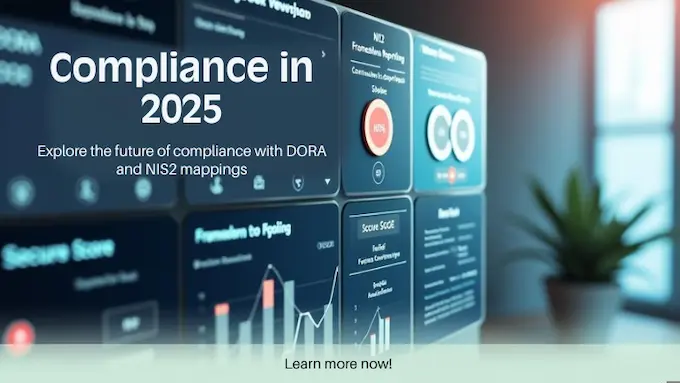
We cannot talk about Cloud Security Posture Management Tools without mentioning the regulators. In 2025 the pressure is real. The European Union’s DORA Compliance CSPM requirements are driving a lot of budget right now. Financial institutions are being forced to prove digital resilience. It is no longer enough to say “we are secure.” You have to prove it with continuous reporting.
This is where the agentless vs. agent debate fades and the reporting engine matters. Tools like Wiz and Prisma have updated their frameworks to map specifically to DORA and NIS2. If you operate in Europe this feature set isn’t optional. It is the difference between passing an audit and paying a fine.
6. Final Verdict: Selecting The Right Tool
There is no single “best” tool. The right choice depends entirely on your specific architecture and team size. If you are a fast-moving cloud-native company with a complex multi-cloud footprint Wiz is likely the winner. The visibility it provides is addictive. Once you see the graph it is hard to go back to lists of alerts.
If you are a lean team that hates maintenance and wants to cover 100% of your assets overnight Orca is the pragmatic choice. The SideScanning model removes the friction of deployment.
If you are a massive legacy enterprise that needs a single platform to rule them all and you have the staff to manage it Prisma Cloud is the safe bet.
Cloud Security Posture Management Tools Best Fit Matrix
Quick view of which Cloud Security Posture Management Tools fit each use case and the main gotcha to watch.
| Tool | Best For | The "Gotcha" |
|---|---|---|
| Wiz | Multi cloud visibility and DevSecOps | Pricing can be brutal for elastic workloads |
| Orca |
Lean teams and 100% coverage | Deep runtime blocking requires an extra sensor |
| Prisma | Large enterprises and compliance | Complexity and credit consumption model |
| Sysdig | Kubernetes and container runtime | Less focus on broad VM and serverless CSPM |
| Defender | Azure native shops | Multi cloud experience is secondary |
Ultimately the only way to know is to test. Do not trust the sales deck. Do not trust the Cloud Security Posture Management Tools magic quadrants.
Get a trial. Connect it to a non-production account. Run an attack simulation. See if the tool actually catches it or if it just adds another row to a CSV file nobody reads.
The best tool is the one your team actually uses to fix problems. Everything else is just shelfware.
- https://www.wiz.io/blog/wiz-ai-spm-secures-ai-agents
- https://orca.security/platform/ai-cloud-security/
- https://www.paloaltonetworks.com/blog/cloud-security/prisma-cloud-achieves-fedramp-high-authorization/
- https://www.wiz.io/blog/wiz-achieves-fedramp-high-authorization
- https://underdefense.com/industry-pricings/wiz-pricing-ultimate-guide-for-security-products/
Q1: What is the best CSPM tool for AWS in 2025?
Answer: Wiz is currently rated top for AWS environments due to its “Security Graph” that visualizes toxic combinations of risks. However, for organizations strictly focused on Kubernetes on AWS (EKS), Sysdig often provides deeper runtime forensics.
Q2: Is Agentless CSPM better than agent-based?
Answer: Agentless (like Orca) is faster to deploy (minutes vs. weeks) and covers 100% of assets without performance impact. However, in 2025, even “agentless” leaders like Wiz and Orca introduced optional eBPF sensors because banks and hospitals still require agents for real-time threat blocking (runtime protection).
Q3: How much does enterprise CSPM software cost?
Answer: Most enterprise tools (Wiz, Prisma Cloud) require annual contracts often starting at $50,000 to $100,000 for mid-sized environments. Orca Security is frequently reported by users to be more cost-competitive, whereas Prisma Cloud uses a “credit consumption” model that can be complex to forecast.
Q4: Which CSPM tools support DORA compliance?
Answer: For 2025, Wiz, Prisma Cloud, and Tenable Cloud Security have updated their compliance frameworks to specifically support the EU’s DORA (Digital Operational Resilience Act) and NIS2 directives, automating the reporting required for financial institutions.
Q5: What is the difference between CSPM and CWPP?
Answer: CSPM (Cloud Security Posture Management) finds misconfigurations before a breach (e.g., “This S3 bucket is open”). CWPP (Cloud Workload Protection Platform) protects workloads during an attack (e.g., “Block this malware running on the server”). Modern tools like Prisma Cloud combine both into a CNAPP.