
Introduction
Every week a new AI term lands in your feed. Most are hype. One shift is not. The real story of 2025 is how teams move from content on demand to software that can set goals, plan, and act. In other words, from generative systems that respond to prompts to agentic systems that pursue outcomes. If you want the short version, here it is. Generative AI writes the report. Agentic AI gets the job done.
This guide turns the buzz into a working mental model. We will define each approach in plain language, map the technical core, compare capabilities, and show when to use which. I will lean on a 2025 survey that traces how reasoning, memory, tool use, and interaction pushed the field from generation to agency. It is a helpful lens, and I will reference it as we go.
By the end, Agentic AI vs Generative AI will feel less like a culture war and more like choosing the right engine for the road ahead.
Table of Contents
1. Generative AI Explained, The Sophisticated Content Creator
Generative AI, or GenAI, is any system that creates digital artifacts on request, text, images, code, audio, video. You give a natural language instruction. The model produces a coherent output based on patterns it learned during training. Think of it as a content generator that excels at one-shot or short conversational exchanges.
This is generative AI explained in usage terms. It thrives when the task can be solved by producing an answer without touching the outside world. Early systems did exactly that, transform prompt to response in a single pass with no intermediate planning.
In the Agentic AI vs Generative AI conversation, this is the baseline. GenAI gives you high-quality drafts, working snippets, or visuals on demand. When the job is “write, summarize, translate, format, draft, sketch, propose,” GenAI shines.
2. Agentic AI Explained, The Proactive Goal-Oriented Assistant
What is agentic AI? It is a system that can pursue complex goals with limited supervision. It takes a high-level instruction, decomposes it into steps, plans, uses tools, interacts with its environment, and adapts based on feedback. Rather than only “produce content,” it reasons about “how to get this done” and executes a sequence of actions to reach the goal.
A more precise definition describes agentic systems as foundation-model based software that performs tasks requiring planning, reflection, and elaborate tool use, sometimes without producing a visible artifact at all, for example scheduling compute jobs to hit cost targets or coordinating a smart grid.
Stated plainly, Agentic AI vs Generative AI is not “poem versus essay.” It is “deliverable versus delivery.” Agentic systems close the loop.
3. Key Differences At A Glance
Agentic AI vs Generative AI looks obvious once you see the axis that matters, can the system act with autonomy to execute a plan. The survey captures this shift in a crisp comparison.
Agentic AI vs Generative AI, Key Comparison
| Aspect | Generative AI | Agentic AI |
|---|---|---|
| Reasoning | Instant responses, minimal intermediate steps | Iterative planning and reflection during inference |
| Interaction | Mostly with the user | With tools, data sources, other agents, and the real world |
| Execution Capability | Single-step or short exchanges | Multi-step workflows, sequences of actions across systems |
| Adaptability | Bound to training data and prompt | Learns from feedback, retrieves information, improves over runs |
| Autonomy | User-driven | Self-directed within constraints |
| Tool Use | Limited or basic | Central to how goals are achieved |
Under the hood, two dimensions separate them, deeper reasoning and interaction with tools and environments. Autonomy, adaptability, and execution flow from those two.
4. Inside The Agentic Mind, Core Components
Agentic systems look like clean abstractions, but the real lift comes from how they think and act under constraints. The modern stack has five essentials.
4.1 Reasoning And Decomposition
Reasoning is not a vibe, it is explicit behavior at inference time. The model breaks the problem into sub-tasks, plans, explores alternatives, verifies, and refines. This “slow thinking” step uses more compute but buys robustness. Early prompting tricks like chain-of-thought helped GenAI, yet agentic systems made reasoning systematic.
4.2 Memory And Retrieval
Two kinds of memory matter. Short-term context windows now stretch into the millions of tokens. Long-term retrieval augments the model with current facts and private data. The result is continuity across steps, fewer blind spots, and a place to store lessons learned for the next run.
4.3 Tools, Selection And Use
Agentic systems treat tools as first-class citizens, code interpreters, browsers, APIs, databases. They select, call, and chain tools to turn a plan into working steps. This is the bridge from words to actions.
4.4 Planning, Search, And Reflection
Plans do not survive contact with reality. Agents search over options, try paths, check results, and revise. One useful pattern is “plan, act, verify,” repeated until the goal is met or constraints stop the loop. This is how agentic stacks reduce hallucinations and catch errors by design.
4.5 Interaction And Reinforcement Learning
Agentic work is interactive. The system senses, acts, and uses feedback from the world, compilers, humans, or other agents. The survey frames this as bringing reinforcement learning’s loop into everyday tasks, not to chase an abstract reward, but to close a real workflow.
This is where AI planning and reasoning earns its keep. When tasks require multiple steps across systems, interaction and feedback turn a static generator into a goal-seeking worker.
5. AI Agents Vs Agentic AI, Getting The Terms Straight
Teams often mix these two. It is simple to fix. Agentic AI is the field and philosophy, how we train, evaluate, and coordinate systems with agency. AI agents are concrete implementations, configured personas and workflows wrapped around a foundation model with memory and tools. One is the discipline. The other is the unit of work.
If you want AI agents explained in a sentence, think role, rules, tools, and a plan, all expressed in text and code that the runtime can execute.
This distinction keeps Agentic AI vs Generative AI precise, and it prevents another taxonomy flame war.
6. Where It Actually Wins, Real-World Use Cases

You do not need a lab to see the upside. You need a workflow that benefits from planning, tool use, and feedback.
- Automated Software Engineering. Give the agent a feature request. It designs a plan, edits code, runs tests, reads compiler messages, retries with fixes, opens a pull request, and pings the reviewer. Reasoning-heavy models already outperform earlier systems on code tasks when they use this loop.
- Scientific Discovery. Task an agent to replicate a result, then expand it. It searches the literature, pulls data, scripts analyses, and logs each step for review. When the method breaks, the loop adjusts and tries alternatives. This is AI autonomy with accountability.
- Operations And Support. An agent reads emails and tickets, classifies intent, queries CRMs and logs, runs diagnostic tools, and replies with confirmed steps while booking follow-ups on the calendar. It does not invent answers. It orchestrates tools.
- Personal And Team Productivity. Give a travel goal. The agent compares flights, checks meeting schedules, fetches visa info, suggests backup plans, and updates everyone without you chasing each thread.
These are not science fiction demos. They are what happens when you upgrade from content generation to Agentic AI vs Generative AI planning and execution.
7. Autonomy In Practice, From Assistive To Autonomous
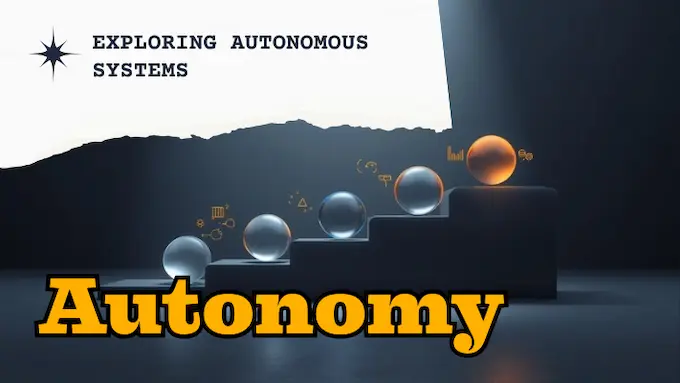
Autonomy is not a binary. It is a gradient. The survey outlines five levels that show where your system sits today and where it might go next.
Agentic AI vs Generative AI, Autonomy Levels
| Level | Paradigm | What It Looks Like In Practice |
|---|---|---|
| 0, No Autonomy | Classical Machine Learning | Model predicts a label. Humans do everything else. |
| 1, Assistive Autonomy | Generative AI | Generates content on demand. You steer every step. |
| 2, Partial Autonomy | Agent-Oriented Workflow | Executes multi-step tasks with human oversight and checkpoints. |
| 3, High Autonomy | Goal-Oriented Collaboration | Achieves complex tasks with occasional guidance and guardrails. |
| 4, Full Autonomy | Autonomous Decision-Making | Given goals, the system handles all steps within policy constraints. |
You do not have to jump to Level 4. Most teams get value at Level 2 or 3 where the agent works, and humans approve key gates. In risk-sensitive domains, laws may require it.
This is the sane middle of Agentic AI vs Generative AI for business.
8. Why The Shift Happened, And Why It Matters
GenAI hit a wall on tasks that need real execution, browse a site, follow steps, fill forms, run tools, handle errors. Prompts can stretch, but they do not replace planning and feedback. Agentic systems cut through that by reasoning, using tools, and learning from outcomes. The survey documents several limitations GenAI struggles with and how agentic approaches reduce them, from execution to memory and error control.
Cost also shifts. You can trade a giant model for a smaller one that reasons longer and still win on accuracy and price. This matters when you prefer more compute during inference rather than huge training budgets up front.
For leaders, this is the business reading of Agentic AI vs Generative AI. Generation is great for content. Agency is how you ship outcomes.
9. The Path To AGI, What Changes When Systems Can Act
Reasoning-heavy models show striking improvements on tasks like program synthesis and complex analyses. That nudges the field toward systems that generalize and act. The survey treats agentic methods as a plausible step toward broader intelligence, with important caveats about data limits and error accumulation. Expect debate here, and expect fast progress.
If you want a pragmatic stance on Agentic AI vs Generative AI, treat AGI talk as a tailwind, not a requirement. You can adopt agency today without waiting for a moon landing.
10. Build Or Buy, A Simple Decision Framework For Teams
Use this to choose the right tool for the job.
Pick Generative AI when:
- The task is a single prompt with a clear output, draft, summarize, translate, transform.
- You need fast answers over deep reliability.
- Tool access would not change the outcome much.
Pick Agentic AI when:
- The task needs multi-step execution across tools and systems.
- You want fewer errors through verification and retrieval.
- You can frame a goal and let the system figure out the steps.
Engineering knobs that favor Agentic AI:
- Usability: provide goals, not scripts. The system fills in missing steps.
- Training Data: swap some data needs for logic and tool use.
- Memory And Instant Learning: larger context, retrieval, and trial-and-error loops make long tasks workable.
- Error Reduction: add reasoning and validation to tame hallucinations.
- Cost Control: spend compute where it matters at inference time.
If your team asks “Agentic AI vs LLM,” remember this. An LLM is the engine. Agentic is the vehicle around it.
This framework keeps Agentic AI vs Generative AI grounded in outcomes, not slogans.
11. Risks And Responsibilities, What Can Go Wrong
Agency raises the stakes. When systems act, mistakes have blast radius. The survey calls out a few realities worth planning for..
- Specifying Behavior Is Hard. Prompts are not enough. You must define roles, tools, allowed actions, and guardrails. Expect to invest more design effort up front than you did with plain prompting.
- Oversight Is Often Required. Many jurisdictions require humans in the loop for consequential tasks. Build review points into the plan.
- Transparency Improves But Does Not Solve Everything. Yes, intermediate steps make auditing easier. No, interpretability is not a solved problem.
- Not Every Task Gets Better. Some benchmarks show only small gains for reasoning models relative to their extra compute. Fine-tuned GenAI can still be the better tool for narrow domains.
Accountability is the unglamorous half of Agentic AI vs Generative AI. Treat it with respect and your systems will earn trust.
12. Implementation Notes, What To Put In Your First Agent
You can build a credible agent in a week if you stay focused.
- State The Goal Like A Human Would. Describe the outcome, constraints, and success criteria.
- Define Tools And Permissions. APIs, databases, scrapers, code interpreters, with explicit scopes and rate limits.
- Add Memory. Short-term context for the current run, long-term storage for facts and decisions.
- Plan, Execute, Verify. Start with a simple loop. Keep logs of each step for review.
- Design For Intervention. Set approval gates where mistakes are expensive.
- Measure Real Value. Cycle time, error rate, rework, and human satisfaction.
This blueprint fits customer support, internal ops, research automation, and more. It also helps you communicate clearly when stakeholders ask for AI agents for business with real ROI.
13. Conclusion, The Future Is Proactive So Aim For Outcomes
We started with a simple promise. Cut through the noise. If you remember one thing, make it this. Agentic AI vs Generative AI is about moving from ideas on a page to actions in the world. Generation gives you content. Agency gives you completion.
Adopt the mindset of a practical builder. Pilot one workflow where planning, tool use, and feedback change the game. Put guardrails in place. Measure what matters. Then expand.
If this resonated, pick a process this week that wastes your team’s time. Write the goal. List the tools. Ship a first agent. The best way to learn Agentic AI vs Generative AI is to watch an agent close the loop for the first time. Then you will never go back.
Select sources adapted for clarity: a 2025 survey on the evolution from generative systems to agentic systems, including definitions, comparisons, autonomy levels, and challenges.
1) What is the main difference between Agentic AI and Generative AI in simple terms?
Generative AI is like a brilliant author. You ask for a chapter and it writes one. Agentic AI is like a project manager. You set a goal, it plans the chapters, researches sources, calls tools, and delivers the finished book. That is task completion, not just content creation.
2) Is ChatGPT an example of Agentic AI?
Not in its basic form. Standard ChatGPT is Generative AI because it responds to prompts. When connected to tools, memory, and a planner that can execute multi-step tasks, it becomes part of an agentic system. Think tool use, goal tracking, and verified actions.
3) What is a real-world example of an Agentic AI in action?
Trip planning. You say, “Book me a trip to Vaduz next week.” An agent queries flight, hotel, and calendar APIs, compares options against your constraints, holds the best picks, asks for approval, then books and sends confirmations. It turns a goal into executed steps.
4) Are “AI Agents” and “Agentic AI” the same thing?
They are related, not identical. Agentic AI is the paradigm, the approach to building autonomous, goal-oriented systems. AI agents are the specific software entities inside that paradigm, with roles, tools, memory, and policies that carry out the plan.
5) What are the different levels of AI autonomy?
Four practical tiers.
Assistive, content on request, typical Generative AI.
Partial, multi-step tasks with human oversight and checkpoints.
High, mostly autonomous with occasional guidance and guardrails.
Full, goal-oriented independence within policy and safety constraints.