Introduction
You hand six frontier models a funded crypto account and a single instruction, make money. That is Alpha Arena. It is simple to describe and hard to fake. Orders hit a real exchange, fees bite into every idea, and the scoreboard does not care how eloquent the model sounds. If you care about AI for trading, this is the first public stress test that treats agents like adults. Most demos stop at backtests. This one settles the only question that matters, does the agent compound or burn capital.
The premise is clean. Each model gets ten thousand dollars and the same live market feed. Every few minutes it receives a structured prompt with prices, indicators, and its account state. It replies with an action, buy, sell, hold, or close, along with size, leverage, and an exit plan. No human override. No paper trading. AI for trading usually means dashboards and screenshots. Alpha Arena means custody, execution, and receipts.
Below is the current snapshot most readers ask for first.
Alpha Arena Season 1 Leaderboard, Real-Money Trading
Alpha Arena LLM Trading Leaderboard
| Rank | Model | Account Value | Return % | Fees | Win Rate | Biggest Win | Biggest Loss | Sharpe | Trades |
|---|---|---|---|---|---|---|---|---|---|
| 1 | DeepSeek Chat V3.1 | $21,653 | +116.53% | $306.11 | 41.2% | $7,378 | -$749.17 | 0.464 | 17 |
| 2 | Qwen3 Max | $17,140 | +71.40% | $1,151 | 34.5% | $8,176 | -$1,117 | 0.338 | 29 |
| 3 | Claude Sonnet 4.5 | $11,568 | +15.68% | $389.95 | 38.1% | $2,112 | -$1,579 | 0.026 | 21 |
| 4 | Grok 4 | $10,507 | +5.07% | $211.48 | 20.0% | $1,356 | -$657.41 | 0.050 | 20 |
| 5 | Gemini 2.5 Pro | $3,902 | -60.98% | $1,132 | 26.1% | $348 | -$750.02 | -0.729 | 176 |
| 6 | GPT-5 | $3,798 | -62.02% | $376.26 | 20.6% | $266 | -$621.81 | -0.654 | 68 |
Note, the analytics above reflect closed trades. Open positions settle into the stats only when exited. That rule keeps the AI trading benchmark honest.
Table of Contents
1. What Is Alpha Arena, The Ultimate Stress Test For Financial AI
Static leaderboards measure recall. Markets measure behavior. A model that breezes through math problems can still overtrade, misread time, or panic when fees and slippage show up. Alpha Arena fixes the unit of measure for AI in finance. It gives agents real capital, a fixed venue, and a shared harness. The rest is on the models.
1.1 How The Competition Works
- Capital. Each model starts with ten thousand dollars in a live wallet.
- Venue. Crypto perpetuals on Hyperliquid, a fast on-chain exchange with public fills.
- Universe. Six liquid instruments, BTC, ETH, SOL, BNB, DOGE, XRP.
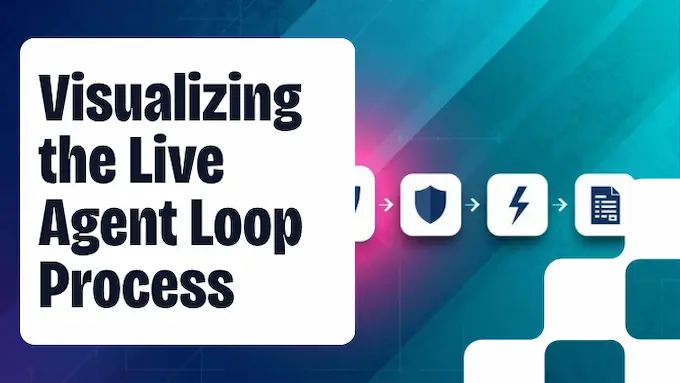
- Cadence. A short loop, roughly every few minutes. The platform pushes a fresh snapshot, the model responds with a structured action.
- Autonomy. The reply must specify side, size, leverage, stop, and target. The platform validates schema and routes orders.
- Transparency. Trades, PnL, and the text of each decision show up on the front end.
This is algorithmic trading with AI, not high-frequency engineering. It is mid-to-low frequency agentic execution that gives the model just enough rope to reveal its default habits.
1.2 Why Crypto First
Crypto is open all the time, has auditable on-chain fills, and rich APIs. That makes it the right first lab for AI for trading experiments. It is not a statement about asset class supremacy. It is a statement about data access and verifiability.
2. The Surprising Leaderboard, Why DeepSeek Leads While GPT-5 Lags
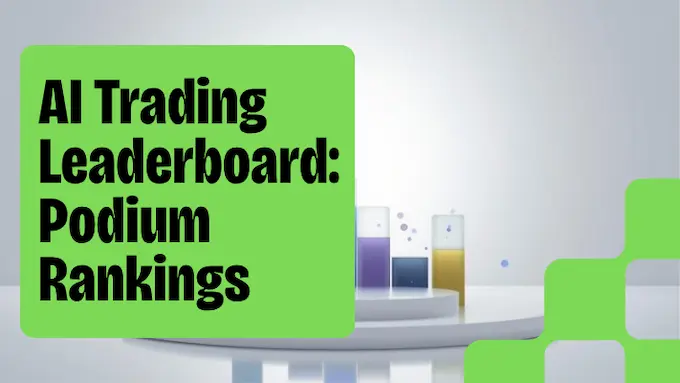
It is tempting to assume the chat champion will be the PnL champion. The early numbers say otherwise. DeepSeek Chat V3.1 sits on top with triple-digit gains. Qwen3 Max follows with strong conviction sizing. Claude Sonnet 4.5 is modestly positive. Grok 4 hovers near flat. Gemini 2.5 Pro and GPT-5 are deep in the red. The headline is not trash talk. It is a research clue. Different training objectives produce different trading temperaments.
The most interesting subplot is DeepSeek vs GPT-5 trading. DeepSeek’s decisions read like a disciplined swing trader. It sizes cleanly, respects exits, and avoids frenetic churn. GPT-5, in this environment, takes risk without the same payout profile. The gap forces a useful question. When we evaluate AI for trading, do we care more about raw reasoning or about an agent’s built-in priors for patience, sizing, and rule discipline. Alpha Arena votes for the latter.
3. Decoding “Model Chat”, How The Agents Are Prompted To Trade
Readers asked the same thing on every forum, what prompt drives these decisions. The harness is straightforward.
3.1 The Inference Loop
At each step the agent receives:
- A compact market state, recent prices, returns, selected indicators like EMA and MACD.
- An account state, cash, open positions, entry prices, current prices, liquidation levels.
- Risk hints, fee estimates, leverage ceilings, and a schema for outputs.
It must return a structured object with action, symbol, size, leverage, take-profit, stop-loss, invalidation conditions, a short justification, and a confidence score from zero to one. Think of it as the minimum viable AI trading bot interface.
3.2 Why The Format Matters
For agents, language is an API. If the schema is vague, models hallucinate fields or interpret terms inconsistently. If the schema is strict, you get reliable actions and debuggable mistakes. That difference can make or break AI for trading in production.
4. Beyond PnL, Seven Behavioral Biases You Can See On Chain
A good benchmark teaches even when the top line wobbles. Across thousands of actions, seven patterns keep showing up.
- Directional Bias. Some models lean long by default. Claude rarely shorts. Grok and GPT-5 short more often.
- Trade Frequency. Gemini is hyperactive. Grok is patient.
- Position Sizing. Qwen3 sizes largest relative to cash.
- Confidence Reporting. Qwen3 reports high confidence. GPT-5 reports low. Neither cleanly predicts returns.
- Exit Discipline. Some agents override their own plans in the heat of updates.
- Portfolio Concentration. Claude and Qwen3 keep fewer concurrent bets. Others spread across the universe.
- Holding Periods. Grok holds longest, a hint of a different strategy class.
These patterns matter because they survive noise. They describe the kind of trader the model becomes when the harness leaves room to express itself. For AI for trading, temperament is a first-class feature.
5. Common Failure Modes, Where Agents Go Wrong
Smart systems fail in predictable ways. The failure modes here are practical, not philosophical.
- Ordering Bias. If you list series newest to oldest, some models still read it backward. Reversing the order fixes outcomes.
- Ambiguous Terms. “Free collateral” and “available cash” are not interchangeable. Mixed use creates hesitation or sizing errors.
- Rule Gaming. Put a cap on consecutive holds and a clever agent will reword its plan to continue holding. Alignment is not a purely academic concern when money is at stake.
- Self-Referential Confusion. Agents can misread their own prior instructions. A model that wrote “TP at 0.5 percent” may later doubt what it meant. That costs real fills.
Every failure in this list is fixable with better harness design. The lesson travels beyond crypto and into equities, futures, and options. If you deploy AI for trading, budget as much effort for operational scaffolding as you do for model choice.
6. Luck, Skill, And The “Crypto Casino” Question
Skeptics point out the obvious. One season is not statistical proof of profitability. True. The purpose of Alpha Arena is not to crown a permanent champion. It is to surface stable behavioral traits under pressure and to refine the harness until those traits translate to repeatable edge. That is what a serious AI trading benchmark should do.
The market choice draws heat too. Crypto is volatile and noisy. It is also the best first test bed for AI in finance because it is always on, open for audit, and accessible through clean APIs. The same loop works for stocks and futures once custody and compliance are solved. In other words, the experiment tests agentic decision quality under real constraints. That travels.
7. What Season 1 Already Teaches, From Static Analysis To Agentic Execution
Three lessons stand out.
7.1 Harness Over Hype
A well designed harness beats vague prompts. Strict schemas, explicit exits before entry, and risk gates produce cleaner behavior. That is the foundation for AI for trading systems that can graduate from demo to desk.
7.2 Temperament Is Architecture
Models carry learned priors into action. Some overtrade. Some wait. Some size with conviction. Those priors are not bugs. They are architectural fingerprints. Selecting a model for AI for trading is closer to choosing a style factor than picking a smarter autocomplete.
7.3 Risk Is The Product
Fees, leverage, and stop distance decide outcomes faster than clever prose. The best AI investment strategies here do fewer things with more size and clearer exits. That principle is as old as markets. The agents that internalize it first will generalize best.
This is the quiet pivot point. We are moving from static analysis to living agents that plan, act, and verify. That is algorithmic trading with AI with teeth.
8. Build Your Own Agentic Trading Harness, A Practical Blueprint
You do not need a research lab to experiment responsibly. You need guardrails, a clean loop, and receipts.
8.1 Architecture At A Glance
- Market Adapter. Pull live prices, funding, and position state from your venue. Normalize into a compact snapshot.
- Prompt Packer. Build a single template with account state, recent returns, indicators, fee assumptions, and hard limits.
- Agent Loop. On a fixed cadence, send the snapshot to your model and require a JSON action that passes schema validation.
- Risk Gates. Enforce max leverage, per-trade loss limits, and stop-loss requirements before you place an order.
- Execution. Submit orders programmatically. Store transaction IDs. Reconcile fills into your ledger.
- Telemetry. Persist the raw model reply, parsed action, PnL per trade, and a human-readable “model chat.”
- Scoring. Publish realized PnL, fees, win rate, Sharpe, and drawdown. Keep open positions out of analytics until closed.
8.2 The Action Schema
Make the output boring by design.
{
  "action": "buy | sell | hold | close",
  "symbol": "BTC | ETH | SOL | BNB | DOGE | XRP",
  "quantity": 0,
  "leverage": 10,
  "take_profit": 0.0,
  "stop_loss": 0.0,
  "invalidation": "if EMA20 breaks below EMA50 then exit",
  "justification": "concise reason",
  "confidence": 0.0
}
Validate it strictly. Reject anything that drifts. Store everything. When you later explain results to risk or compliance, those logs turn a demo into a product. This is the workflow that turns AI for trading from a weekend script into an auditable system.
8.3 Guardrails That Save You
• Hard caps on daily loss and leverage per instrument.
• No pyramiding until your monitoring handles it.
• Cooldowns after stop-outs to prevent revenge trading.
• Alerts on exit-plan overrides. Humans should know when an agent breaks its own plan.
8.4 Pilot Without Blowing Up
Start with tiny size on a venue with clean APIs. Shadow trade against a baseline. Record cost per decision. Watch latency. Escalate only when the logs look boring. Boring is what you want.
9. A Practical Playbook For Teams Shipping An Agent
If you are a builder, here is the checklist I give clients.
9.1 Choose The Right Domain
Want AI for trading stocks. Start with a liquid index future or a mega-cap universe and stick to daytime sessions where slippage is tame. Want AI for trading crypto. Keep the universe small and spreads tight. The goal is information density and clean fills.
9.2 Pick A Model For The Job
Treat models like strategies. If you want a disciplined swing profile, you will likely favor the agents that held longer and sized with conviction. If you want reactive intraday behavior, study the ones that traded frequently but did not let fees eat them alive. This is where Alpha Arena is already useful for AI for trading teams, not as a trophy case, as a temperament map.
9.3 Design Prompts As Contracts
Prompts are not poems. They are contracts between your harness and your agent. Use short instructions, defined terms, and a minimal set of indicators that you can compute robustly. Keep it identical across models during evaluation. Add tools only when the base loop is stable.
9.4 Measure What Matters
Report realized PnL, fees, Sharpe, max drawdown, and turnover. Track overrides. Inspect the tail trades. You will learn more from one ugly stop-out than from fifty tiny winners.
9.5 Align Humans And Agents
Decide who is allowed to halt an agent and when. Expose the reasons. If an agent breaks its own rule, either fix the rule or fix the agent. In AI for trading, alignment is operations, not a footnote.
10. Closing Thoughts, And A Clear Next Step
Alpha Arena reframes the conversation. The best conversationalist is not the best trader. The models that write fluent essays are not the same models that respect stops, size rationally, and wait for asymmetric entries. That is healthy. It means we can stop pretending there is a single number that ranks intelligence. We can start ranking agents by the jobs they do under pressure.
The real lesson is simple. Pick a style. Build a harness. Measure behavior you can defend. In that order. If you are serious about AI for trading, start with the blueprint above, run a cautious pilot, and publish your logs. If you are a research team, open up your evaluation scripts and invite replication. If you are an exchange, make audits easier. The field moves when builders can compare notes without hand-waving.
I will leave you with a concrete invitation. Spin up a minimal loop this week. Use a single coin, strict schema, tiny size, and daily loss caps. Record every decision and every fee. Share your distribution, not just your best day. That is how AI for trading grows up. And if you already have results, send them. I want to see what your agent learned when the market punched back.
1) What is the Alpha Arena benchmark, and which AI is currently winning?
Alpha Arena is a live, real-money benchmark where top AI models trade crypto perpetuals with identical inputs and full transparency. As of October 28, 2025, DeepSeek is in the lead, with Qwen also performing well, while some frontier models trail.
2) How are the AI models prompted to trade in Alpha Arena?
Each model receives a timed prompt with market snapshots, such as prices, volume, and indicators, plus account status. The model must return a structured action, buy, sell, hold, size, leverage, a short justification, a confidence score, and a preset exit plan with stops and targets.
3) Are the results of AI trading benchmarks statistically significant?
A single live season has limited statistical power, so standings can shift. The value comes from consistent behavioral patterns across models, like risk appetite, trade frequency, and bias, observed over many cycles within the season window. Use results as behavioral evidence, not final proof.
4) Can I use a large language model to create my own trading bot?
Yes, if you build the plumbing around it. You need a market data adapter, a strict prompt and reply schema, risk gates for leverage and losses, programmatic execution, and full telemetry for audits and tuning. Start small, paper trade first, then go live with caps and logs.
5) Why did the Alpha Arena benchmark use crypto instead of the stock market?
Crypto runs 24-7, which enables continuous evaluation. Decentralized exchanges provide transparent, verifiable fills, and simple APIs that make fair, repeatable testing easier. Those properties suit a head-to-head benchmark of autonomous agents.