
1. Introduction
There is a comment buried in social media discussing the latest OpenAI release that captures the current moment better than any white paper could. The user looked at the new benchmark numbers and simply wrote. “71% isn’t just a win, it’s a rewiring of labor cost.”
That is the signal through the noise. For years we have been distracted by academic benchmarks. We watched models take the Bar Exam or solve math Olympiad problems and treated it like a spectator sport. It was impressive. It was novel. But it felt abstract. A model solving a logic puzzle does not immediately threaten the payroll of a mid-sized logistics company.
The release of GPT-5.2 and the introduction of GDPval changes the texture of the conversation entirely. We are done with abstract reasoning tests. We have moved into the era of economic substitutability.
This is not about whether an AI has a soul or if it can write a novel that makes you cry. This is about whether an AI can look at a messy Excel sheet. parse a PDF invoice. and generate a purchasing plan that doesn’t bankrupt the company. According to the new data. the answer is yes. And it can do it for pennies.
The AI workforce is no longer a futuristic concept for 2030. It is a line item on a spreadsheet right now. The latest data shows that GPT-5.2 meets or exceeds human expert performance on 70.9% of economically valuable tasks. That number is the tipping point. It suggests we are walking into a trap, the “Good Enough” trap, where the AI workforce does not need to be Einstein. It just needs to be a competent intern who works at 100x speed for 1% of the cost.
Table of Contents
2. The 70.9% Signal: Understanding the GDPval Shockwave
To understand why the ground is shifting. you have to look at how we measure intelligence. Previously we used MMLU (Massive Multitask Language Understanding). It tested general knowledge. It asked questions like “What is the capital of France?” or “Explain quantum entanglement.”
GDPval is different. It stands for Gross Domestic Product Value. It is boring. It is tedious. And it is terrifyingly accurate regarding the future of employment.
The benchmark consists of tasks created by humans with an average of 14 years of industry experience. These are not trivia questions. They are deliverables. Create a shift schedule for a hospital. Audit this purchase order against these three invoices. Write a legal brief based on this specific case law.
When we look at the leaderboard. the jump is vertical. GPT-5.1 was hovering around the 38% mark. barely an assistant. GPT-5.2 has shot up to 70.9% (Wins + Ties) against human experts.
This is the “competent intern” threshold. In software engineering. we often talk about the difference between a junior and a senior engineer. A senior engineer solves problems you didn’t know you had. A junior engineer solves the problem you give them. GPT-5.2 has effectively graduated from junior to mid-level in 44 distinct occupations.
The implications for the AI workforce are immediate. Companies do not always need a genius. Most of the time. they just need someone to process the data correctly and not make a mess. If the AI can do that 70% of the time. the structure of the modern firm changes overnight.
3. Deconstructing the “Good Enough” Trap (Wins vs. Ties)

Here is where the data gets interesting and where most people misread the chart. There is a distinction in GDPval between “Wins Only” and “Wins + Ties.” A “Win” means the AI did a significantly better job than the human expert. It found an error the human missed. It wrote a clearer memo. It optimized the schedule better.
A “Tie” means the AI did the job just as well as the human. The output was indistinguishable in quality. In a creative contest. a tie goes to the human because we value the human touch. In capitalism. a tie goes to the cheaper option every single time.
This is the “Good Enough” trap. The AI workforce does not need to dominate humans to replace them. It just needs to tie them. If a human analyst costs $50 an hour and takes four hours to spread a financial statement. that is a $200 task. If GPT-5.2 can do the same task in 30 seconds for $0.15 and achieve a “Tie” in quality. the human is not just competing. they are being economically deleted from that workflow.
I saw a comment from a user named Tesla addict who argued that “ties don’t guarantee superiority.” They are technically right but economically wrong. In the labor market. “superiority” is a function of output per dollar. If the output is identical (a tie). the cost difference makes the AI infinitely superior.
Look at the data for Customer Service Representatives. The “Wins + Ties” score is 82.2%. That means in four out of five interactions. the AI is as good as or better than a human agent. For a call center running on thin margins. that is not a statistic. That is a roadmap for layoffs.
4. The Data: Consolidated Industry Impact
We need to look at the raw numbers to really see the blast radius. This isn’t speculation. This is the scoreboard for the AI workforce right now.
Table 1: Overall GDPval Model Leaderboard
Data Source: Main Leaderboard Chart. Values are precise percentages.
AI Workforce: Model Performance Table
Wins and wins plus ties compared with expert parity at 50%.
| Rank | Model Name | Wins Only (%) | Wins + Ties (%) | Performance vs. Expert Parity (50%) |
|---|---|---|---|---|
| 1 | GPT-5.2 | 49.7% | 70.9% | Wins + Ties significantly exceeds parity. |
| 2 | Claude Opus 4.5 | 45.5% | 59.6% | Wins + Ties exceeds parity. |
| 3 | Gemini 3 Pro | 40.3% | 53.5% | Wins + Ties exceeds parity. |
| 4 | Claude Sonnet 4.5 | 42.5% | 50.3% | Wins + Ties barely exceeds parity. |
| 5 | Claude Opus 4.1 | 43.6% | 47.6% | Below parity. |
| 6 | GPT-5 | 34.8% | 38.0% | Below parity. |
| 7 | o3 | 30.8% | 34.1% | Below parity. |
| 8 | o4-mini high | 25.3% | 27.8% | Below parity. |
| 9 | Gemini 2.5 Pro | 23.3% | 25.5% | Below parity. |
| 10 | Grok 4 | 21.1% | 24.3% | Below parity. |
| 11 | GPT-4o | 9.9% | 12.3% | Below parity. |
The gap between GPT-5.2 and everything else is the story here. But the deeper story is in the specific industries. The aggregate number hides the specific devastation in certain sectors.
GDPval Leaderboard: Consolidated Industry Data
AI Workforce: Sector Performance Highlights
Best model shown plus wins-only and wins-plus-ties rates by occupation.
| Category (Sector) | Occupation (Subcategory) | Best Model Shown | Wins Only (Super-Human) | Wins + Ties (Replacement Ready) |
|---|---|---|---|---|
| Finance & Insurance | Customer Service Representatives | GPT-5.2 | 75.6% | 82.2% |
| Finance & Insurance | Securities & Financial Sales Agents | GPT-5.2 | 73.3% | 77.8% |
| Finance & Insurance | Personal Financial Advisors | Claude Opus 4.1 | 62.2% | 64.4% |
| Professional Services | Computer & Info Systems Managers | GPT-5.2 | 66.7% | 93.3% |
| Professional Services | Software Developers | GPT-5.2 | 82.2% | 82.2% |
| Professional Services | Project Management Specialists | Claude Opus 4.5 | 64.4% | 80.0% |
| Information | Editors | Claude Opus 4.5 | 93.3% | 93.3% |
| Information | News Analysts & Reporters | GPT-5.2 | 60.0% | 86.7% |
| Wholesale Trade | Sales Managers | GPT-5.2 | 80.0% | 93.3% |
| Wholesale Trade | First-Line Supervisors (Non-Retail) | GPT-5.2 | 86.7% | 88.9% |
| Retail Trade | Private Detectives & Investigators | GPT-5.2 | 68.9% | 93.3% |
| Retail Trade | First-Line Supervisors (Retail) | GPT-5.2 | 68.9% | 84.4% |
| Retail Trade | General & Operations Managers | Claude Opus 4.1 | 62.2% | 66.7% |
| Government | Compliance Officers | Claude Opus 4.5 | 71.1% | 88.9% |
| Government | Administrative Services Managers | GPT-5.2 | 77.8% | 86.7% |
| Government | First-Line Supervisors (Police/Detectives) | GPT-5.2 | 75.6% | 86.7% |
| Government | Recreation Workers | GPT-5.2 | 55.6% | 80.0% |
| Government | Child, Family, & School Social Workers | Gemini 3 Pro | 68.9% | 78.9% |
| Manufacturing | Buyers & Purchasing Agents | Claude Opus 4.5 | 75.6% | 88.9% |
| Manufacturing | Shipping, Receiving & Inventory Clerks | Claude Opus 4.5 | 77.8% | 80.0% |
| Real Estate | Counter and Rental Clerks | Claude Opus 4.1 | 82.2% | 82.2% |
| Real Estate | Real Estate Sales Agents | GPT-5.2 | 60.0% | 77.8% |
| Real Estate | Real Estate Brokers | Claude Sonnet 4.5 | 66.7% | 66.7% |
| Health Care | Nurse Practitioners | GPT-5.2 | 66.7% | 75.6% |
| Health Care | Medical & Health Services Managers | Claude Opus 4.1 | 62.2% | 66.7% |
5. The “Danger Zones”: Sectors Already Above the Red Line
When you look at the consolidated data. certain professions are screaming for help. The AI workforce is not coming for them. It is already sitting at their desk.
Finance and FP&A:
There was a lot of anxiety in the r/FPandA subreddit regarding this update. and the fears are justified. Financial Analysts are seeing a replacement readiness score of 64.4%. But look closer at Securities & Commodities Agents. They are at 77.8%. The job of analyzing market data. predicting trends. and executing trades is fundamentally a data processing task. GPT-5.2 is relentless here. It doesn’t get tired. It doesn’t get emotional about a bad trade. It just computes.
The “Private Detective” Anomaly:
This one caught my eye. Private Detectives and Investigators show a 93.3% score for replacement readiness. At first glance. this seems absurd. Can an AI sit in a car and stake out a cheating spouse? No. But modern investigation is 90% digital forensics. It is combing through public records. social media footprints. and financial discrepancies. The AI workforce can digest terabytes of this data in seconds. The “gumshoe” work is dead; the “OSINT” (Open Source Intelligence) work is solved.
Wholesale Trade:
Sales Managers in wholesale are sitting at 93.3%. This implies that the strategic planning of inventory. pricing strategy. and territory management is largely algorithmic. If you are in this field. your value proposition just shifted from “I know the strategy” to “I own the client relationship.”
6. Is This “Benchmaxxing”? Addressing Skepticism
We have to be intellectually honest here. Is this real? There is always the accusation of “benchmaxxing”—the idea that models are optimized specifically to score high on the test while failing in the real world. Critics point out that GDPval is run by OpenAI. It is a fair critique. There is an inherent conflict of interest when the vendor creates the yardstick.
There is also the “Under-contextualized” flaw raised by engineers like Eugene Vyborov. He noted that these benchmarks often involve static files. “Here is a PDF. analyze it.” Real work is messy. Real work involves logging into a legacy SAP system that times out every ten minutes. asking a coworker for a password. and dealing with ambiguous emails from a client who doesn’t know what they want.
The current AI workforce struggles with that friction. It fails when the browser crashes or the API key expires. But here is the counter-argument: Even if the score is inflated by 10% or 15%. we are still looking at numbers that cross the human parity line. If GPT-5.2 is “only” 60% as good as an expert instead of 70%. the economic pressure to automate remains. The trajectory is what matters. and the trajectory is vertical.
7. The 93% Club: Jobs That Are Effectively “Solved”

We need to talk about the “93% Club.” These are the occupations where the AI workforce has effectively solved the core competency of the role.
- Editors: 93.3%
- Computer & Info Systems Managers: 93.3%
- Sales Managers (Wholesale): 93.3%
- Private Detectives: 93.3%
Why these? They share a common DNA. They involve high-volume data processing within a strict set of rules. Editing is about grammar. style guides. and consistency. Management in IT systems is about uptime. ticket resolution. and resource allocation.
These are not “creative” jobs in the mystical sense. They are optimization problems. And AI loves an optimization problem. Look at the Software Developers score. It is 82.2% for Wins and 82.2% for Wins + Ties. The numbers are identical. That is rare. It means the model never ties. It either writes perfect code that beats the human. or it hallucinates and fails completely. It is binary. As models improve. that failure rate drops. and the binary flips entirely to “Win.”
8. AI Workforce Economics: The Cost of “Good Enough”
The most chilling statistic in the OpenAI paper wasn’t the win rate. It was the efficiency metric. The model produced outputs at “>11x the speed and <1% the cost.”
This creates a gravitational pull that no CEO can resist. We are entering a phase of “Rewiring.” Companies won’t just fire everyone and install ChatGPT. That is the naive view.
Instead. they will change the ratio. In the past. you might have had ten junior analysts reporting to one senior manager. The AI workforce changes that math. Now. you have one senior manager overseeing ten AI agents. The junior tier—the training ground for the next generation of experts—is what disappears.
This creates a crisis of skill acquisition. If the entry-level jobs are gone. how does anyone get the 14 years of experience required to become the expert grader? We are burning the ladder while we climb it.
9. The Human Edge: Where Do We Still Win?
It is not all doom. The data highlights exactly where the human AI workforce still holds the line.
Look at Recreation Workers. The AI scores 55% in Wins. It barely passes parity. Look at Social Workers. The score is high (78.9%). but notice the gap between Wins and Ties.
Humans win where the job requires physical presence. empathy. and high-stakes ethical judgment. An AI can design a “spring vendor fair” table layout (a task mentioned in the dataset). but it cannot calm down an angry vendor who didn’t get the spot they wanted.
The human element is no longer about “being smart.” It is about “being there.” It is about accountability. An AI cannot go to jail if the compliance report is wrong. A human Compliance Officer can. That liability shield is a form of job security. largely because we need a human throat to choke when things go wrong.
10. Future Outlook: From GPT-5.2 to Agentic Workflows
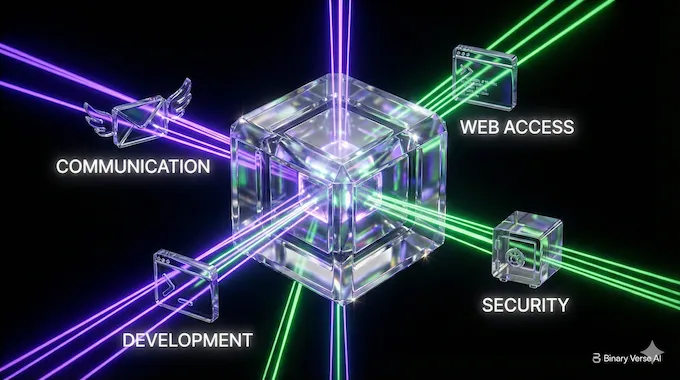
We are currently looking at GPT-5.2. The rumor mill on Reddit and Twitter is already spinning up about GPT-5.3 and 5.4.
The consensus is that we have solved the “Knowledge problem.” The model knows everything it needs to know. The next battleground for the AI workforce is “Execution.”
This is the shift to Agentic Workflows. Currently. the human has to act as the glue. You take the output from the AI. check it. format it. and email it. The next generation of models will do the clicking. They will navigate the browser. fill out the form. and hit send.
When that friction disappears. the “Under-contextualized” defense falls apart. We are likely 18 months away from agents that can navigate messy enterprise software as well as a human.
11. Conclusion: Surviving the Parity Era
The era of “AI vs Human” is over. The AI won on speed and cost. We are now in the era of integration. If you are reading this and your job falls into the “93% Club.” you have two choices. You can try to be faster than the AI (you will lose). or you can move up the stack.
You need to focus on the 30% of the job that the AI workforce fails at. Focus on ambiguity. Focus on the client relationship. Focus on the tasks that require physical verification.
The “Good Enough” trap is real. The economy is about to accept “B+” work from robots because “A+” work from humans is too expensive. To survive. you can’t just be a worker anymore. You have to be the architect who tells the robots what to build. The future belongs to the managers of the AI workforce, not the competitors of it.
Is AI better than humans at professional tasks?
Not necessarily better, but economically superior. According to the GDPval benchmark, GPT-5.2 ties or beats human experts 70.9% of the time. For businesses, an AI that performs equally (“Ties”) to a human but costs <1% is a preferred alternative, making “super-human” performance unnecessary for displacement.
Will AI replace 50% of jobs?
Displacement becomes highly probable once a model crosses the 50% Expert Parity Line. Current data shows several sectors have already breached this threshold, with roles like Customer Service (82.2%) and Sales Managers (93.3%) effectively “solved” for routine tasks, signaling inevitable cost-driven automation.
How is AI affecting the finance workforce?
The finance sector is in a high-risk zone. GPT-5.2 now scores 82.2% replacement readiness for Customer Service Representatives and 77.8% for Securities & Commodities Traders. This indicates that high-volume data processing and market analysis roles are being rapidly rewired for automation.
What is the GDPval benchmark?
GDPval (Gross Domestic Product Value) is OpenAI’s new standard for economic substitutability. Unlike academic tests (like MMLU) that measure abstract reasoning, GDPval evaluates an AI’s ability to produce real-world work products, like spreadsheets, legal briefs, and schedules—cheaper and faster than human professionals.
What is the “Good Enough” trap in AI?
The “Good Enough” trap is the economic reality that businesses automate roles as soon as AI reaches parity (“Ties”) with humans, rather than waiting for it to be superior. If an AI creates a “B+” deliverable instantly for pennies, it economically displaces an “A+” human expert who costs significantly more.