If AI at your company feels like a pile of impressive demos that never make it into production, you are not alone. The tools are powerful, yet most teams still move files around by hand, paste charts into slides, and chase approvals in chat threads. The fix is not another chatbot. You need a front door that brings models, data, and workflows together in one place. That is what Gemini Enterprise aims to be, a single platform that turns scattered pilots into dependable gains.
Across this guide, we will break down what it is, what it costs, how it fits into your stack, and where it delivers real value. Think of this as a field manual written by an engineer who cares about clean abstractions, who knows the difference between a feature and a capability, and who wants your team to get its hours back.
Table of Contents
1. What Is Google Gemini Enterprise, And Why It Matters For Your Business
The short version, Google Gemini Enterprise is a platform that shifts AI from single prompts to orchestrated work. It blends three layers that used to live apart, the models, the agents that use them, and the secure connectors that give those agents context from your company’s data. The result is a hub where people search, analyze, and then hand the keyboard to software that actually takes action.
The value is not a clever demo. It is a repeatable path from idea to outcome. Gemini Enterprise gives you a structure where marketing can spin up a campaign assistant, sales can automate pipeline hygiene, and engineering can accelerate code reviews, all under shared governance.
1.1 The Agentic Pattern, Why It Works
Traditional tools wait for you to click. Agents notice, decide, and do. The agentic pattern pairs a capable model with a plan, a set of tools, and guardrails. Inside Gemini Enterprise, that pattern becomes standard. Agents search across docs and tickets, call APIs, update records, and return a trace you can audit. You get speed with accountability, not speed with chaos.
2. The Core Features, A Taskforce Of AI Agents For Every Team
You will see plenty of features on a product page. Here is the distilled version, what teams actually use and why it matters.
- Access To Advanced Models. The latest Gemini models sit under the hood. Your agents can read, write, summarize, plan, and reason across text, tables, images, and more.
- No-Code Workbench. Non-technical users build custom agents by describing tasks, wiring data sources, and setting policies. No scaffolding from engineering required.
- Google-Made Agents. You start with a shelf of proven helpers, including deep research agents, data analysis agents, and coding agents.
- Centralized View. See every agent in one console, who owns it, where it runs, what data it touches, and how it performed.
- Partner Ecosystem. Pull in vetted third-party agents and connectors. If your business runs on Salesforce, SAP, Workday, or ServiceNow, you will meet them here.
If you need the elevator pitch for leadership, Gemini Enterprise features boil down to velocity, safety, and a single pane of glass.
2.1 What Sets It Apart
Plenty of products promise automation. The difference here is coherence. Gemini Enterprise treats models, agents, data, and controls as one system. You do not need ten contracts and a custom integration project before you see value. You can start with one team and grow by adding agents, not by rewriting your stack.
3. Unlock Your Data, Ground Agents In Business Reality
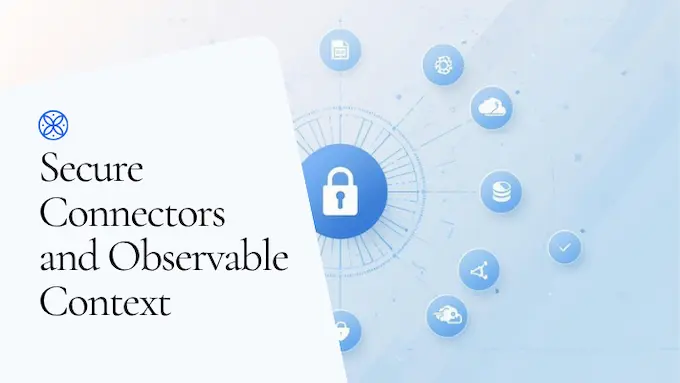
AI is only as good as its context. An agent that cannot reach your systems will hallucinate authority it does not have. The platform’s connective tissue fixes that. Agents can read from Google Workspace and Microsoft 365, call out to your CRM and ERP, reach data lakes and warehouses, and respect access policies you already enforce.
Two principles matter here.
- Least-Privilege Access. Agents get scoped credentials and time-boxed tokens. If a task only needs read access to a folder, it does not get write access to a drive.
- Observable Context. You can see what an agent pulled, why it chose a source, and which decision points led to the result. That audit trail is not a luxury. It is how you trust the outcome.
When people say Gemini Enterprise “feels smart,” what they actually mean is that it has your context. That is the difference between a chat window and a teammate you depend on.
3.1 Typical Connectors Your Teams Will Use
- Docs And Mail. Drive, Docs, Sheets, Slides, Gmail, Outlook, and SharePoint.
- Business Apps. Salesforce, SAP, Workday, ServiceNow, Zendesk, HubSpot.
- Data Stores. BigQuery, Cloud SQL, Snowflake, Databricks, and S3-compatible lakes.
- Custom APIs. Your internal services with OAuth or service-account auth.
Wire these well and agents stop guessing. They start answering with evidence.
4. Gemini Enterprise Pricing, A Clear Breakdown Of The Tiers

Leadership will ask about cost on slide one. You want a simple answer. Gemini Enterprise pricing is offered in two tiers that map to how you operate, a team-friendly Business edition and an enterprise-grade edition with stronger controls.
| Edition | List Price (USD) | Who It Fits | Core Benefits |
|---|---|---|---|
| Business | $21 per seat per month | Small businesses, departments, or pilots up to 300 seats | Chat with Gemini to analyze, search, and create, connect to Workspace and Microsoft 365, library of data connectors, no-code agent builder, ready-to-use Google-made agents, centralized agent view, built-in security, pooled storage and indexing (25 GiB per seat) |
| Enterprise Standard / Plus | $30 per seat per month | Large organizations that need advanced IT controls and unlimited seats | Everything in Business, higher usage quotas, Code Assist Standard for developers, bring your own agents via the Agent Development Kit and third-party agents, advanced security and governance such as VPC-Service Controls and Customer-Managed Encryption Keys, support for strict compliance needs, sovereign data boundaries, pooled storage and indexing up to 75 GiB per seat, option to add a Frontline edition |
That is the snapshot you share with finance. For contracts and SKUs, work with your Google Cloud rep. The important point is that the entry tier removes friction for teams, and the upper tier adds the controls that IT requires.
5. Gemini Business Vs Enterprise, Which Plan Is Right For You
You do not choose tools. You choose tradeoffs. Here is the head-to-head that matters.
| Dimension | Business | Enterprise |
|---|---|---|
| Seats | Up to 300 | Unlimited |
| Governance | Centralized agent view and basic controls | Advanced policies, deeper auditing, granular permissions |
| Security | Built-in security | VPC-SC, CMEK, access transparency, data residency options |
| Developer Tools | No-code builder | No-code plus Code Assist Standard and the Agent Development Kit |
| Ecosystem | Google-made agents and connectors | Everything in Business plus vetted third-party agents, bring-your-own agents |
| Data Storage | 25 GiB pooled per seat | Up to 75 GiB pooled per seat |
| Compliance | Baseline needs | Support for stricter workloads such as HIPAA and FedRAMP High |
| Best For | Team pilots and SMBs | Regulated industries, global rollouts, complex estates |
If your company is evaluating Gemini Business vs Enterprise, start with the data you must protect and the workflows you need to automate. If the pilots require protected health information, regulated customer data, or line-of-business systems, the Enterprise tier earns its keep. If you are testing the waters, Business gets you moving fast.
In either case, Gemini Enterprise stays in view as the north star platform. You can begin small without painting yourself into a corner.
6. The Power Of The Platform, Centralized Governance And Security
Security and AI must grow together. You want speed, yet you cannot afford a shadow zoo of agents that nobody owns. The platform addresses this with a simple contract, every agent is visible, every action leaves a trace, and every data boundary is enforced.
- Unified Catalog And Policy. See all agents, owners, scopes, and usage. Apply policies once and inherit them everywhere.
- Data Boundary Controls. Configure virtual perimeters and control where data is processed and stored. Customer-managed encryption keys give you ownership of the keys that protect sensitive information.
- Safety Layer. Screening and response controls lower the risk of unsafe content and reduce prompt injection exposure.
- Compliance Support. The Enterprise tier aligns with stricter workloads. That lets your legal and risk teams sleep at night.
This is where Gemini Enterprise earns trust. People can move faster because the rails are in place.
6.1 What IT Leaders Should Ask On Day One
- Which connectors will we enable and with what scopes.
- Who approves production agents and under what criteria.
- How we will monitor usage, cost, and outcomes.
- How we will rotate credentials and keys on a schedule.
- What events we ship to our SIEM and what alerts we trigger.
Ship answers to those questions and your rollout will look like a plan, not a hope.
7. How AI Agents For Enterprise Transform Workflows
This is where things get fun. Real wins show up when multiple tools move in sync and people stop working as glue. Here are patterns you can implement in a week and refine over time.
7.1 Marketing, Campaigns That Build Themselves
An agent collects brand guidance, product facts, and past performance. It drafts creative, segments audiences, and fills a calendar with multi-channel assets. It pushes content to the review queue, logs each version, and publishes once approved. With context and guardrails, the team moves from scattered requests to a steady drumbeat.
7.2 Sales, Clean CRM With Zero Nagging
An agent reads calls, emails, and meeting notes, updates fields, flags risks, schedules follow-ups, and drafts a recap after each call. Nothing heroic, just consistent hygiene. That consistency is what lifts conversion rate.
7.3 Engineering, Code With A Second Pair Of Eyes
Code Assist catches obvious mistakes, proposes tests, explains diffs, and helps navigate unfamiliar modules. You still own design and tradeoffs. You just move through the noise with less drag. When paired with a backlog agent, you get cleaner triage and clearer release notes.
7.4 Finance And Operations, Less Churn, More Signal
Agents reconcile data across systems, draft variance analyses, and propose cost-savings experiments. They surface outliers and attach the math that proves it. You get fewer meetings and better decisions.
These are AI agents for enterprise that create time, not meetings. They work because they can see your data and follow your rules. They also work because the platform meets people where they already live, inside email, documents, dashboards, and chat.
If you have been looking for Google Gemini for business use cases that do not stall in month three, start here.
8. An Adoption Playbook, Build Momentum In Weeks Not Quarters
No platform, including Gemini Enterprise, installs itself. You need a path that creates quick wins and builds trust.
8.1 Pick Two Lighthouse Workflows
Choose one revenue-facing and one internal workflow. Keep the scope narrow. Define the before and after in one page. Write down how you will measure success, cycle time, error rate, and satisfaction.
8.2 Wire Data With Intention
List the sources, set scopes, and avoid God-mode access. Build a thin read-only connector first. Expand only when required. Document the lineage an agent will follow to reach a decision.
8.3 Put Guardrails Where They Matter
Enforce least privilege. Log every action. Add human review where the cost of a wrong answer is high. Start with dry runs in a sandbox, then promote to production behind a feature flag.
8.4 Publish Like A Product
Give the agent a name, a page, and a one-minute video. Tell people what it can do, what it cannot do, and how to ask for changes. Treat it as living software, not a one-off experiment.
8.5 Measure, Then Multiply
Share outcomes every Friday. Retire what underperforms. Invest where the curve bends. Use the same cadence when you spin up your second and third agents.
This rhythm scales because it respects attention. People adopt what removes friction today, not what promises magic later.
9. Developer Experience, Where Agents Meet Your Toolchain
Developers want two things, power and fewer context switches. The platform leans into both. Code Assist integrates into editors and reviews. The Agent Development Kit lets teams ship custom logic behind clean interfaces. Standards for context and inter-agent messaging reduce bespoke glue. You get the control to build what your business needs without re-implementing the basics.
If you are already automating in your terminal and CI, Google Gemini Enterprise can join that flow. Agents post findings to pull requests, generate traces you can inspect, and call the same services your teams already trust. Your stack stays yours. Your delivery cycle gets faster.
10. Decision Framework, Is Gemini Enterprise The Right Move
You want a simple test. If your teams are stuck in manual work, if leaders cannot see how AI ties to outcomes, and if IT needs real governance, Gemini Enterprise is worth serious attention. It consolidates point solutions into a platform you can reason about. It turns context into leverage. It gives you agents that actually ship work.
The choice is not between build and buy. It is between scattered tools and a coherent system. Start with one team. Wire one source of truth. Deliver one visible win. Then repeat.
10.1 A Practical Checklist Before You Call Sales
- Define three use cases and their metrics.
- List the systems that hold the data they need.
- Decide who will own the first two agents.
- Align IT and security on policy, logging, and keys.
- Set a 30-day goal and a public demo date.
You are not buying a promise. You are buying a way of working.
Call To Action. If you are ready to move from clever pilots to dependable outcomes, bring your core team together this week. Pick the workflows, wire the data, and stand up your first agents. Then measure. If the needle moves, expand your footprint with Gemini Enterprise and set a new standard for how work gets done.
What does Gemini Enterprise do?
Gemini Enterprise is a unified AI platform that lets employees search, analyze, and act on company data using prebuilt and custom AI agents. It connects to tools like Google Workspace, Microsoft 365, Salesforce, and SAP, then centralizes governance so IT can secure and audit every agent.
How much does Gemini Enterprise cost?
Gemini Enterprise is offered in tiers. Business starts at $21 per seat per month for smaller teams, and Enterprise Standard or Plus starts at $30 per seat per month for larger organizations that need advanced security and controls.
What is the difference between Gemini Business and Gemini Enterprise?
Gemini Business fits up to 300 seats and focuses on quick adoption with no-code agent building. Gemini Enterprise supports unlimited seats, adds higher usage quotas, deeper governance, VPC Service Controls, customer-managed encryption keys, and the option to bring your own or third-party agents.
What are the main features of Gemini Enterprise?
Key features include access to the latest Gemini models, a no-code workbench for building agents, Google-made starter agents for research and data insight, secure connectors to your business apps, and a central console for policy, auditing, and compliance.
How does Gemini Enterprise use AI agents to automate workflows?
Teams create or customize AI agents that read context from documents, emails, and business apps, then generate plans and take actions like drafting content, updating records, or analyzing data. Results are logged and auditable, so you get speed with oversight.