Introduction
The pace of progress is wild, but signal beats noise. This roundup cuts through the chatter with clear wins, sharp risks, and a few practical moves you can use right away. We sifted the launches, the papers, and the policy updates so you don’t have to, then stitched them into a story about where the field is actually heading. Think lab notebook meets builder’s playbook, anchored to AI News October 3 2025.
You’ll find what matters to teams shipping product today, from models that reason better to tools that respect privacy by default. We’ll also call out the soft spots, like safety gaps and licensing traps, so you can steer around them. If you want a fast, credible read on the week that still respects your time, AI News October 3 2025 is it.
Table of Contents
1. Claude Sonnet 4.5 Leads Coding, Adds Agent SDK, Safer Computers
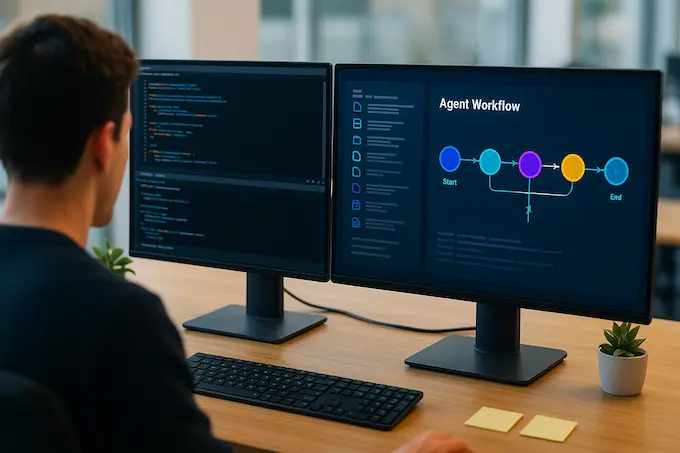
Anthropic’s Claude Sonnet 4.5 is tuned for practical work. It codes well, uses tools cleanly, and keeps long projects on track. Claude Code now adds checkpoints for instant rollbacks, a sharper terminal, and a native VS Code extension. The API gains context editing and memory so agents can survive messy, multi hour workflows. Inside chats, Claude can execute code and generate files, including spreadsheets and slides. For developers, the company released the Claude Agent SDK, the same scaffolding behind Claude Code.
Benchmarks back the claim. Sonnet 4.5 leads OSWorld for real computer use and posts strong results on SWE-bench Verified for real software fixes. Anthropic also invested in safety with stronger defenses against prompt injection and a tighter system card. The model ships at the same price as Sonnet 4, which keeps adoption simple for teams watching cost. For readers tracking AI News October 3 2025, this is the week Claude became an enterprise default.
2. OpenAI Unveils Sora 2, Physics-Smart Video Generator, Social Cameos App
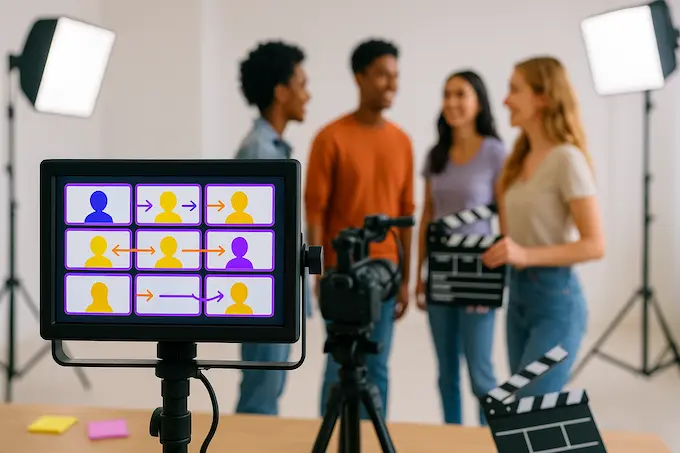
Sora 2 leans into world simulation. It tracks cause and effect with fewer reality bends. Missed shots bounce, bodies keep believable weight, and multi shot directions hold together. The model spans realistic, cinematic, and anime styles, with synchronized dialogue and sound effects. Think of it as LLM era coherence for video. OpenAI says better pre training and post training on large video data built that fidelity.
The headline is personal cameos. After a brief verification, you can place your likeness and voice inside scenes. OpenAI is shipping an invite based iOS app for creation and remixing, with steerable recommendations and wellbeing controls. Teens get tighter limits and stricter permissions. Parents can cap scrolling and manage direct messages. Access begins in the United States and Canada with web invites to follow. The message is simple. Video generation is moving from cool clips to believable stories that people make together.
3. OpenAI Debuts ChatGPT Parental Controls, Links Teen Accounts, Safety Alerts
Families can now link a parent account with a teen’s ChatGPT profile and tune settings for age appropriateness. Parents can set quiet hours, disable voice, turn off memory, block image tools, and opt out of model training. Linked teen accounts receive stronger protections against sensitive content and cannot loosen them on their own. A notification pipeline escalates signs of acute self harm to trained reviewers, with alerts to parents unless they opt out.
The update lands alongside a parent resource hub and teen settings in Sora. OpenAI plans to roll out an age prediction system so teen safeguards apply when the user appears under 18. The controls reflect input from researchers, advocacy groups, and state officials. For AI news today, the bigger shift is cultural. Responsible defaults are becoming a product feature. In the stack of AI News October 3 2025, this gives households real levers, not just guidance.
4. OpenAI Details Hard-Line Strategy To Stop AI-Fueled Child Exploitation
OpenAI published how it prevents and responds to child sexual exploitation across text, images, audio, and video. Policies ban sexualization of minors, grooming, underage roleplay, and access to restricted goods. Attempted uploads are hash matched against known material, scanned by Thorn’s classifier for novel content, and reported to NCMEC. Offending accounts are banned, and developer apps with repeated violations are removed. The company says dataset sourcing excludes and reports confirmed CSAM.
The system includes context aware classifiers, abuse monitoring, and human expert review for edge cases. OpenAI is collaborating with lawmakers and advocates on frameworks that balance reporting with privacy. Red teaming with illegal content is not permitted, which complicates evaluation, so the company backs protective legislation for responsible testing and disclosure. The signal for builders is clear. Content safety is part policy, part infrastructure, and part discipline in how models are trained, shipped, and observed.
5. One Battlefield, Two Fronts: Cybersecurity And Information Integrity Converge
Attackers now blend technical intrusions with cognitive manipulation. They phish inboxes, then seed rumors that steer behavior. The result is a single risk surface that spans systems and minds. Cybersecurity brings threat intelligence, kill chains, and hunt teams. Information integrity brings behavioral science, segmentation, and narrative analysis. The winning defense borrows from both. Track adversary tactics, then counter them early, upstream of viral content and before malware lands.
Teams can start by unifying visibility. Put indicators from networks next to signals from social spaces. Expand frameworks to include seeded rumors, identity spoofing, and deepfake operations. Add at risk audience segmentation to awareness programs. Build joint playbooks for protective controls and disruptive actions. For readers scanning AI News October 3 2025, the takeaway is practical. The same campaign should not win twice, once by breaching your stack, then by breaching your trust.
6. Samsung And OpenAI Strike Stargate Pact: Chips, Cloud, Floating Datacenters
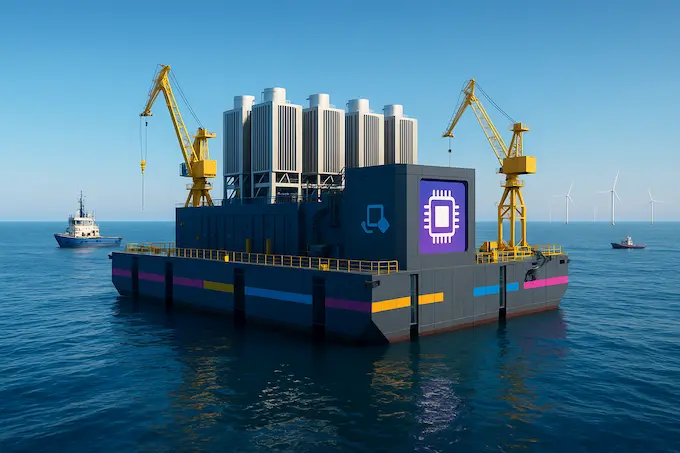
Four Samsung companies signed a letter of intent with OpenAI to accelerate hyperscale AI infrastructure. Samsung Electronics brings memory at unprecedented volumes and advanced packaging to pair system logic with high bandwidth memory. Samsung SDS will co design and operate Stargate class data centers and resell OpenAI services in Korea. Samsung C&T and Samsung Heavy Industries will explore floating data centers, power plants, and control hubs to ease land, cooling, and grid constraints.
The collaboration positions Samsung as an end to end provider, from wafers to oceanside platforms. For OpenAI, it secures long term compute and memory for rapidly growing models. Floating platforms remain complex to design and regulate, yet they fit markets where space and energy are tight. This is an infrastructure story with national ambition. It is also a template for how chip, cloud, and construction converge when demand outgrows conventional sites.
7. Oncology AI Surges, 27.8% CAGR To 2029, Multimodal Diagnostics Mainstream
A new market forecast projects AI in oncology to add USD 7.54 billion from 2024 to 2029 at a 27.8 percent CAGR. The demand driver is simple. Cancer care generates complex, multimodal data, and precision medicine needs integrated views. Vendors range from platform giants to focused med-AI firms across imaging, pathology, and genomics. Software and services anchor the opportunity in breast, lung, kidney, and long tail indications.
Two technical waves stand out. First, multimodal models that fuse radiology, pathology, genomics, and notes into stronger diagnostics and trial stratification. Second, workflow aware deployments that fit tumor boards and routine care. The edge goes to tools that deliver measurable throughput gains, faster time to treatment decisions, and auditable outputs that pass regulatory review. The arc points toward earlier detection and treatment matching, which is the real metric that matters for patients and payers.
8. ByteDance’s Hyper-Real Video And Image Models Raise The Deepfake Stakes
ByteDance is gaining ground with Seedance for video, Seedream for images, and a fast growing LLM called Doubao. Creators highlight style consistency, physics that feel right, and strong prompt adherence. Third party platforms often find lower costs at similar or better quality, which is pushing adoption in the United States through intermediaries. Policy checks block some misuse, yet realistic outputs still slip through and can fuel misinformation.
Copyright and likeness concerns are mounting. Users post celebrity lookalikes and comic book characters that sit in a gray zone. Studios are suing Chinese startups for alleged mass infringement. U.S. lawmakers are pushing rights of publicity bills. Advocacy groups call for media literacy and provenance standards, not just model restrictions. For AI News October 3 2025, this is a competitive and ethical inflection point. Better generation demands better watermarking, disclosure, and enforceable platform rules.
9. AI Targets Brain Metastases, With Gains In Segmentation, Diagnosis, And Prognosis
A systematic review distilled 2,830 recent papers to 32 full text studies on AI for brain metastases. The focus is practical. Automated segmentation to count and measure lesions, differential diagnosis to separate metastases from other findings, and prognostic models to guide surveillance and treatment. Given that 10 to 40 percent of cancer patients develop brain metastases, even small workflow wins matter across radiosurgery, oncology, and neurosurgery.
Segmentation improves reproducibility and feeds radiosurgery planning. Diagnostic assistance synthesizes features across modalities and reduces ambiguity in complex presentations. Prognostic tools estimate progression risk and flag likely emergence of new lesions. Integration is still early, and rigorous validation remains essential. Yet the direction is clear. When AI outputs connect cleanly to dose planning, surgical candidacy, and systemic therapy, care teams make faster, better aligned decisions. That is the bridge from algorithm to action that will define clinical value.
10. Citi Sees More Upside For Nvidia As AI Capex Surges And Rubin Roadmap Holds
Citi raised its Nvidia target to 210 dollars after meetings with management and a read on product cadence. The firm highlights the Rubin CPX GPU and a steady one year release rhythm. A separate team lifted 2026 hyperscaler AI capex to 490 billion dollars and 2029 to 2.8 trillion. The thesis is scale. Enterprises are moving from pilots to production, and hyperscalers are building ahead of demand.
Nvidia’s deals with OpenAI and Intel do not change roadmap priorities. Intel pairing is framed as optionality for x86 environments, not a foundry pivot. Citi estimates AI compute will add 55 gigawatts of power capacity by 2030. If that spending lands, leadership in GPUs, systems, and networking pays off. For readers of AI News October 3 2025, the key is cadence. Annual launches plus robust networking stack equals durable share, if supply and power keep up.
11. Precision Mental Health Moves From Concept To Clinic, Digital Twins
A Stanford symposium spotlighted precision mental health built on three pillars. Brain circuit biotypes for depression that forecast treatment response, AI powered digital twins that simulate patient trajectories, and multimodal ambient sensing that fuses voice, video, movement, and questionnaires to triage and track risk. The aim is straightforward. Replace trial and error with probabilistic guidance and use data to support better decisions between visits.
Clinicians already see AI in the therapy room as a third participant. People bring transcripts to sessions. New state laws are shaping professional use. The message from researchers is balanced. Keep human judgment, empathy, and accountability at the center, and use models to expand options and catch blind spots. Privacy, safety, and escalation paths are non negotiable. If workflows integrate cleanly, precision approaches can improve outcomes while making scarce clinician time more effective.
12. AI In Teacher PD Empowers Educators, Evaluations Ignore System Changes
A systematic review of 16 studies shows AI infused teacher professional development tends to put educators in the lead. Tools assist reflection, planning, and classroom transfer while preserving professional judgment. Designs favor data driven personalization, early use of LLMs as coaching companions, and analytics that adapt to a teacher’s goals. Most targets are in service K-12 educators, often in STEM.
The gap is evaluation. Programs measure knowledge, confidence, or practice shifts, yet rarely assess school level change or student outcomes over time. The playbook is clear. Tie AI features to explicit instructional design, pair analytics with human coaching and peer communities, and plan for privacy and integration. For AI News October 3 2025, the takeaway is agency. Tools should raise teacher leverage, not replace it, and success should be measured in sustained student learning, not just workshops completed.
13. Stanford AI Lab Highlights 20+ CoRL 2025 Papers, No Catalyst
Stanford’s AI Lab will present more than 20 papers at CoRL 2025 in Seoul. The roundup page links accepted work, videos, and contacts. This matters to researchers scouting fresh ideas in manipulation, perception, planning, locomotion, and hardware. It is not a product reveal or partnership announcement and it is not a direct trigger for equities or tokens.
If you invest, watch for artifacts after the conference. Code, datasets, or ablations that reduce data needs, improve sim to real transfer, or enable longer horizon planning on smaller footprints can shift cost curves. Those details, not the headline, tell you whether training clusters grow, networking needs change, or edge inference becomes viable. Until then, treat this as a watchlist update and check back when authors ship reproducible work that survives scrutiny.
14. Anthropic Touts Claude Sonnet 4.5 Workhorse With 30 Hour Autonomy
Anthropic’s message to CIOs is durability. Claude Sonnet 4.5 reportedly codes on its own for up to 30 hours, keeps context across long projects, and controls computers reliably for spreadsheet fills, file operations, and software navigation. The pitch de emphasizes splash and leans on practical autonomy, instruction following, and guardrails for regulated environments.
External coverage points to sustained runs that produced functioning apps with fewer stalls. The model’s stronger safety behaviors matter for adoption in banks, healthcare, and government. The question is total cost of ownership, integration with identity and data controls, and cooperation with existing toolchains. In a market where assistants now act like agents, endurance and policy fit beat flashy demos. That is the ground game that decides whether pilots turn into deployments with measurable productivity gains.
15. AI Designs First Working Genome, With Lab-Made Phages That Kill E. Coli
A bioRxiv preprint reports two generative models, Evo 1 and Evo 2, designed hundreds of bacteriophage genomes, sixteen of which yielded viable viruses that infect E. coli. Several killed bacteria faster than ΦX174, and mixes suppressed ΦX174-resistant strains. The models trained on billions of nucleotide pairs and steered novelty with ΦX174 as a guide. Human pathogens were excluded, and phages do not infect people.
If validated, this accelerates phage therapy by proposing candidate matches when time is critical. Control is essential so engineered phages do not harm beneficial microbes or spread unwanted genes. Beyond infectious disease, AI designed microbes could boost biomanufacturing and help decode larger genomes. It is early and not peer reviewed. Still, the milestone is notable in AI News October 3 2025. Generative models can now propose coherent, testable genomes that work as living systems.
16. Hollywood Recoils, Agents Court AI Actress Tilly Norwood, Consent Backlash
Reports say multiple agencies are courting Tilly Norwood, a photoreal performer built by Eline Van der Velden’s studio. The pitch to represent a synthetic “actor” hit a nerve. Celebrities called it a threat to human connection, and SAG-AFTRA issued a sharp response. The union argues synthetics leverage unconsented training data and risk replacing performers without compensation, reviving unresolved strike era tensions.
Van der Velden frames Tilly as art and experimentation, not a replacement. Critics point to optics and equity. Who grants consent for data sources, and who gets paid if composites draw from many faces. What do contracts, residuals, or moral clauses look like for someone who never tires or ages. The near term test is whether agencies treat synthetics as novelty, new genre, or direct competitor. Studios will need clear labels, provenance, and enforceable guardrails before this scales. U.S. lawmakers are pushing rights of publicity bills.
17. U.S. Commerce Unit Says DeepSeek Lags On Performance, Cost, And Security
NIST’s Center for AI Standards and Innovation evaluated Chinese lab DeepSeek’s models and found they trailed U.S. peers across performance, cost, and security on 19 benchmarks. The widest gaps were in software engineering and cyber tasks. A U.S. reference model averaged 35 percent lower cost at similar performance on 13 tasks. The report also flags content governance risks, noting a higher incidence of state aligned narratives.
Security warnings are stark. In agent simulations, evaluated DeepSeek models were far more likely to follow malicious instructions, leading to phishing and credential exfiltration in sandboxes. Jailbreak rates were high under common prompts. The center positions itself as a federal contact for testing and best practices. The enterprise takeaway is practical. Weigh provenance, cost, and safety hardening alongside accuracy and expect tighter U.S. standards as AI regulation news moves from talk to policy.
18. Real-Time Audit Finds Top AIs Shifted On Election Answers And Tuned To User Cues
A preprint tracked more than 16 million answers to 12,000 election questions asked daily across 12 models during the 2024 U.S. race. It found abrupt shifts in behavior, including synchronized pivots likely tied to behind the scenes guardrail changes. Models tailored framing to implied user demographics while keeping headline facts, a form of sycophancy that nudges tone without flipping truth claims.
Most systems refused to predict winners, so researchers inferred implicit forecasts by aggregating answers to exit poll style prompts. That revealed contradictions across issues. The broader lesson is volatility and opacity. AI systems mediate political information at scale, yet the public rarely sees what drives day to day changes. The authors call for continuous global monitoring, transparent change logs, and stress tests of LLMs used for polling and forecasting. Treat them as evolving intermediaries and validate claims against trusted sources.
19. SME Study Says AI Can Be A Lifeline Or A Fault Line In Crises
A new study argues AI can both boost resilience and widen gaps among small and medium enterprises. UK evidence from COVID era disruptions shows that firms with skills, infrastructure, and capital used AI and IoT to keep operating and reach new customers. Others struggled with digital literacy, data stewardship, and platform lock in. The divide today is more than connectivity. It is proficiency, process fit, and speed of adaptation.
The playbook for inclusive transformation is pragmatic. Link AI to explicit process goals, like reducing waste or stabilizing cash flow. Pair analytics with human oversight and peer networks. Standardize data practices for privacy and auditing. Policymakers can back micro firms with targeted grants, shared infrastructure, and vendor neutral procurement. Measure outcomes beyond adoption counts. Track equity of access and resilience gains. That is how AI becomes a shock absorber rather than a stress multiplier.
20. Video AIs Go Zero Shot, With Google’s Veo 3 Showing Early Visual Reasoning
A research report on Veo 3 shows broad zero shot behavior across perception and manipulation tasks without task specific heads. The model handled object segmentation, edge detection, image editing, affordance recognition, and physics reasoning by prompt alone. It also showed early “chain of frames” planning, solving mazes and symmetry puzzles by maintaining a latent plan over time. The jump from Veo 2 to Veo 3 suggests steady gains as training scales.
Specialist systems still win on benchmarks, and qualitative success rates are not standardized leaderboards. Yet the unification trend is visible. A single generative objective is starting to cover many vision problems. That has practical implications for robotics, video editing, simulation, and assistive tools. For AI News October 3 2025 readers, the signal is clear. Video models are moving from pretty clips to general purpose vision engines that reason over time.
21. Apple Opens On Device AI With Foundation Models, Offline Features
Apple’s Foundation Models framework arrives with iOS 26, iPadOS 26, and macOS 26. It lets apps call a 3-billion parameter language model on device for free, offline inference. Swift integration supports guided generation for structured outputs and tool calling so the model can fetch app data before answering. The pitch is privacy, speed, and reliability inside familiar apps without cloud round trips.
Early partners show how this lands. Health and fitness apps turn plain English into structured workouts, generate compassionate prompts, and summarize progress locally. Education apps explain concepts in level appropriate language and spin up new exercises. Productivity tools parse dates, draft projects, and answer questions about your notes. For developers, the upside is zero inference bills and native APIs. For users, it is fast, private assistance woven into routines. This is quiet, meaningful lift rather than a headline demo.
22. Disney Forces Character.AI To Remove Fan Bots, Raising IP Questions
Disney sent a cease and desist letter to Character.AI over unauthorized bots that mimicked studio characters. The platform removed a wide range of Disney related personas and said it acts quickly on rightsholder reports. The clash sits at the boundary between participatory culture and enforceable rights. Fan made interactive characters are closer to commercial products than fan art, which raises copyright, trademark, and publicity rights all at once.
Expect more formal licensing deals, walled garden experiences, and stricter filters on names and likeness. Platforms will likely add verified official bots, clearer labels, and faster takedown channels for major brands. For builders, the lesson is practical. If your feature leans on familiar IP, secure rights, build rights aware tooling, and label clearly. The culture loves remix. The law protects provenance and pay. Getting both right is what keeps creative platforms open for fans and safe for companies.
23. Google Turns Search Into A Visual Conversation, Shoppable From The First Prompt
Google’s updated AI Mode lets you speak an idea, upload a photo, or snap something on the fly, then refine visually. It blends Lens and Image Search with Gemini’s multimodal understanding. A new “visual search fan out” runs multiple queries behind the scenes and parses primary subjects and secondary details. You can even search within a specific image and ask follow ups about what you see.
Shopping fits into the same loop. Say “barrel jeans that aren’t too baggy” and jump straight to retailer pages. Results come from the Shopping Graph with billions of listings updated constantly. The experience reduces friction between inspiration and transaction while keeping provenance visible. For creators and merchants, metadata and images matter more because the model reads nuance in both. For readers of AI News October 3 2025, this is search turning into a creative canvas that understands vibe and intent.
24. Global $1M AI Film Award Opens, Requires 70% Google-AI Footage By Nov. 20
Google and the 1 Billion Followers Summit launched a short film competition with a million dollar prize. Submissions must run 7 to 10 minutes, include English subtitles, and meet a 70 percent threshold for footage made with Google’s tools like Gemini, Flow, Veo 3, and Nano Banana. The goal is to showcase what on platform multimodal tools can do in the hands of storytellers.
Two briefs guide entries. “Rewrite Tomorrow” calls for optimistic futures. “The Secret Life of” invites intimate stories from overlooked places. A jury of technologists and filmmakers will review narrative clarity, responsible use of generative tools, and attention to rights and provenance. The constraint is part challenge, part tutorial. It nudges creators to learn a stack where preproduction, rendering, and finishing can be steered conversationally. That is how new pipelines become habits rather than one off experiments.
25. Google Centers Home On Gemini With App, Devices, Premium Plan
Google is rebuilding the smart home around a conversational AI tuned for shared households. “Gemini for Home” replaces Assistant on displays and speakers, upgrades compatible Nest devices, and powers a redesigned Google Home app that is faster and more coherent. The aim is collaboration, not command and control. Multiple users, clearer context, and routines that feel natural rather than scripted.
New Nest Cams and a Doorbell arrive with better image quality and scene understanding. A Google Home Speaker debuts with conversations that sound more fluid. A Home Premium plan unlocks the most advanced features across devices and bundles with Google’s higher AI tiers. Partners will add more form factors. For AI News October 3 2025 readers, the move is simple to parse. If early access proves responsive and reliable, the helpful home may finally feel helpful.
Closing
The week confirms a simple truth. Great AI work blends strong engineering, thoughtful guardrails, and a bias for results over theater. If you felt the ground shift under your stack, you’re not imagining it. The tools are getting steadier, and the stakes are getting higher. File this edition of AI News October 3 2025 where your strategy lives, then turn one insight into action.
Choose one idea and run a tight pilot. Fold a new capability into a workflow, pair it with a clear success metric, and review the outcome in seven days. Small loops beat big promises. If you need a nudge on what to try first, the highlights from AI News October 3 2025 are a solid menu.
If this saved you a few hours, send it to a teammate who ships. Subscribe for the next roundup, drop a comment with your hardest open question, and tell us what you want measured next. We’ll keep tracking the signal so you can keep building, one smart step at a time, with AI News October 3 2025 as your weekly compass.
If this brief sharpened your view of AI news this week October 2025, share it with a teammate, then pick one idea to pilot in the next 48 hours. Subscribe for the next drop of Top AI news stories and practical playbooks that turn Artificial intelligence breakthroughs into working wins.
- Anthropic: Claude Sonnet 4.5
- OpenAI: Sora 2
- OpenAI: Parental Controls
- OpenAI: Combating Abuse
- World Economic Forum: Cybersecurity & Integrity
- Samsung + OpenAI Partnership
- AI in Oncology Market
- Time: ByteDance SeeDance
- Frontiers in Medicine: 2025 Study
- Morningstar: Nvidia Stock Outlook
- Forbes: AI in Mental Health
- ScienceDirect Article
- Stanford AI: CoRL 2025
- Bloomberg: Anthropic Enterprise Push
- BioRxiv: 2025 AI Study
- Fortune: AI Actress Debate
- NIST: DeepSeek Evaluation
- arXiv: 2509.18446
- ScienceDirect Article
- arXiv: 2509.20328v2
- Apple: Foundation Models
- NBC: CharacterAI & Disney
- Google: Search AI Updates
- Google: AI Film Award
- Google: Gemini Home Launch
1) What Is Claude Sonnet 4.5 And Why Are Developers Excited?
Claude Sonnet 4.5 is Anthropic’s newest model for real work, with stronger coding, tool use, and long running tasks. It ships with a VS Code extension, checkpointed Claude Code, and an Agent SDK so teams can build workflow aware assistants, as covered in AI News October 3 2025.
2) What Did OpenAI Launch With Sora 2 And How Safe Is It?
Sora 2 generates higher fidelity video with better physics, synchronized audio, and multi shot consistency, plus an invite only iOS app for creation and remixing. Users can opt in to verified cameos with consent controls and moderation, which is why it headlines AI News October 3 2025.
3) How Do The New ChatGPT Parental Controls Work For Teens?
Parents can link accounts to enforce stricter defaults, set quiet hours, disable voice or images, turn off memory, and opt out of training on teen chats. An age prediction system and risk alerts round out the safety stack featured in AI News October 3 2025.
4) What Is OpenAI’s Plan To Combat Child Exploitation Content?
OpenAI combines policy bans, dataset hygiene, live monitoring, hash matching, partner classifiers, and mandatory NCMEC reporting, with immediate account bans for violations. That layered approach to safety is a core policy update in AI News October 3 2025.
5) What Does The Samsung–OpenAI Partnership Actually Cover?
Samsung Electronics, SDS, C&T, and Heavy Industries signed an LOI with OpenAI spanning memory supply, data center design and ops, and research into offshore or floating facilities. The goal is hyperscale capacity for future models, a major infrastructure story in AI News October 3 2025.
6) Why Are ByteDance’s Seedance And Seedream Getting So Much Attention?
Creators and platforms report strong quality, style consistency, and competitive pricing, which is pushing adoption through tools like CapCut and partners. The flip side is higher risk of deepfakes and copyright disputes, a theme tracked in AI News October 3 2025.
7) What Changed In Google Search With The New Visual AI Mode?
You can start with a photo or a vague idea, then refine through a grid of images while Gemini parses both pixels and language. Shopping plugs in through the Shopping Graph for direct buying, a practical upgrade highlighted in AI News October 3 2025.
8) Why Did Nvidia Feature In Market Notes And Forecasts This Week?
Citi lifted its price target and projected higher hyperscaler AI capex, citing Nvidia’s Rubin CPX roadmap and annual cadence. The view is that GPU, systems, and networking leadership holds in a rising spend cycle, as outlined in AI News October 3 2025.