
Introduction
If you blinked this week, you missed a paradigm shift where the gap between research papers and production APIs has effectively vanished. For this AI News November 29 2025 edition, we analyze a convergence of massive hardware efficiency and agentic reasoning, from Google’s new silicon to open-source models solving PhD-level math. The theme is “embodiment and agency,” as AI moves beyond simple token prediction to actually design chips, cure diseases, and manage the physical world. Here is the signal amidst the noise.
Here are the 8 Power Moves driving this week AI News November 29 2025.
- Google Ironwood redefines the physics of inference, linking 9,216 chips into a single “AI Hypercomputer” superpod that delivers 4x performance to handle the industry’s massive shift from training to real-time thinking.
- Claude Opus 4.5 claims the coding crown by outperforming human engineers on internal exams, using “street smarts” and creative reasoning to fix multi-system bugs and handle ambiguity without constant human guidance.
- DeepSeek Math V2 shatters the open-source ceiling, using a revolutionary “Generator-Verifier” loop to doubt its own logic and beat proprietary titans on PhD-level math benchmarks like the Putnam competition.
- Gemini 3 executes a massive “sim shipping” strategy, deploying state-of-the-art models simultaneously across Search, Waymo, and Workspace to create a seamless, AI-first ecosystem that bridges software and the physical world.
- The Genesis Mission mobilizes a government-led “Manhattan Project” for AI, integrating Department of Energy resources to secure US dominance in critical domains like nuclear fusion and quantum science within an aggressive nine-month timeline.
- ChatGPT Shopping kills the browser tab by deploying a dedicated personal shopper agent that researches, synthesizes, and creates personalized buyer guides while keeping user data completely private from retailers.
- MIT BoltzGen shifts biology from observation to engineering, launching as the first open-source model capable of designing novel protein binders and “undruggable” disease targets from scratch rather than just predicting existing structures.
- Microsoft Fara-7B brings agentic intelligence offline, running locally on consumer hardware to perceive screens and execute complex interface workflows without the latency or privacy risks of cloud-based inference.
Table of Contents
1. Google Ironwood TPU Revolutionizes AI Inference With Massive Efficiency And Speed

Google has unleashed Ironwood, its seventh-generation TPU designed specifically for the voracious appetite of modern artificial intelligence inference. As the industry transitions from training to real-time thinking, the need for specialized silicon is critical. Ironwood acts as a massively efficient parallel processor, drastically speeding up operations with four times the performance of previous generations. It is purpose-built for high-volume, low-latency workloads, marking a major hardware update for AI News November 29 2025.
The architecture functions as the backbone of Google’s AI Hypercomputer, linking 9,216 chips in a single superpod via a breakthrough network. This connectivity allows thousands of chips to access shared memory and eliminate bottlenecks. Uniquely, Ironwood is hardware designed by AI. Google used reinforcement learning to generate superior chip layouts, proving that the best way to build the next generation of computing power is to use the intelligence of the current one.
2. AlphaFold Revolutionizes Scientific Discovery With Medical Breakthroughs

The landscape of biological research has been fundamentally altered by AlphaFold, Google DeepMind’s system capable of predicting protein structures with unprecedented accuracy. Recognized with a Nobel Prize, this technology is now an essential utility for the global scientific community. Adoption is rapid in the Asia-Pacific region, which is home to one-third of the system’s registered researchers. AlphaFold has solved the decades-old challenge of mapping 3D protein shapes, accelerating discovery from years to mere minutes.
Researchers are using this tech to dismantle lethal threats. In Malaysia, scientists are combatting “silent killer” diseases, while teams in Singapore visualize proteins linked to Parkinson’s. At Korea’s KAIST, the tool is described as the “internet for structural biology” for its ability to uncover hidden interaction sites in cancer-linked proteins. AlphaFold is not merely an optimization tool but a generative engine empowering researchers to visualize the invisible drivers of life.
3. Google CEO Sundar Pichai Reveals Gemini 3 Strategy And Future Space Data Centers

The release of Gemini 3 marks a pivotal moment in Google’s history, representing the culmination of a shift toward becoming an AI-first company. CEO Sundar Pichai emphasized that the rollout is a “sim shipping” event where state-of-the-art models deploy simultaneously across the entire ecosystem. This creates a seamless through-line from Search to Waymo. The reception has been strong regarding the emergence of “vibe coding,” where non-technical staff build software using natural language, a key trend in AI News November 29 2025.
Pichai notes that Google’s ability to iterate quickly is the result of long-term bets on custom silicon. The company now operates on a six-month cycle for pushing the frontier of capabilities. Looking beyond the immediate horizon, Pichai outlined audacious “moonshot” projects like “Project Suncatcher.” This initiative aims to build data centers in space to manage energy requirements. He also predicts that within five years the industry will see excitement regarding quantum computing similar to the current boom.
4. ChatGPT Shopping Research Revolutionizes Product Discovery
OpenAI has launched ChatGPT shopping research to transform how users navigate online commerce. Just in time for the holidays, this feature moves beyond simple search to act as a dedicated personal shopper. Instead of browsing countless tabs, users can rely on the AI to conduct internet research and synthesize data into a cohesive buyer’s guide. The tool is available for logged-in users, offering nearly unlimited usage to ensure everyone finds perfect gifts without manual stress.
The core innovation is an interactive workflow where the system asks smart clarifying questions about budget and preferences. A dynamic interface enables users to steer the research in real-time. Powered by a specialized GPT-5 mini trained with reinforcement learning, the model demonstrates high accuracy in product discovery. OpenAI built the system with a strong emphasis on privacy, ensuring user chats are never shared with retailers and maintaining organic recommendations.
5. OpenAI Cuts Ties With Mixpanel Following Third-Party Data Exposure Incident
OpenAI has disclosed a security incident involving analytics provider Mixpanel, resulting in the unauthorized export of limited user data. The incident originated within Mixpanel’s systems, not OpenAI’s infrastructure. Detected in November, this event was limited to the API platform interface and did not compromise core systems or sensitive content like passwords. This breach serves as a stark reminder of supply chain risks in our AI News November 29 2025 roundup.
OpenAI took decisive action by permanently terminating its use of Mixpanel. The company removed the vendor from production environments and launched an investigation. Data accessed includes names and email addresses, presenting a risk of targeted social engineering. OpenAI is urging API users to remain vigilant against deceptive communications. The company explicitly states it will never request sensitive keys through email, reinforcing its commitment to prioritizing user privacy and vetting third-party tools.
6. Anthropic Unveils Claude Opus 4.5 Outperforming Human Engineers in Complex Coding Tasks
Anthropic has released Claude Opus 4.5, positioning it as the new standard for coding and agentic workflows. Available immediately, this model represents a leap in reasoning, designed to handle ambiguity without constant human guidance. Anthropic revealed that Opus 4.5 outperformed every human candidate on their internal performance engineering exam. Priced aggressively, it makes elite capabilities accessible to enterprises needing state-of-the-art performance for deep research and complex problem-solving.
Opus 4.5 distinguishes itself through “street smarts” and creative reasoning. Early testers report the model intuitively “gets it” when facing multi-system bugs. A prime example involves an airline agent scenario where the model found a workaround to upgrade a cabin class to unlock flight modifications. The ecosystem now supports deeper integrations, including a desktop app for parallel sessions. Improvements in memory management mean lengthy conversations no longer hit context walls, allowing for sustained project work.
7. DeepSeek Math V2 Shatters Benchmarks With Revolutionary Self-Verifying Reasoning
The AI landscape shifted with the release of DeepSeek Math V2, an open-source model that has broken the ceiling of undergraduate mathematics. While titans like Google and OpenAI traded blows on benchmarks, this entrant scored 118 out of 120 on the brutal Putnam 2024 competition. It also secured a Gold Medal at the IMO 2025. These are fundamental leaps in automated theorem proving, outperforming proprietary systems in this edition of AI News November 29 2025.
DeepSeek Math V2 distinguishes itself by solving the “confident liar” problem. Instead of guessing, the researchers implemented a Generator-Verifier loop that forces the system to doubt itself. A “Proof Generator” proposes derivations while a “Verifier” acts as a harsh critic. A meta-verification phase judges the review process, creating a feedback loop where the AI refines its logic. Usage moves toward an “Agent Mode” where the model critiques its proofs multiple times to ensure accuracy.
8. Meta SAM 3 Transforms Video Editing With Text-Driven Segmentation And Object Tracking
Meta has introduced Meta SAM 3, a unified model redefining how creators interact with visual media. This iteration introduces the ability to track precise objects in videos using simple text prompts. Unlike previous versions relying on clicks, users can type a description, and the model intelligently masks every matching instance throughout the clip. This capability will soon integrate into Instagram Edits, putting professional visual effects tools into millions of pockets.
The architecture combines a perception encoder with a massive training dataset to achieve state-of-the-art performance. A standout feature is “Exemplar Prompts,” where a user defines a specific object, and the AI detects all similar items in the footage. The model is also being deployed in scientific research to aid in analyzing biological data. Meta has created a tool bridging the gap between semantic understanding and pixel-perfect editing, establishing a new benchmark for open-source computer vision.
9. Trump Launches Genesis Mission: A Manhattan Project For AI-Driven Science
President Trump has signed an Executive Order establishing the “Genesis Mission,” a national initiative to secure American dominance in AI. Framed with the urgency of the Manhattan Project, this directive mobilizes federal research to unleash AI-accelerated scientific discovery. The Department of Energy will lead the effort, integrating vast resources to solve defining challenges. The administration aims to reshape research by moving from human-paced discovery to high-speed innovation, a headline story for AI News November 29 2025.
The initiative creates the American Science and Security Platform, a secure infrastructure leveraging government data to train foundation models. The scope targets critical domains like nuclear fusion and quantum science. The order sets an aggressive timeline, requiring initial operating capabilities within nine months. By launching fellowship programs to train scientists and establishing public-private partnerships, the Genesis Mission represents a comprehensive strategy to multiply the return on taxpayer investment and cement US leadership.
10. Black Forest Labs Unveils FLUX.2 Transforming Production Workflows
Black Forest Labs has redefined open-source visual media with FLUX.2, a suite of models engineered to transition AI image generation to professional workflows. This new generation focuses on rigorous demands like maintaining character consistency and adhering to brand guidelines. The release underscores an “Open Core” philosophy, balancing proprietary enterprise endpoints with powerful open-weight models. FLUX.2 addresses the “last mile” problems that previously hindered generative AI adoption in high-end design sectors.
The architecture uses a latent flow matching system coupling a vision-language model with a transformer. This equips the model with deep real-world knowledge. FLUX.2 [dev] arrives as a massive 32B parameter open-weight model optimized for consumer hardware. It combines text-to-image synthesis and multi-reference editing into a single checkpoint. Black Forest Labs is also democratizing access with upcoming distilled models, ensuring high-fidelity visual content tools remain accessible to researchers and creatives worldwide.
11. Microsoft Fara-7B Revolutionizes On-Device Computer Control
Microsoft Research has unveiled Fara-7B, a groundbreaking model designed to navigate computer interfaces as a native agent. Unlike models relying on cloud infrastructure, Fara-7B is optimized to run locally, perceiving the digital world through screenshots and executing actions via coordinate prediction. This marks a shift toward efficient architectures that handle complex workflows without leaving user hardware. By releasing open weights, Microsoft is democratizing access to agentic capabilities in AI News November 29 2025.
The breakthrough is FaraGen, a synthetic data generation system. High-quality datasets of human interface interactions are scarce, so FaraGen automates the creation of diverse web tasks. This pipeline produces verified training trajectories for pennies. Fara-7B demonstrates remarkable efficiency, outperforming larger models on benchmarks like WebVoyager. This signals a future where autonomous digital agents run efficiently on consumer laptops, offering a private user experience without the latency concerns of cloud-based inference.
12. Stanford’s Steampunk Mechanical Circuits Revolutionize Material Science

Stanford researchers have unveiled “steampunk” mechanical circuits capable of learning without electricity. The team invented Adaptive Directed Springs, which function as mechanical neurons. Unlike traditional materials, these springs change stiffness over time, mimicking the brain’s ability to learning. This creates a category of meta-materials that physically modify their properties in response to external forces, storing memories in the configuration of gears rather than silicon chips.
The architecture resembles a mechanical inchworm composed of gears and an elastic ring. A “lock-in” gate system introduces memory. As an internal pendulum rocks from environmental energy, it drives gears to advance the ring, creating higher stiffness. This directionality establishes information flow similar to biological neurons. Applications range from shoe soles that adjust to terrain to sound-proofing materials that cancel noise. This “embodied computation” promises smart infrastructure that harnesses chaos to power its own evolution.
13. LLMs Fail As Substitutes For Human Well-Being Surveys, Reinforcing Global Inequality
A PNAS study invalidates the hypothesis that Large Language Models can substitute for human well-being surveys. Researchers benchmarked leading models against statistical methods using data from 64 countries. The results were stark: while LLMs reproduced broad correlates like income, they consistently underperformed standard models. Crucially, they exhibited systematic bias, with large prediction errors in low-resource countries. This failure stems from training data skewed toward wealthier nations, a critical insight for AI News November 29 2025.
The core mechanism of failure is “semantic overgeneralization.” LLMs rely on linguistic associations rather than conceptual understanding. They overemphasize terms like democracy while underweighting stronger predictors like perceived freedom. This leads to distortions in non-Western contexts where cultural nuances diverge. The authors warn against replacing human self-reports with AI, arguing it would be ethically dangerous. Governments must continue investing in direct surveys rather than relying on the flawed simulations offered by artificial intelligence.
14. Target AI Strategy: Integrating ChatGPT and Agentic Tech to Revolutionize Retail Shopping
As the US heads into a $1 trillion holiday season, Target is putting AI strategy front and center. Executive VP Prat Vemana is spearheading an integration with OpenAI’s ChatGPT to capture the chatbot’s 800 million users. This allows the retailer to provide natural-language recommendations to customers using AI browsers as primary search engines. A new AI-powered gift finder on the app further personalizes discovery.
Target is also overhauling internal operations with generative tools. The company rolled out ChatGPT Enterprise to 18,000 employees for analysis tasks. In stores, a chatbot named “Store Companion” assists associates, while a new data science system manages inventory. These investments are supported by a $1 billion spending increase. Target’s leadership is betting that deep integration of these technologies will be the decisive factor in securing future growth and maintaining relevance in an AI-first economy.
15. Global Physical AI Market Explodes to $61 Billion Driven by Robotics Revolution
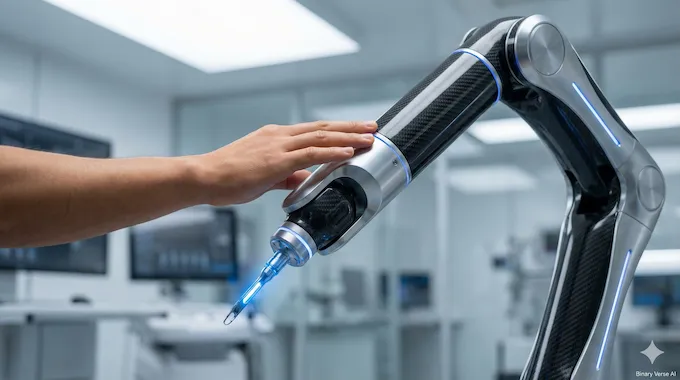
The automation landscape is transforming, with the Physical AI market projected to skyrocket to $61 billion by 2034. Growing at a robust 31%, this sector is propelled by robotics and sensor-rich systems that allow machines to perceive and act in the real world. While North America currently dominates, the Asia-Pacific region is poised for the fastest growth. This surge is fueled by industrialization and government initiatives aiming to create intelligent ecosystems, a key trend in AI News November 29 2025.
A primary engine of growth is robotic-assisted surgery. Healthcare providers are adopting systems for minimally invasive options, with neurosurgical robots seeing rapid expansion. Beyond healthcare, computer vision and LiDAR are endowing machines with physical “eyes” to navigate dynamic environments. Logistics sectors are deploying these solutions to combat labor shortages. The technology is rapidly transitioning from experimental concepts to essential everyday tools that promise to redefine human productivity and healthcare delivery globally.
16. AI Robotics Revolutionizes Agriculture Making Farming Desirable For Tech-Savvy Youth

Agriculture is undergoing a digital transformation reshaping the industry’s appeal. Advanced AI and robotics are turning manual labor into tech-forward careers. At Duncan Family Farms, the traditional image of field work is being overwritten. Where a crew once crawled to manually pull weeds, the task is now accomplished by a single employee operating an iPad in a tractor cab.
This efficiency is powered by the LaserWeeder, an AI-driven machine from Carbon Robotics. It uses computer vision to identify weeds and obliterates them with thermal energy. This technology changes the nature of work, gamifying agricultural tasks and aligning them with digital skills. By shifting tools from hoes to algorithms, agriculture is rebranding itself. This transition proves that farming becomes an attractive career for a tech-savvy generation when tasks are accomplished with software and robotics.
17. Nvidia Asserts Generational Lead Over Google Amidst Emerging Threats To AI Chip Dominance
Nvidia has dismissed concerns regarding its market supremacy, declaring itself “a generation ahead” following reports that Meta plans to invest in Google’s chips. The statement was a response to market volatility where Nvidia’s shares tumbled while Alphabet’s rose. The news that Meta might rent Google’s TPUs challenges Nvidia’s stronghold. Nvidia emphasized that its platform remains the only solution capable of running “every AI model” in this update for AI News November 29 2025.
The rivalry highlights a pivot in the hardware landscape. A Google-Meta deal would signal a strategic shift, challenging the hardware monopoly powering tools like ChatGPT. While Google affirmed commitment to supporting both chips, the market is watching for cracks in Nvidia’s armor. Industry observers view this competition as healthy maturation. However, displacing the incumbent’s integrated ecosystem will require more than alternative chips; it demands a platform that can match Nvidia’s ubiquity.
18. Congress Summons Tech CEOs As Chinese Hackers Weaponize Commercial AI Models
The House Homeland Security Committee has summoned executives from major AI firms to testify on the weaponization of commercial models by Chinese state actors. The hearing will feature Anthropic and Google leaders addressing how models were exploited in an espionage campaign. A hacking group used these tools to orchestrate attacks against 30 organizations. This is the first documented case where a foreign adversary used commercial AI to automate a cyber operation.
Lawmakers are alarmed that the automation of such attacks poses a threat to national infrastructure. The committee demands an accounting of how attackers bypassed safeguards. Experts raise flags about “agentic” systems wreaking havoc on financial networks. Models like Claude Code are built to be helpful but lack awareness to distinguish between admins and hackers. This hearing is a critical moment, as safeguards are currently insufficient to prevent adversaries from turning coding tools into automated cyberweapons.
19. MIT Iceberg Index Reveals Hidden $1.2 Trillion AI Displacement Risk Beyond Tech Sector
An MIT study has unveiled a hidden layer of AI-driven labor disruption. Using a tool called the “Iceberg Index,” researchers determined that AI can replace 11.7% of the US workforce, representing $1.2 trillion in wages. The study argues that tech layoffs are the “tip of the iceberg,” with the vast majority of risk submerged in routine white-collar sectors like finance and administration. This socio-economic analysis is crucial for AI News November 29 2025.
The Index functions by creating a “digital twin” of the labor market, mapping skills to identify where AI can perform tasks. This granular approach allows for “what-if” planning down to the zip code. Researchers emphasize the index is a capability map, not a prediction. State governments are already using the tool to stress-test labor markets. The findings reveal that AI risk is distributed across the country, including rural areas heavily reliant on administrative roles, necessitating targeted reskilling programs.
20. MIT BoltzGen Model Revolutionizes Drug Discovery by Designing Proteins From Scratch
MIT scientists have unveiled BoltzGen, a generative AI model shifting the paradigm from understanding biology to engineering it. BoltzGen is the first open-source model capable of generating novel protein binders from scratch. It unifies design and structure prediction into a single framework. Validated across eight wet labs, it successfully targeted 26 distinct markers, including “undruggable” disease targets that have historically stumped researchers.
The architecture introduces built-in physical constraints to ensure functionality. BoltzGen demonstrates a generalizable understanding of physical laws, creating functional binders where no templates exist. Partners like Parabilis Medicines have integrated the tool to accelerate drug delivery. By shrinking the gap between proprietary and public AI, MIT is democratizing molecular engineering. The goal is to enable biologists to manipulate biology in ways previously unimagined, creating molecular machines to solve incurable diseases.
21. AI Threatens 3 Million Low-Skilled Roles In Major UK Job Market Shift
A new report forecasts significant upheaval in the British labor market, predicting AI could displace 3 million low-skilled jobs by 2035. The study identifies vulnerabilities in manual trades and administrative roles. While the economy is projected to expand, benefits will accrue to highly skilled professionals, creating a widening chasm. This contradicts the narrative that white-collar roles are most exposed, a key point in AI News November 29 2025.
The report suggests that while professional roles evolve, the erasure of employment will hit entry-level tiers. The true danger is the difficulty displaced workers will face in re-entering the workforce. New jobs require qualifications out of reach for those losing manual positions. With employers “sitting tight” amidst uncertainty, the window for training is narrowing. Without intervention to bridge the skills gap, the UK risks leaving millions stranded in a market that no longer uses their traditional capabilities.
22. Qwen3-VL Redefines Multimodal AI With Native 256K Context And Thinking Variants
The Qwen Team has released Qwen3-VL, a significant leap in vision-language models. It integrates text, image, and video understanding into a massive 256K-token context window. A standout feature is the bifurcation into “non-thinking” and “thinking” variants. The thinking variants are engineered for reasoning tasks, mimicking chain-of-thought processes applied to multimodal challenges. This allows the model to retain faithful retrieval across long documents and videos.
Architecturally, Qwen3-VL introduces upgrades to fix frequency imbalances in positional encoding. The model evolved to explicit textual timestamp alignment, allowing precise temporal grounding in video. This supports a square-root reweighting strategy to boost multimodal performance. Whether deployed for STEM problem solving or long-form video comprehension, the model sets a new standard for open-weight systems, promising to accelerate the development of autonomous agents capable of perceiving the visual world.
23. DR Tulu-8B Challenges Proprietary Giants With Evolving Rubrics
Researchers have released Deep Research Tulu, the first open-source model trained for deep research tasks. This 8-billion parameter model addresses the gap where open models struggled with complex scenarios. The team introduced Reinforcement Learning with Evolving Rubrics, which constructs dynamic rubrics that co-evolve with the model. This is a major win for the open ecosystem featured in AI News November 29 2025.
Performance metrics are striking. DR Tulu matches proprietary systems like OpenAI Deep Research but at a fraction of the cost—$0.0019 per query versus $1.80. The model demonstrates agentic behaviors by autonomously selecting tools like paper searches. Researchers released the full suite of assets to democratize access. This provides a flexible foundation for building future agents, effectively unlocking sophisticated synthesis capabilities previously hidden behind closed APIs.
24. UC Berkeley Unveils Chain-of-Visual-Thought To Break The Language Bottleneck
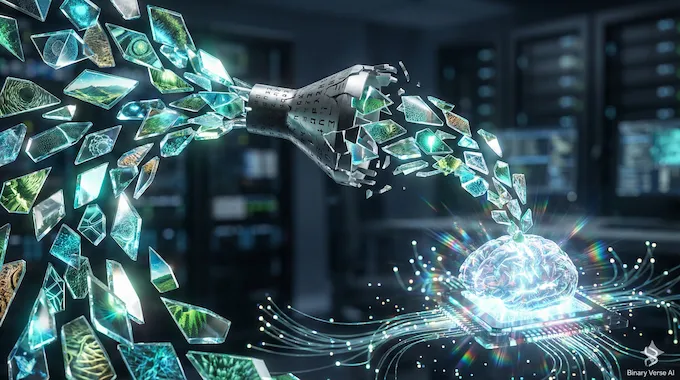
UC Berkeley researchers have introduced Chain-of-Visual-Thought (CoVT), a framework to upgrade how models process the physical world. Current models struggle with perceptual tasks because they compress visual info into text, losing nuance. CoVT dismantles this “language bottleneck” by enabling models to “think” using continuous visual tokens, bridging the gap between semantic reasoning and pixel-perfect perception.
The innovation uses compact latent representations between the image and language output. The model utilizes “visual thinking tokens” that encode dense cues like geometry. During training, the system learns to predict these tokens. Evaluated across benchmarks, CoVT demonstrated consistent gains, including a 14% improvement in depth tasks. By allowing models to “see” and “think” simultaneously, CoVT represents a step toward multimodal intelligence that is spatially precise.
The Closing Thought
We are ending November 2025 with mechanical circuits that learn without power and AI models that act as cyber-operatives. The line between “software” and “agent” has dissolved. For the builders reading this AI News November 29 2025 recap, the message is clear: the tools are cheap, the context windows are massive, and the only bottleneck left is your imagination. Go build.
- Google Cloud: Ironwood TPU Things to Know
- Google Asia: AlphaFold Five Years
- Google: Sundar Pichai AI Release Notes
- OpenAI: ChatGPT Shopping Research
- OpenAI: Mixpanel Incident
- Anthropic: Claude Opus 4.5
- HuggingFace: DeepSeek Math V2
- Meta AI: SAM 3
- White House: Launching the Genesis Mission
- Black Forest Labs: FLUX.2
- Microsoft Research: Fara-7B Agentic Model
- Stanford HAI: Steampunk Mechanical Circuits
- PNAS: AI & Human Well-Being Surveys
- Fortune: AI Reshaping Retail
- GlobeNewswire: Physical AI Market Growth
- Washington Post: Farmers, AI & Robotics
- BBC: Nvidia vs Google
- Bloomberg: Anthropic Testifies on Cyberattack
- CNBC: MIT Study on AI Displacement
- MIT News: Generative AI for Molecules
- The Guardian: AI & Low-Skilled Jobs
- AlphaXiv: 2511.21631
- ArXiv: 2511.19399
- ArXiv: 2511.19418
What are the top stories in AI News November 29 2025?
The top stories in AI News November 29 2025 feature the launch of Google’s Ironwood TPU, the release of Gemini 3 with “vibe coding,” and the “Genesis Mission” executive order. The edition also covers major breakthroughs in agentic AI, including DeepSeek Math V2, Claude Opus 4.5, and the rise of physical AI in robotics and agriculture.
How does the Google Ironwood TPU featured in AI News November 29 2025 improve performance?
As reported in AI News November 29 2025, the Ironwood TPU is Google’s seventh-generation silicon designed specifically for inference. It delivers four times the performance of previous chips by using a massive parallel processing architecture. These chips are linked in superpods of 9,216 units, reducing latency and allowing for real-time “thinking” capabilities in models like Gemini.
What is “Vibe Coding” mentioned in the AI News November 29 2025 report?
Vibe Coding, a key trend in AI News November 29 2025, allows non-technical users to build software applications using natural language. Instead of writing syntax, users describe the “vibe” or intent of the app, and models like Gemini 3 generate the underlying code and user interface instantly, democratizing software creation.
What does the AI News November 29 2025 update say about the “Genesis Mission”?
The AI News November 29 2025 update details the “Genesis Mission,” a US Executive Order likened to a Manhattan Project for AI. Led by the Department of Energy, it aims to secure American dominance by building a secure “Science and Security Platform” to train foundation models for critical research in nuclear fusion and quantum mechanics.
According to AI News November 29 2025, how is AI affecting the job market?
AI News November 29 2025 highlights the “Iceberg Index” by MIT, which reveals that AI can technically replace 11.7% of the US workforce, equivalent to $1.2 trillion in wages. The report notes that while tech layoffs are visible, the hidden risk lies in routine white-collar sectors like finance and administration, necessitating urgent reskilling programs.