

1. Introduction
You came here for signal, not noise. So let’s cut straight to the showdown that actually shapes your day at the keyboard. GPT-5 vs Sonnet 4.5 is the defining matchup of 2025, the one that decides whether your next refactor feels like flow or friction. OpenAI promises a unified system that plans and reasons with fewer mistakes. Anthropic claims a tireless coder that can hold a long thread of thought, and do it fast. This is the grudge match that matters across codebases, teams, and budgets.
If you want the broad landscape, our main guide to the best AI for coding covers that. Today we zoom in. GPT-5 vs Sonnet 4.5 is more than a benchmark duel. It is a question about workflow, pace, reliability, and value. You will see the hard numbers, the field notes from working developers, and a playbook that combines both models when it pays to mix tools. By the end you will have a clear call on GPT-5 vs Sonnet 4.5, and a plan you can ship with.
Table of Contents
2. The Tale Of The Tape: How GPT-5 And Sonnet 4.5 Compare On Paper
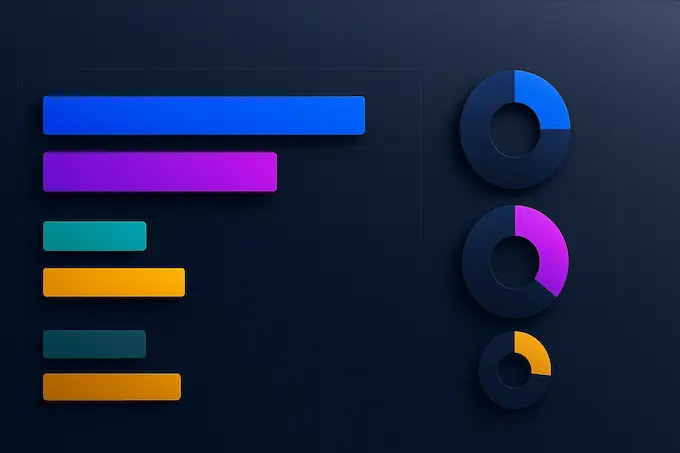
Benchmarks do not write production code, but they do reveal patterns. To ground GPT-5 vs Sonnet 4.5 in facts, start with third-party snapshots, then layer in official results where both labs claim leadership.
2.1 Third-Party Validation Snapshot
These leaderboards are noisy, yet they highlight where each model tends to win. This is the quick read you can bring to a stand-up when someone asks who is on top this week. It keeps GPT-5 vs Sonnet 4.5 honest.
| Benchmark | Rank 1 | Rank 2 | Rank 3 | Notable Placement |
|---|---|---|---|---|
| LiveCodeBench | GPT-5 Mini, 86.6% | GPT-5 Codex, 84.7% | OpenAI o3, 83.9% | Sonnet 4.5 Thinking appears around 73.0% in later slots |
| SWE-bench | Sonnet 4.5 Thinking, 69.8% | GPT-5 Codex, 69.4% | GPT-5, 68.8% | Tight cluster at the top |
| Terminal-Bench | Sonnet 4.5 Thinking, 61.3% | GPT-5 Codex, 58.8% | GPT-5, 48.8% | Sonnet leads interactive terminal tasks |
What it suggests. In GPT-5 vs Sonnet 4.5, Anthropic often edges terminal work and the stricter SWE-bench setup. OpenAI variants tend to top free-form coding leaderboards. That tension shows up again in the official numbers.
2.2 Official Benchmarks, Head-To-Head
The table below narrows to the two models you care about. Where a benchmark lists multiple variants, scores are mapped to the most relevant pairing. It keeps GPT-5 vs Sonnet 4.5 focused on what you can actually choose today.
| Metric | Sonnet 4.5 | GPT-5 | Winner |
|---|---|---|---|
| Agentic coding, SWE-bench Verified | 77.2% | 72.8% | Sonnet 4.5 |
| Agentic coding, parallel compute | 82.0% | 74.5% (Codex) | Sonnet 4.5 |
| Terminal-Bench, agentic terminal coding | 50.0% | 43.8% | Sonnet 4.5 |
| Tool use, Retail (tx2) | 86.2% | 81.1% | Sonnet 4.5 |
| Tool use, Airline (tx2) | 70.0% | 62.6% | Sonnet 4.5 |
| Tool use, Telecom (tx2) | 98.0% | 96.7% | Sonnet 4.5 |
| Computer use, OSWorld | 61.4% | — | Sonnet 4.5 by report |
| AIME 2025, with Python | 100% | 99.6% | Sonnet 4.5 by a hair |
| AIME 2025, no tools | 87.0% | 94.6% | GPT-5 |
| GPQA Diamond | 83.4% | 85.7% | GPT-5 |
| MMLU | 89.1% | 89.4% | GPT-5 |
| Visual reasoning, MMMU | 77.8% | 84.2% | GPT-5 |
| Finance Agent | 55.3% | 46.9% | Sonnet 4.5 |
Takeaway. The paper story is not binary. GPT-5 vs Sonnet 4.5 splits along a familiar line. Sonnet often wins structured agentic coding, terminal control, and tool orchestration. GPT-5 often wins raw reasoning, multimodal understanding, and math without tools. The question is not who wins a trophy. It is which model maps better to the way you ship software.
3. Hype Vs Reality: What Developers Are Actually Saying
Numbers are a compass. Repos are the terrain. In day-to-day usage, GPT-5 vs Sonnet 4.5 shows a clear pattern that keeps coming up in engineering chats, code review threads, and builder forums.
- Context handling and analysis. Many developers report that GPT-5 reads existing code more faithfully, keeps track of project architecture, and documents wiring with fewer misses. When used as a reviewer, it tends to call out gaps with specific file paths and function names. This is where GPT-5 vs Sonnet 4.5 feels like planner versus sprinter.
- Speed and confidence. Sonnet 4.5 is quick. It proposes a plan and starts patching. That speed is delightful when you want refactors or documentation updates. It can feel overconfident when it skips a helper that already exists or summarizes a repo from memory. In GPT-5 vs Sonnet 4.5, the trade often reads as fast answers versus slower, denser analysis.
- Looping behavior. Developers echo a shared frustration with repeated mistakes. Sonnet 4.5 can get stuck in familiar loops without strong guardrails. GPT-5 loops less often on architectural questions, yet it can still drift on long sessions without structure. This is not magic. It is tool behavior you can shape.
- Agentic tasks. Sonnet’s long-horizon claims sound impressive, and for automated terminal work they matter. GPT-5 tends to plan with more transparency on complex change sets. In this arena, GPT-5 vs Sonnet 4.5 turns into a question of which agent you trust to touch production scripts.
If you are here for an ai model comparison you can use, keep reading. The next section translates this field noise into a concrete call on complex refactors.
4. The Coding Showdown: Agentic Tasks And Complex Refactoring

Engineers do not live on benchmark charts. We fix brittle tests, migrate frameworks, and rip out subsystems that hurt velocity. That is where GPT-5 vs Sonnet 4.5 earns or loses a place in your stack.
Architectural analysis. Ask for a deep read of a medium-large repo, then request an architecture doc that matches actual wiring. Many teams see GPT-5 produce a tighter, more accurate map with fewer imaginary modules. Sonnet 4.5 can generate a clear outline fast, yet it sometimes infers components that are not there without extra prompts to “read before writing.” In GPT-5 vs Sonnet 4.5, this is where planning quality sets the tone for the day.
Large, difficult changes. On multi-step refactors, GPT-5’s chain of thought tends to surface dependencies and edge cases sooner. You get fewer surprises after the third patch. Sonnet 4.5 moves quickly and handles the mechanical parts with confidence. Pair it with constraints, like “do not re-implement helpers,” and it flies. For tough, messy changes that span services, GPT-5 takes a small lead in reliability. So GPT-5 vs Sonnet 4.5 here tilts toward the model that writes the better plan, not the faster patch.
Long-running sessions. Sonnet’s “keep going” vibe shines in terminals and controlled agent loops. GPT-5’s longer deliberation pays off in design reviews and migration strategies. If your day is a split between high-stakes changes and quick, safe edits, you already see the shape of the answer on GPT-5 vs Sonnet 4.5.
5. The Workflow Test: Speed, Cost, And Developer Vibe
A model is not only its score, it is how it feels to work with. That is where GPT-5 vs Sonnet 4.5 becomes a question about momentum and trust.
- Speed. Sonnet 4.5 is fast enough to feel conversational. You can iterate on UI details, write crisp unit tests, or draft migration notes without waiting. GPT-5 is calmer. It takes longer, then lands with analysis that often needs less rework. In GPT-5 vs Sonnet 4.5, speed wins small loops, depth wins big loops.
- Cognitive load. GPT-5 reduces the “did it read the repo” anxiety. You ask for a review, you get a review that maps to files you know. Sonnet reduces the “this is taking forever” anxiety. It moves. Both reduce stress in different ways. That choice is personal, yet it drives team adoption in GPT-5 vs Sonnet 4.5.
- Edge cases. GPT-5 tends to surface edge cases early. Sonnet 4.5 tends to implement the happy path with urgency. If your sprint is full of integrations and compliance checks, you will lean one way on GPT-5 vs Sonnet 4.5. If your sprint focuses on refactors and cleanup, you may lean the other.
- Style. Karpathy fans often love GPT-5’s planning feel. Chollet fans often enjoy Sonnet’s crisp outputs and tooling focus. Your taste will color how you score GPT-5 vs Sonnet 4.5 after a week of hands-on work.
6. The Price War: A Cost-Benefit Analysis
You do not ship in a vacuum. Budgets matter. The price curve is shifting, yet a simple rule still holds. If a model saves you an hour of senior time, it paid for itself.
In GPT-5 vs Sonnet 4.5, the economics split by task shape.
- Planning and diagnosis. When one great analysis prevents three bad commits, the saved rework dwarfs token costs. GPT-5 often creates that value. If your roadmap is heavy on architectural change, GPT-5 looks cheap in practice.
- Refactors and documentation. When you want speed, Sonnet 4.5 is easy to love. It writes tests, extracts helpers, and generates docs briskly. Price per token matters less than tokens avoided by tighter prompts. For these tasks GPT-5 vs Sonnet 4.5 often favors Sonnet on both pace and perceived value.
- Capacity planning. Teams rarely pick one model for everything. You blend. That means your real metric is throughput at a fixed budget. A hybrid setup can raise throughput without pushing invoices into the red. We will lay that out next.
If you came in asking is Sonnet 4.5 better than GPT-5, you can now see the honest answer. It depends on the task, and on the bottleneck you are paying to remove.
7. The Professional’s Playbook: Using Both Models In A Hybrid Workflow
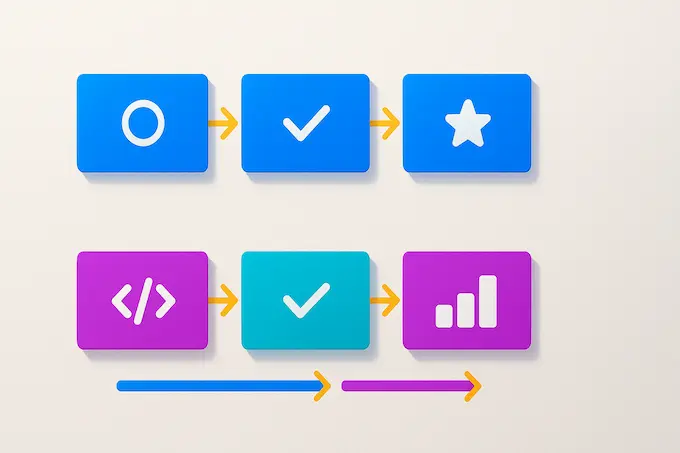
You do not need to join a fan club. You need to ship. This stack treats GPT-5 vs Sonnet 4.5 as a toolset, not a rivalry. It is simple to adopt and easy to tune.
7.1 The Hybrid Stack In Five Steps
- Scoping And Risk Checks, GPT-5. Start big changes with GPT-5. Ask for impact analysis, migration plan, and regression risk list. This leverages GPT-5 coding performance on architectural reasoning and reduces surprises.
- Refactor And Test Harness, Sonnet 4.5. Hand Sonnet the scoped plan. Pin constraints like “reuse helpers from X” and “no files over N lines.” Let it crank through the mechanical parts. This is where Sonnet 4.5 review cycles are fast and focused.
- Tight Loop On Failure, Sonnet 4.5. When a test fails, keep Sonnet in the loop for first-pass fixes. The speed helps. If the failure points to design debt, bounce back to GPT-5 for a design patch.
- Documentation And Release Notes, Sonnet 4.5. Generate change logs, code comments, and READMEs. This leverages Sonnet 4.5 benchmarks on tool use and computer control to keep docs consistent.
- Final Review, GPT-5. Ask GPT-5 to critique the change set, flag inconsistencies, and propose security or performance checks. Close the loop with a readable risk summary.
7.2 Guardrails That Make Both Models Better
- Force a repo read. Always ask for “read, then write.” Paste paths to helpers to prevent reinvention. This turns GPT-5 vs Sonnet 4.5 into a fair fight.
- Pin style rules. Set constraints on file length, module boundaries, and error handling. Sonnet follows them well. GPT-5 respects them and documents tradeoffs.
- Separate planning from execution. One message for plan, one for patches. You get cleaner diffs and fewer loops. That structure helps GPT-5 vs Sonnet 4.5 both hit their strengths.
- Track deltas. Keep a session file that logs assumptions, decisions, and follow-ups. It lowers context drift for both models and shortens feedback cycles.
This is where GPT-5 vs Sonnet 4.5 stops being a debate and starts being a system. You get the planner and the sprinter on the same relay team.
8. The Final Verdict: Choosing Your Champion For 2025
Time to answer the only question that matters. In GPT-5 vs Sonnet 4.5, which model should an average developer or small team pick as the default?
Raw performance. On difficult reasoning and architecture, GPT-5 lands the cleaner plans and the steadier critiques. If you do weekly migrations, gnarly bug hunts, or multi-service changes, pick GPT-5 as your default. This is the decisive edge in GPT-5 vs Sonnet 4.5 when reliability is king.
Speed and efficiency. On refactors, test writing, and documentation, Sonnet 4.5 feels faster and gets you to green tests with less waiting. If your team spends long hours on mechanical code changes and internal docs at scale, make Sonnet 4.5 your daily driver. That is the decisive edge in GPT-5 vs Sonnet 4.5 when throughput is king.
Best value. Most teams win with a hybrid stack. Use GPT-5 to think, Sonnet 4.5 to move, then GPT-5 to review. That setup reduces rework, boosts velocity, and keeps costs predictable. It also ends the tribal “Claude Sonnet 4.5 vs GPT-5” debate by treating both models as parts of one toolchain.
Final call. If you force a single pick, the crown for 2025 goes to GPT-5 for end-to-end software work where correctness beats speed. Sonnet 4.5 wins the speed title and remains the best second model you can add to a serious shop. In GPT-5 vs Sonnet 4.5, the smart answer is to let each do what it does best.
Now put it to work. Spin up the hybrid flow, capture your gains, and share a quick note on what moved your velocity. If you want a broader ai model comparison and deeper context on where this race is heading, read our main guide, then come back and tune your stack. GPT-5 vs Sonnet 4.5 will keep evolving. Your workflow should evolve faster.
Bonus: Where The Rivalry Actually Stands
- Anthropic vs OpenAI is not a beauty contest. It is a choice of default behaviors. Sonnet is tuned for action. GPT-5 is tuned for judgment.
- Sonnet 4.5 benchmarks tell a story about tools and terminals. GPT-5 coding performance tells a story about architecture and design pressure.
- Claude Sonnet 4.5 vs GPT-5 is not the only way to phrase the matchup, yet it captures the same truth. Speed is thrilling. Reliability pays the bills.
Use this lens the next time someone asks is Sonnet 4.5 better than GPT-5. Ask what job they want done. Then pick the model that does that job with the fewest surprises, or pair them and stop leaving performance on the table.
9. Call To Action: Make The Split-Stack Your Default
Set up the hybrid workflow today. Use GPT-5 to plan and review, Sonnet 4.5 to execute and document. Keep the session log, pin constraints, and measure rework avoided. Send your team the two tables above and agree on defaults for common tickets. Then tell us what moved the needle for you in GPT-5 vs Sonnet 4.5.
In A Direct Comparison, Is Sonnet 4.5 Better Than GPT-5 For Coding?
Sonnet 4.5 often wins on agentic coding and terminal tasks, with strong SWE-bench and OSWorld results, while many developers report GPT-5 is steadier for repo analysis, architecture, and complex planning. The practical answer is task dependent, not a blanket win.
What Are The Biggest Strengths Of Sonnet 4.5 Compared To GPT-5?
Sonnet 4.5 is fast, confident with tools, and strong at sustained computer use. It leads or matches on agentic coding benchmarks and shines in terminal workflows and long-running automation, which suits refactors, test writing, and structured multi-step chores.
What Are The Biggest Strengths Of GPT-5 Compared To Sonnet 4.5?
GPT-5 tends to produce tighter architectural reads, clearer plans, and more reliable fixes on complex changes. It is also cost-advantaged in many setups and shows strong scores in reasoning and multimodal tasks, which benefits deep reviews and high-stakes PRs.
4. Why Do The Benchmarks Show Sonnet 4.5 Winning In Some Areas, While Developers Report GPT-5 Is Better?
Benchmarks emphasize controlled tasks like verified issue solving or terminal sequences. Real repos mix legacy code, flaky tests, and ambiguous specs, which reward planning and critique. That gap explains why Sonnet 4.5 tops some leaderboards while many engineers prefer GPT-5 for production-grade work.
For A Professional Developer, Is It Worth Paying For Both Anthropic’s And OpenAI’s Models?
Yes, many teams run a hybrid stack. Use GPT-5 for scoping, architecture, and final review, then use Sonnet 4.5 for fast refactors, tests, docs, and computer use. This pairing increases throughput while keeping quality high, and it mirrors how practitioners report the models’ strengths.