1. WHY TINY MODELS WIN WHEN REAL USERS ARE INVOLVED
Big models get the headlines. Budgets, clouds, racks of accelerators, all that shine. Yet the most useful AI in your product is usually the one that answers in milliseconds, protects privacy by default, and costs less than your daily coffee to run. That is the promise of Gemma 3, and the 270M edition turns that promise into something you can ship.
I have a simple rule for production AI. Pick the smallest model that cleanly solves the job, then specialize it. Gemma 3 makes that rule easy to follow. The family spans sizes for server workloads, and Gemma 3 270M gives you a surgical tool for on-device AI. You get instruction following that does not fall apart, a generous vocabulary for rare tokens, and quantization that still behaves. If you care about latency, battery life, and unit economics, Gemma 3 is not a curiosity. It is the backbone for products that need to work anywhere, from a laptop to a phone in airplane mode.
Fast Links
Table of Contents
2. WHAT GEMMA 3 270M ACTUALLY IS
It is a family of small language models with open weights and a pragmatic design. The 270M variant sits at the bottom of the stack, yet it is not a toy. Gemma 3 270M splits parameters between a large 256k-token vocabulary and compact transformer blocks, which helps with rare tokens, names, and domain lexicons that break smaller vocabularies. You can use a pre-trained checkpoint, you can pick the instruction-tuned version, and you can also use a QAT release that behaves well at INT4 precision. That last one matters when you run Gemma 3 locally on devices that do not have generous memory bandwidth.
The result is simple. It reduces your cost per request, it reduces your tail latency, and it lets you keep data on the device. The 270M model draws so little power in INT4 that a round of conversations barely moves the battery indicator on a recent phone. That translates to real product freedom. You can put Gemma 3 inside tools that live offline, you can gate more features behind private inference, and you can reach users in places where the network is unreliable.
3. WHY SMALL LANGUAGE MODELS ARE THE RIGHT DEFAULT
The industry spent years assuming that bigger is always better. Bigger can be better for open-ended general knowledge, yet most production workloads are not open-ended. They are well scoped. Classify this complaint. Extract entities from this invoice. Turn unstructured notes into a clean JSON record. Route this query to the right subsystem. For these jobs, Gemma 3 shines because it is easy to steer and cheap to fine-tune.
Models like Gemma 3 270M learn to follow instructions cleanly once you show them the desired schema. You do not need millions of examples. You need a tight spec, representative edge cases, and a feedback loop. When you fine-tune Gemma 3 on that spec, you get a specialist that beats generalists on your task while running on humble hardware. That is the compounding effect that gets you from a clever demo to a reliable system.
4. THE ARCHITECTURE, STRAIGHT TO THE POINT
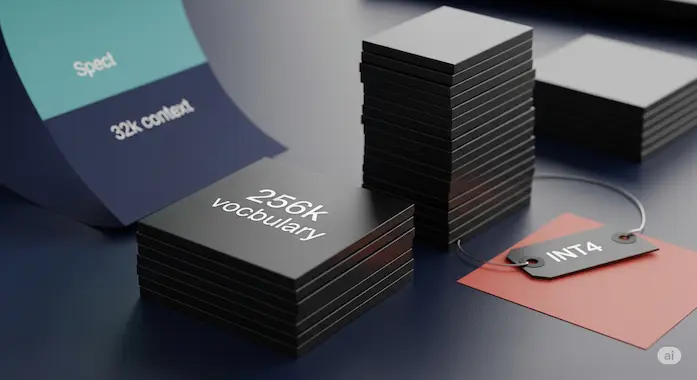
Gemma 3 270M uses a large vocabulary that front-loads capacity into embeddings, then keeps the stack lean. That choice helps with long-tail tokens and multilingual names. The instruction-tuned variant gives you reasonable adherence out of the box, and the QAT checkpoints let you deploy INT4 without a nasty accuracy cliff. When you work with on-device AI, that matters more than you think. Quantization that preserves behavior means you can ship one model to many devices and keep outputs stable.
The family benefits from the same research lineage that produced bigger multimodal models. You get long context support in the larger sizes, and you still get a usable 32k context for Gemma 3 270M. In practice, that is enough for a short document, a policy, a form, or a handful of messages with tool outputs. You will not write a novel in one request, and that is fine. You will ship a feature that answers instantly and never leaves the device.
5. BENCHMARKS IN CONTEXT, WHAT THE NUMBERS SUGGEST
Benchmarks are not your product, yet they help spot behavior. Gemma 3 benchmarks for the 270M size show competent instruction following for its class and a good baseline for reasoning that you can harden with fine-tuning. The instruction-tuned 270M model posts solid IFEval performance, which tracks with the way it obeys explicit constraints. That is exactly what you want when the output must match a schema.
TABLE 1. GEMMA 3 270M SNAPSHOT AND BENCHMARKS
| Item | Details |
|---|---|
| Parameters | 270M total. Approximately 170M in embeddings to support a 256k-token vocabulary, 100M in transformer blocks |
| Context Window | 32k tokens for the 270M size |
| Instruction Variant | Available as a separate checkpoint that follows typical task prompts cleanly |
| Quantization | Quantization Aware Training checkpoints, stable INT4 behavior for on-device AI |
| Battery Profile | Internal test on a recent phone showed roughly 0.75% battery for 25 short conversations under INT4 |
| Gemma 3 Benchmarks, IT 270M | HellaSwag 0-shot 37.7, PIQA 0-shot 66.2, ARC-c 0-shot 28.2, WinoGrande 0-shot 52.3, BIG-Bench Hard few-shot 26.7, IFEval 0-shot 51.2 |
| Gemma 3 Benchmarks, PT 270M | HellaSwag 10-shot 40.9, BoolQ 0-shot 61.4, PIQA 0-shot 67.7, TriviaQA 5-shot 15.4, ARC-c 25-shot 29.0, ARC-e 0-shot 57.7, WinoGrande 5-shot 52.0 |
| Best Fit Tasks | Classification, extraction, routing, formatting, lightweight assistants with tight scopes |
| Ecosystem | Gemma 3 Hugging Face models, Ollama Gemma 3 support, llama.cpp and related runtimes, Keras and MLX paths |
These figures do not tell you if your billing system will parse 500 vendor formats. They tell you that Gemma 3 listens to instructions and that it will hold a shape once you lock in a schema. That is the signal most teams need.
6. WHEN TO PICK GEMMA 3 270M OVER HEAVIER OPTIONS
- You run Gemma 3 locally, so you need predictable latency, privacy by default, and a cost profile that scales to millions of calls without a finance review.
- You plan to fine-tune Gemma 3 on a narrow task, such as entity extraction, compliance checks, or routing.
- You serve mobile users. On-device AI unlocks features where the network is weak, or where privacy concerns block cloud usage.
- You have a fleet of micro-services and want a model per service. Small models compose well.
- You need short iteration loops. Gemma 3 270M fine-tunes fast, which means you can run many experiments in a day.
If your product demands broad open-domain knowledge, go up the Gemma 3 stack. If your product rewards precision under constraints, start with Gemma 3 270M and specialize.
7. RUNNING GEMMA 3 LOCALLY, YOUR OPTIONS AND TRADEOFFS
You have several clean paths to run Gemma 3 locally. The fastest way to explore is Ollama Gemma 3, which gives you a single-command pull and a simple HTTP API. If you want tight native performance on CPUs and smaller GPUs, the llama.cpp family of projects and ports labeled gemma.cpp work well. If you prefer Python ergonomics, Gemma 3 Hugging Face models give you instant access to tokenizers, pipelines, and training tools. If you are on Apple Silicon, MLX is an easy path with good device utilization. If you prefer Keras, you can wire up a small inference service in an afternoon.
A developer’s checklist helps:
• Accept the model license on the Gemma 3 Hugging Face page if you use the hosted weights.
• Pull with Ollama Gemma 3 for a quick local API.
• Measure latency with real inputs, not prompts that hide complexity.
• Quantize to INT4 only after you measure task stability with your own tests.
• Log strict traces of prompts and outputs. Schema mismatches hide in the logs.
TABLE 2. LOCAL ECOSYSTEM OPTIONS TO RUN GEMMA 3
| Environment | How To Use | Where It Shines | Notes |
|---|---|---|---|
| Ollama Gemma 3 | Pull the model, then hit the local HTTP endpoint | One-command setup, quick prototyping, small services | Great for demos and internal tools that call Gemma 3 often |
| Gemma 3 Hugging Face | Load tokenizer and weights, then run with Transformers or TRL | Training, evaluation, batch jobs, rich tooling | Accept the license, then use your HF token for gated weights |
| llama.cpp and gemma.cpp ports | Build the quantized GGUF, then run the CLI or bind a library | Tight CPU inference, small GPU cards, low memory servers | Useful when you ship Gemma 3 on edge servers or laptops |
| Keras and TensorFlow | Wrap the model in a Keras pipeline and deploy | Teams that already standardize on TF serving | Good integration with existing observability stacks |
| MLX (Apple Silicon) | Use MLX APIs to load and run Gemma 3 | Local Mac dev, good M-series efficiency | Handy for iOS and macOS prototyping before mobile deployment |
These paths make it trivial to run Gemma 3 locally, profile it, and then push a small service into production. The portability story is strong, which keeps your deployment options open.
8. A BLUEPRINT FOR SPECIALISTS, THE FLEET MODEL

The cleanest systems I have seen use a fleet of small specialists rather than one giant generalist. Gemma 3 makes that architecture straightforward. You can create a classifier that routes, a formatter that writes JSON, a redacter that strips PII, and a light assistant that answers short questions. Each one is a tiny Gemma 3 270M checkpoint with a narrow charter. The benefits are obvious. Each component is cheap to run, cheap to test, and cheap to replace.
There are real-world examples of this principle at larger scales. Teams have fine-tuned Gemma 3 in the multi-billion range to beat larger proprietary models on focused moderation tasks. The takeaway is not to chase the biggest number. The takeaway is to specialize. Gemma 3 270M just lets you specialize on even tighter budgets, which expands where you can deploy.
9. GEMMA 3 VS PHI-4, A QUICK, HONEST COMPARISON
Both Gemma 3 and Phi-4 aim for usable models that ship. Gemma 3 270M is a tiny specialist you can run locally on phones, laptops, and lean servers. Phi-4 is a 14B decoder model with a 16k context, trained on about 9.8T tokens, and released under MIT. It leans English, uses supervised fine tuning plus direct preference optimization, and was red teamed for safety. Expect stronger zero shot reasoning, math, and code, at the cost of GPU inference and higher latency.
Choose Gemma 3 when latency, privacy, and cost dominate. You can run Gemma 3 locally, quantize to INT4 with QAT, and fine tune Gemma 3 quickly for contracts like classification, extraction, routing, and strict JSON formatting. Shipping to mobile or laptops is straightforward, and unit economics stay friendly.
Choose Phi-4 when your task needs more headroom for complex reasoning, longer prompts, or richer tool use, and you accept GPU serving. Keep prompts and schemas identical across tests, then compare accuracy, p95 latency, and cost per 1k tokens. If Phi-4 clears an accuracy bar that Gemma 3 cannot reach without heavy data, keep Phi-4 for that slice. Otherwise, fine tune Gemma 3 and ship. Measure, iterate, and keep it practical.
10. A SHORT GUIDE TO EVALUATION THAT DOESN’T MISS THE POINT
Evaluation fails when it rewards answers that look clever rather than answers that conform to the contract. Use contracts.
- Assert the schema. Parse the output. Reject on mismatch.
- Track task-specific accuracy. If you predict a risk label or an entity span, compute exact matches.
- Track stability after quantization. If INT4 drifts, find the prompt or training example that breaks.
- Record latency distributions, not just averages. Tail latency is what your users feel.
- Keep a small human review loop. Flag failures that look plausible yet wrong.
You can reference public Gemma 3 benchmarks to calibrate intuition, then run your own. Benchmarks get you started. Contracts ship products.
11. A SMALL, TASTY DEMO YOU CAN STEAL
Creative tasks also benefit from small models. A bedtime story generator using Gemma 3 in the browser is a great example. Gemma 3 270M in an efficient runtime can craft short stories offline when the model is instruction tuned for tone and structure. That setup translates directly to educational apps, language drills, or narrative UX in games. The same patterns, a clean schema, a tiny dataset, and a short fine-tune, will carry you far.
12. PRIVACY, COST, AND SOVEREIGNTY
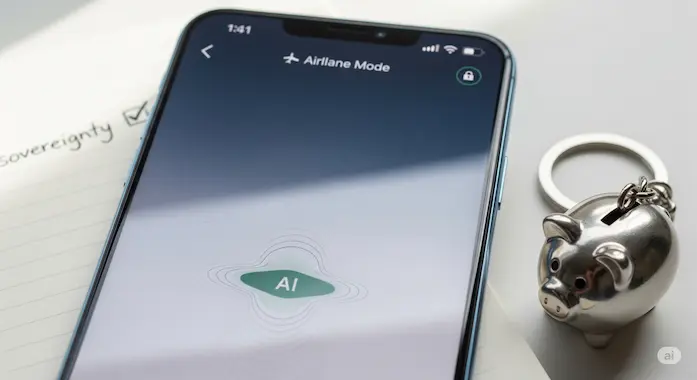
There is a reason on-device AI is trending. Privacy laws are getting stricter, and users do not want their data shipped to servers just to reformat a paragraph. Gemma 3 lets you keep sensitive computation on the device and still deliver crisp experiences. The cost angle is obvious. A tiny model on a phone is cheaper than a large model behind a GPU-backed API. Model sovereignty is the quiet third benefit. You own the weights you fine-tune. You can pin versions. You can audit changes. You can freeze a behavior for a regulated workflow and sleep well.
13. A CLEAN STARTER PLAN FOR YOUR TEAM
You can put it into production in a week with a focused plan.
- Pick one painful task that repeats all day. Keep it narrow.
- Gather 200 examples that match real production distributions, not happy paths.
- Define a JSON schema for the output. Include a strict field for confidence or abstain when appropriate.
- Run a baseline with the instruction model of Gemma 3 270M. Log schema errors.
- Fine-tune Gemma 3 with TRL on your dataset. Hold out a validation split that contains the gnarliest edge cases.
- Quantize to INT4 QAT weights if latency or device constraints require it.
- Canary in production with hard rejects on schema violations.
- Expand the dataset from real failures. Retrain weekly.
- Write two dashboards. One for throughput and latency, one for semantic errors by field.
The model is not the hard part. The process is. Gemma 3 makes the process shorter by being small, steerable, and portable.
14. A FEW PITFALLS TO AVOID
- Do not hide model mistakes behind regex bandages. Fix the data and the fine-tune.
- Do not measure only averages. Averages lie.
- Do not keep prompts secret. Document them next to the schema and example pairs.
- Do not wait to instrument. You cannot improve what you do not log.
- Do not chase leaderboard glory for a task that never shows up in your product.
If you want a simple mantra, use this one. Fewer prompts, more contracts. Fewer debates, more experiments.
15. CLOSING THOUGHTS, AND A NUDGE TO BUILD
Gemma 3 represents a shift in how we think about useful AI. Less spectacle, more engineering. Gemma 3 270M is proof that the right model is the one you can place exactly where it needs to run, shape to your schema, and trust to answer without waking a data center. You can pull it with Ollama for a quick test, you can train it with Hugging Face tools, and you can deploy it as a quiet workhorse inside your product. It is small, so you will actually use it.
Your next step is not another thread about model wars. Your next step is a test set, a schema, and a feature that ships. Pick one workflow. Fine-tune Gemma 3. Measure. If it works, clone the pattern into a fleet of specialists and claim the compound wins. When you discover something interesting, share your Gemma 3 benchmarks and your recipes, and help push the ecosystem forward.
Gemma 3 is ready. Run it locally. Fine-tune it for your task. Build something your users feel immediately. Then keep going.
Further Reading From Binary Verse AI
Azmat — Founder of Binary Verse AI | Tech Explorer and Observer of the Machine Mind Revolution.
Looking for the smartest AI models ranked by real benchmarks? Explore our AI IQ Test 2025 results to see how today’s top models stack up. Stay updated with our Weekly AI News Roundup, where we break down the latest breakthroughs, product launches, and controversies. Don’t miss our in-depth Grok 4 Review, a critical look at xAI’s most ambitious model to date.
For questions or feedback, feel free to contact us or browse more insights on BinaryVerseAI.com.
What is the main difference between Google’s Gemma 3 and Microsoft’s Phi-4?
Gemma 3, especially Gemma 3 270M, targets on-device AI with tiny footprints, fast latency, and INT4-friendly deployment. Phi-4 is a 14B model with stronger zero-shot reasoning and coding, a 16k context, and MIT licensing, but it typically needs a GPU and higher runtime cost.
How do the benchmarks for Gemma 3 270M and Phi-4 compare for coding and reasoning?
Phi-4 leads on complex math, code synthesis, and long reasoning chains. Gemma 3 benchmarks show the 270M model excels on tightly specified tasks after fine-tuning, delivering lower latency and cost for structured outputs and classification.
How can I run Gemma 3 locally using Ollama?
Install Ollama. Pull a model, for example ollama pull gemma3:270m. Run it with ollama run gemma3:270m. Start simple prompts, measure latency, then try quantized variants. This gives a fast local baseline before you fine-tune.
When should I choose a small model like Gemma 3 versus a mid-size model like Phi-4?
Choose Gemma 3 for privacy, mobile or laptop deployment, strict schemas, and high QPS with tight budgets. Choose Phi-4 when you need higher accuracy on complex reasoning, longer prompts, or heavier tool use, and you can serve on a GPU.
Is Gemma 3 or Phi-4 better for fine-tuning on custom data?
To fine-tune Gemma 3, you need less compute and fewer examples, which suits rapid iteration and small language models. Phi-4 fine-tuning costs more, yet can unlock wider generalization for advanced tasks. Pick based on your target contract, latency budget, and data size.