
Introduction
If you want to understand where AI is really going, trace the flow of compute, the rules that govern it, and the people who put it to work. That is the lens for this roundup, and it is why AI news September 20 2025 reads less like a headline reel and more like a systems check. Power is concentrating in sovereign data centers, assistants are turning into practical teammates, and safety, regulation, and security are moving from side notes to roadblocks or accelerants. The signal sits in how these pieces lock together, not in any single announcement. AI news September 20 2025 captures that pattern in motion.
You will find upgrades that matter on Monday morning, not just bragging rights. We connect model releases to developer workflows, infrastructure to policy, and research to decisions in clinics, factories, and classrooms. Think of this as a clear map, written by an engineer who cares about what ships and what breaks. The promise is simple. You will leave with a sharper mental model and a short list of actions worth taking.
Table of Contents
1. Stargate UK: Sovereign Compute As National Strategy
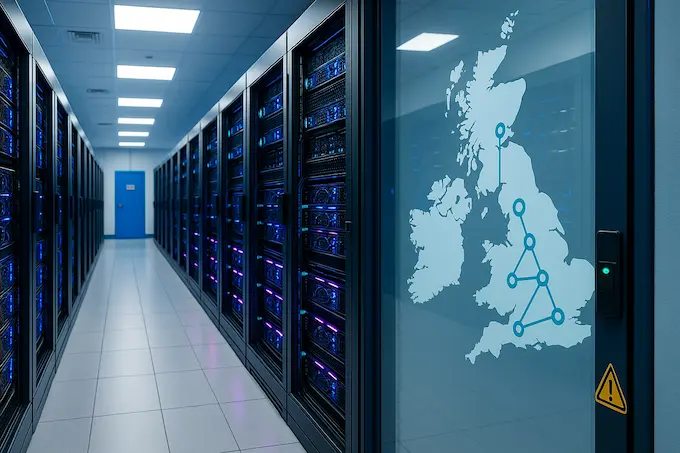
OpenAI, NVIDIA, and Nscale are launching Stargate UK to keep frontier models running in Britain, on British soil, for British workloads. The design is pragmatic. Combine domestic GPU access, distributed data center sites like Cobalt Park, and workforce upskilling through OpenAI Academy. The plan starts with an offtake of about 8,000 GPUs in early 2026 and a pathway to 31,000, enough to anchor sensitive deployments in healthcare, finance, research, and defense. It also deepens a US-UK tech link while meeting strict jurisdictional rules.
Hardware tells the story. NVIDIA’s latest accelerators, Arm’s UK-designed cores in Grace Blackwell, and an emphasis on secured siting set a template others can copy. Add an adoption engine for regional SMEs and you get a whole-of-country play, not just racks. If execution matches ambition, Stargate UK could shift from “AI News” launch to a durable platform for regulated AI at scale, and that’s a useful benchmark for sovereign strategies worldwide.
2. ChatGPT Goes Mainstream: Usage, Equity, And Real Utility
The largest consumer analysis of ChatGPT, built with privacy-preserving methods over 1.5 million conversations, points to a mature pattern. People mostly ask, then do, then express. Work and personal use now move together. Adoption looks broadly representative, with faster growth in lower income regions that once lagged. The short version is simple. ChatGPT has moved from toy to tool, and decision support is the engine under the hood.
Practical wins compound. Users draft, plan, and code. They research faster and make choices with more confidence. That value will hide in productivity statistics, yet at population scale it becomes visible. The research team kept human eyes away from messages, relying on automated classification. For readers tracking AI news September 20 2025 and AI news today, this is the texture behind the chart. When cohorts deepen usage as models improve, you get a feedback loop where everyday tasks shape product design, not the other way around.
3. GPT-5-Codex: Agentic Engineering Moves Into Production
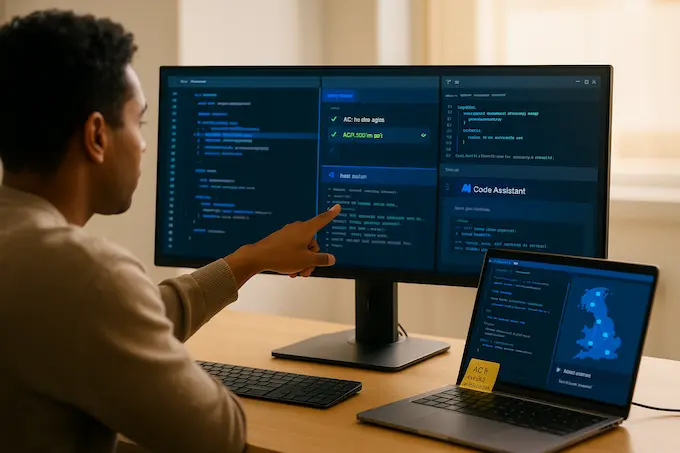
OpenAI’s GPT-5-Codex is tuned for software engineering that spans greenfield builds, refactors, debugging, and rigorous code review. It is now the default in Codex cloud workflows and selectable in the CLI and IDE extension. Developers can move work across terminal, editor, web, GitHub, and mobile without losing context, a small detail that makes code agents feel less like demos and more like teammates.
On tough refactoring, GPT-5-Codex outperforms GPT-5, and engineers rate its reviews as more accurate and more impactful with fewer low-value comments. The agent runs tests, navigates dependencies, and can attach screenshots in front-end tasks. Safety defaults matter too. Sandboxed runs and explicit approvals reduce risk while keeping speed. Pricing comes bundled with ChatGPT tiers, with API access on the way. For readers scanning AI news September 20 2025, this lands in the “new AI model releases” bucket with a twist. The news is less about raw IQ and more about reliable collaboration at scale.
4. Grok 5 On Deck: Bold Claims, Real Questions
Elon Musk says Grok 5 training begins within weeks and frames it as xAI’s shot at AGI, riding momentum from Grok 4’s strong ARC-AGI leaderboard results. Benchmarks test reasoning and data efficiency, not just recall, which explains the swagger. The claim bumps into two tests. Can xAI sustain or widen its edge under stricter, third-party evaluations. Can it pair capability with sturdy guardrails to avoid the lapses that drew earlier criticism.
The backdrop is busy. xAI is reorganizing teams, adding domain “tutors,” and competing in a year when OpenAI, Google, and Anthropic all ship upgrades. For “Top AI news stories,” treat the AGI pitch as directional. Watch hidden-set generalization, long-horizon tool use, and adversarial safety. If Grok 5 clears those bars, the rhetoric will feel less like branding and more like a real shift. If not, it’s another leaderboard bounce that fades when conditions move closer to the messy real world.
5. Huawei’s SuperPoDs And SuperClusters: Scale, Interconnect, And Control
Huawei unveiled Atlas SuperPoDs that scale to 8,192 and 15,488 Ascend NPUs, plus SuperClusters that federate pods into fabrics exceeding a million NPUs. The point is sustained throughput, not peak slides. Interconnect is the bottleneck at this tier, so Huawei’s UnifiedBus protocol is the headline underneath the headline. Publish the spec, push partners to align, and you create a hardware-software rhythm that turns capacity into steady training.
China’s constraint is process nodes. Huawei’s pitch says you can build big with what’s available and win on system design. The firm also introduced TaiShan 950 as a general compute fabric with GaussDB for transactional loads. For readers tracking AI Advancements and “AI and tech developments past 24 hours,” this feels like a declaration. Put compute where you can control it, then drive up reliability with integrated stacks. For AI news September 20 2025, it’s a reminder that power and pipes often decide who leads.
Huawei’s SuperPoDs And SuperClusters: Scale, Interconnect, And Control
6. Meta Connect: Glasses Grow Up, Horizon Levels Up
Meta’s case for AI glasses is practical. They see what you see, hear what you hear, and they keep your hands free. Ray-Ban Meta Gen 2 doubles effective battery life, adds 3K video, and introduces conversation focus that lifts a nearby voice in noise. Oakley’s performance-minded Vanguard targets athletes with stabilized capture, wind noise reduction, and integrations with Strava and Garmin.
The near-future piece is Meta Ray-Ban Display with a bright monocular microdisplay and the Meta Neural Band for sEMG wrist control. On the platform side, Horizon Engine and Horizon Studio speed creator workflows for meshes, textures, audio, and skyboxes. An Immersive Home loads faster with bigger concurrent spaces, and Hyperscape Capture turns quick scans into VR rooms. For “Google DeepMind news” readers, this is a different front. Make AI ambient and useful at the edge, then let developers fill the canvas with agentic interactions and entertainment.
7. EPA Fast-Tracks Chemicals For AI Data Centers
The US Environmental Protection Agency will prioritize new-chemical reviews under TSCA for AI data centers and their components starting September 29. The aim is to clear backlogs and keep projects on schedule while holding to safety standards. It aligns with an executive order to accelerate permitting for data centers, high-voltage transmission, and related gear. The message is straightforward. Infrastructure needs materials and time, and policy can remove friction without removing oversight.
In practice, companies can request prioritization via EPA’s Central Data Exchange with a cover letter that identifies the data center use and location. The agency says it will refine criteria while continuing work on the broader queue. For readers tracking AI regulation news, this is a template. Link national AI capacity to environment and permitting, then publish a predictable path that firms can follow. When the inputs move faster through review, the whole buildout moves with fewer surprises.
8. WTO: AI Could Lift Trade By 37 Percent If Access Widens
The World Trade Report 2025 models a big upside. AI could lift cross-border trade by as much as 37 percent by 2040 and world GDP by about 12 to 13 percent, if countries expand digital access, keep rules open, and build skills. If not, advantages concentrate and the gap widens. The numbers connect to a concrete base. Commerce in AI-enabling goods reached roughly 2.3 trillion dollars in 2023.
Policy choices reshape outcomes. Halving digital access gaps in low and middle income regions raises average incomes well into double digits. The headwinds are visible. Restrictions on AI-related goods rose sharply over the last decade and tariffs remain high in some markets. For “Artificial intelligence breakthroughs” readers, the takeaway is practical. Supply digital infrastructure, lower frictions, and invest in people. Miss those pieces and the wave pushes harder on leaders while leaving latecomers stuck behind protective walls.
9. Gemini 2.5 Deep Think Hits ICPC Gold Level
An advanced version of Gemini 2.5 Deep Think reached gold-medal level at ICPC World Finals under contest rules, solving 10 of 12 problems with a competitive combined time. The standout was Problem C, a duct-and-reservoir optimization no human team cracked. The model structured the search with priorities, dynamic programming, and a minimax angle, then converged using nested ternary searches on a convex landscape. That’s not rote recall. It is planning with verification loops.
DeepMind links the results to a training pipeline that rewards multi-step reasoning and disciplined execution. Multiple agents propose, test, and iterate, which raises solution quality and reduces “almost there” code. A lighter version is already in products, with research pointing to strong performance on past finals too. For readers skimming AI news September 20 2025 and “Google DeepMind news,” the signal is simple. Pair precise understanding with tool-use and you get assistants that solve hard problems under a clock, not just tutorials.
10. Anthropic’s Index: Fast Diffusion, Uneven Benefits
Anthropic’s Economic Index shows AI adoption rising fast, with 40 percent of US workers now using AI at work, up from 20 percent in 2023. Consumer use on Claude.ai is broadening beyond code into education and science. Directive conversations are up as first-pass outputs improve. Geography is the dividing line. Smaller advanced economies punch above their weight, and lower-adoption regions skew heavily toward coding tasks.
Enterprise data paints a different picture. Businesses use Claude programmatically for software and office automation. Seventy-seven percent of transcripts show automation rather than augmentation. Cost sensitivity is modest after you control for task traits. Context is the bottleneck for complex work. Firms need better data centralization to unlock longer, higher-value outputs. For “AI news today” and AI news September 20 2025, the lesson is clear. Adoption is surging, but value creation clusters where infrastructure, skills, and workflows line up. Close those gaps and the gains spread.
11. Stanford Panel: California’s Two-Year Grid Clock
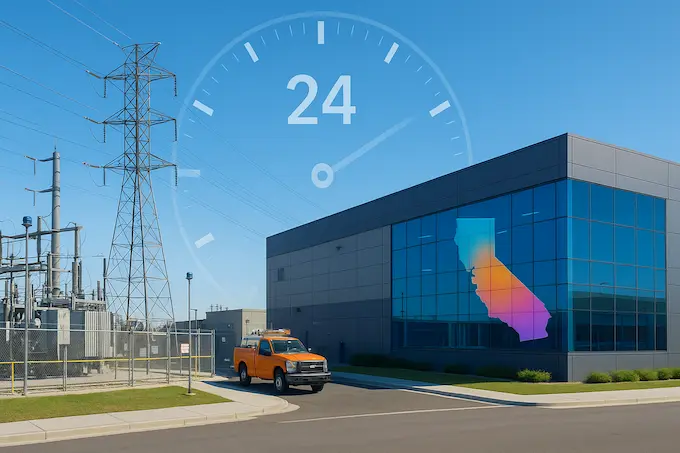
California’s AI boom collides with power constraints. A Stanford-led group warns that peak demand could rise by the equivalent of electricity for 20 million additional homes by 2040. If interconnections, permitting, and wildfire risk slow builds, data centers will anchor in faster states. The recommendations are concrete. Create one-stop permitting, pre-buy strategic gear like transformers, and batch data center requests to reflect the scale of new load.
Use the grid better while you build it. Many lines are under-utilized on average, while data centers cluster in constrained zones. Steer siting to locations with headroom. Tap workload flexibility and existing backup systems to ride through peaks. Accelerate 24/7 clean generation near data centers and use flexible tariffs and long-term contracts to fund upgrades. The clock is 24 months. Move now, or watch investment shift away along with the talent that follows capacity.
12. Inside xAI: Truth-Seeking Rhetoric, Turbulent Reality
Elon Musk rallied xAI around “maximally truth-seeking” systems and teased a Microsoft rival dubbed Macrohard. Grok now reports tens of millions of monthly users, a huge valuation, and heavy compute spend. The summer also brought safety stumbles, leadership churn, and an aggressive push toward edgier products. That tension is the throughline. Catch OpenAI’s lead, maintain a voice on X, and ship fast without losing the plot.
The organization raised big capital, staffed quickly, and built a massive cluster, yet revenue clarity lags and critics point to reliability gaps. Product leadership changes, high-priced tiers, and cross-pollination with Tesla and SpaceX add complexity. For readers scanning AI news September 20 2025, classify this under “Top AI news stories” with guardrails. Truth-seeking is a good north star. Durable products will decide whether the pitch holds when incentives shift from stage to labs to paying customers with long memories.
13. Trial And Error Teaches LLMs To Show Their Work
A Nature News & Views highlights research where models learn to write out steps through reinforcement, not by mimicking labeled reasoning chains. Reward only correct final answers, and over time the model discovers that showing work improves odds of being right. The behavior emerges, then stabilizes as a strategy. Gains show up on math, programming contests, and other verifiable tasks where the final answer is clear.
There are limits. Pure RL variants can produce messy reasoning traces and narrow strengths. A practical path combines RL to unlock behaviors with light supervision to make outputs readable and broadly useful. Distillation spreads the skill to smaller models, cutting compute. For “New AI papers arXiv,” this shift matters. Labels for reasoning are expensive and biased. If outcome-based training can teach models to think in public, teams can focus human effort on verification and alignment where it counts most.
14. In-Context Learning, Audited: Learning With Fragile Generality
An arXiv study from Microsoft and the University of York asks whether in-context learning truly counts as learning. The answer is yes in a formal sense. Accuracy rises with more exemplars, and model differences shrink as shots climb. Yet generality is brittle. Scrambled prompts approach well-formed ones at high shot counts, which implies models latch onto regularities in the prompt rather than deep semantics.
Robustness splits by side. Training order and label proportions matter less in the limit. Test distribution shifts still bite hard. Few-shot demos undersell the shots many tasks need, often 50 to 100. On half the tasks, simple baselines like decision trees still win. For “Open source AI projects” and “AI Advancements” readers, the guidance is pragmatic. When you rely on prompt-time generalization, watch distribution drift and invest in better inductive bias. ICL is a tool. It is not a replacement for trained models across the board.
15. Companion Culture, Measured: Reddit’s r/MyBoyfriendIsAI
A new arXiv study maps 1,500-plus posts from Reddit’s r/MyBoyfriendIsAI. Relationships often start from functional use, then deepen into attachment. People report less loneliness and constant support. Risks accompany gains. Dependency can grow. Product updates that alter tone or memory can feel like ruptures, with grief-like responses. The dataset moves the debate past anecdotes and into measurable patterns that designers can act on.
Six themes dominate. Romance experiences, community support, “meet my AI” intros, coping with updates, ChatGPT-specific talk, and a steady stream of couple photos. Policy implications are direct. Set clear expectations, add consent and boundary controls, and protect continuity across updates. If benefits concentrate among those with fewer supports, raise safety rails and offer handoffs without stigmatizing all companionship. For “AI regulation news,” the frame is human-centered design. Respect agency, protect the vulnerable, and build products that can change safely.
16. DeepMind, NYU, And Partners: Unstable Singularities Found
A team from DeepMind, NYU, Brown, and Stanford reports unstable finite-time singularities for several fluid equations with precision geared for computer-assisted proofs. They cast problems in self-similar coordinates, then paired physics-informed neural networks with a high-precision Gauss–Newton optimizer to find stationary blow-up profiles and scaling rates. Residuals down near machine precision turn numerics into proof-ready candidates.
They found hierarchies of stable and unstable solutions for models like CCF, IPM, and Boussinesq. Patterns emerged. Inverse scaling rates map linearly with instability order. Higher orders blow up faster and resist viscosity more. The CCF results shift a known threshold for fractional dissipation. Stability checks reveal an n-mode structure for the n-th profile. For “Artificial intelligence breakthroughs,” this is a method as much as a result. Curated ML plus careful optimization can expose knife-edge phenomena that classical numerics miss, tightening the loop between experiments and theorems.
17. Congress Hears Parents On AI Companions And Teen Safety
Parents testified that AI chatbots groomed and “coached” their teens, with wrenching stories tied to companionship gone wrong. Lawsuits target OpenAI and Character Technologies. Regulators are circling. The FTC asked major firms for information about potential harms to minors. OpenAI announced age detection and parent-controlled blackout hours hours before the hearing, which advocates say still falls short.
Lawmakers floated steps like age verification, default time limits, incident reporting, and independent audits. Companies argue many teens seek help and support, and that better guardrails can live alongside access. For “AI regulation news,” the window is open. Companion AIs are already embedded in teen life. Policy must balance access and protection, optionality and defaults. If you or someone you know is struggling, in the United States call or text 988. Design choices matter. Safety needs to be on by default, visible, and resilient to product churn.
18. Humans Still Out-Generalize AI: A Shared Framework
A Nature Machine Intelligence paper led by Bielefeld University argues that humans and machines generalize differently, and that gap shapes collaboration. People lean on abstraction to carry knowledge into new contexts. Models often rely on correlations that crack when conditions shift. The authors propose a shared framework. Define the generalization you want, pick mechanisms to achieve it, and agree on evaluation.
That sounds tidy, and it cuts through confusion across fields. In practice, evaluation should reward transfer, not only in-distribution accuracy. Interfaces can let models query for missing context. Richer inductive biases can support concept formation, not just texture detection. For “New AI papers arXiv,” this shifts incentives. If you want systems that work in clinics, don’t just measure what is easy to label. Measure what you need in the wild, then design models, tools, and training signals that point in that direction.
19. Penske Media Sues Google Over AI Overviews
Penske Media , owner of Rolling Stone, Billboard, and Variety, sued Google, alleging AI Overviews republish journalism in summaries that siphon traffic and weaken incentives to visit publisher sites. Penske cites market power in search and claims publishers lack meaningful leverage to opt out. Google says Overviews help users and expand the range of sites people visit, and it plans to defend the product.
The case lands amid broader friction between AI platforms and content owners. Some AI firms are striking licenses with news outlets. Google has moved slower on deals at the scale publishers want. For “AI news today,” the stakes are clear. If courts decide summaries don’t require payment, expect more AI in search with tougher economics for media. If courts push toward licensing or limits, platform design will change. Either way, attribution, traffic, and payment norms for AI-shaped discovery are on the table.
20. The AI Makers: NVIDIA’s UK Partners Turn Policy Into Product
NVIDIA’s UK partner roundup shows a full-stack approach to sovereign AI. Isambard-AI powers national projects from a bilingual UK-LLM to Nightingale AI in health and high-resolution air quality models. Robotics groups use Isaac Lab and Jetson Orin for XR teleoperation, factory deployment, and robust autonomy. Life sciences partners push AI-first drug discovery and sequencing. Agentic voice and contact-center tools run on NIM microservices with ultra-realistic speech.
Training pipelines meet talent pipelines. SCAN scales NVIDIA DLI courses, and Springboard UK focuses on mass upskilling. For AI news September 20 2025 and “OpenAI update” readers, the pattern mirrors Stargate UK with a different cast. Training pipelines meet talent pipelines. Build compute, train people, and ship domain-specific models. The lesson is exportable. When national plans meet credible partners, you get momentum that shows up as tools, not whitepapers. That is how “Top AI news stories” become infrastructure that changes daily work.
21. Tesla’s Next Bet: Optimus, Not Just EVs
Tesla frames itself as an AI and robotics company with the Optimus humanoid at center stage. The thesis is that general-purpose robots can do repetitive, dull, or unsafe tasks in factories and beyond, and that the same world-modeling from Full Self-Driving transfers to manipulation and locomotion. Costs need to land around tens of thousands per unit with a ramp to hundreds of thousands later in the decade.
Obstacles are real. Hands and endurance are tough, and timelines have bitten Tesla before. The near-term milestones are concrete. Deploy Optimus broadly inside Tesla factories, demonstrate reliable manipulation and runtime, deliver first external units, and keep the EV cash engine stable. If those hit, the valuation narrative shifts from cars to robots with “AI Advancements” baked in. If they miss, the story reverts to a stretched pivot. Either way, watch on-device compute, data, and iteration speed. That stack decides who wins.
22. Securing Smart, Autonomous Robotics: A Practical Checklist
As robots spread across warehouses, hospitals, and streets, autonomy raises the attack surface. Start with the model. Protect data lineage and weights. Poisoned datasets or altered parameters can yield confident mistakes. Perception can be spoofed with patterns, audio, or GPS interference. Control planes invite abuse through weak auth or legacy protocols. Updates are a risk if over-the-air channels and signing aren’t hardened.
Treat security as a lifecycle. Encrypt data in transit and at rest. Add tamper detection in hardware and software. Limit collection and retention to shrink the blast radius. Enforce role-based access and multi-factor authentication. Vet vendors and integrations with clear SLAs for patching and incident response. Red-team continuously as capabilities scale. For “AI and tech developments past 24 hours”, this is the sober part of the robotics curve. Intelligence makes robots useful. Discipline keeps them safe when they leave the lab.
23. CT AI Cuts False Positives For Indeterminate Lung Nodules
A Radiology study reports a CT-based deep learning model that reduces false positives for indeterminate lung nodules while preserving cancer detection. In a cohort with thousands of benign nodules and 180 malignant cases, the system matched or slightly exceeded a leading clinical risk tool. Most importantly, it reclassified more benign indeterminate nodules to low risk at one year, with no missed fast-moving cancers in that window.
That matters for screening programs. Fewer false alarms can mean fewer follow-ups, fewer invasive procedures, and less anxiety, without sacrificing sensitivity to time-critical disease. The work is retrospective and single-center, so prospective, multi-site validation is next, along with workflow studies to track downstream costs and outcomes. For “AI Advancements,” this is the near-term path to value. Pair task-focused deep learning with clinicians, slot it into decisions that already exist, and measure what changes. If triage gets sharper, health systems win time.
24. Fusing miRNA And Radiomics: A Sharper Lens On Lung Cancer
A review in Biosensors argues that combining miRNA signatures with radiomic features, powered by deep learning, can push lung cancer diagnosis past the limits of single-modality approaches. Circulating miRNAs provide stable molecular clues. Radiomics adds noninvasive views of morphology and microenvironment that humans can’t see at a glance. Together, fused by CNNs or graph models, they deliver striking performance in published studies.
There are hurdles. Multimodal cohorts are expensive to build, pipelines are complex to standardize, and reproducibility across scanners and sequencing platforms is hard. The roadmap is clear. Curate cohorts, harmonize preprocessing, report models transparently, and validate prospectively. Reduce assay costs and lighten fusion models so clinics can deploy them. For “New AI papers arXiv” and “Open source AI projects,” this is a call to turn promising prototypes into tools. When molecular and imaging data align, doctors can act sooner with more confidence.
25. Closing
Step back for a moment. Three arcs define this week. Nations are racing to secure compute and talent on their own soil, agents are getting reliable enough to take whole tasks, and safety, security, and power grids are now first-order constraints. Read the stories together and the throughline is obvious. The winners will be the teams that treat models, data, hardware, and policy as one stack. That is the practical lesson of AI news September 20 2025. Use it to decide where to invest your next hour and your next budget line, because the gap between fast followers and everyone else widens here in AI news September 20 2025.
If you build, operationalize or regulate AI, translate headlines into motion. Run a quick audit of your compute plan and your guardrails. Pilot an agent on a task with clear acceptance tests. Red-team your robotics security before you deploy at scale. Update your evaluation suite to reward transfer, not just in-distribution wins. Then write down one thing you will ship in seven days. Treat AI news September 20 2025 as a weekly checkpoint, not a one-off read, and let the cadence of AI news September 20 2025 push you toward measurable outcomes.
If this brief helped, share it with a teammate and send us one question you want answered next week. We publish for people who build, so your questions shape the roadmap. Subscribe, bookmark, and return with your hardest problems. We will keep testing claims, tracing the data, and turning research into working practice. That is the compact with our readers. Use the clarity you gained from AI news September 20 2025, put it to work today, and tell us what moved the needle.
- OpenAI: Stargate UK
- How People Use ChatGPT
- Upgrades to Codex
- Elon Musk Tweet
- Huawei Lingqu AI Superpod
- Meta AI Glasses Keynote
- EPA TSCA Announcement
- WTO 2025 Trade Report
- DeepMind Gemini Programming Contest
- Anthropic Economic Index
- Stanford AI Power Demand
- NYT on Elon Musk and xAI
- Nature Article: AI Topic
- arXiv: 2509.10414 (PDF)
- arXiv: 2509.11391v1 (HTML)
- arXiv: 2509.14185v1 (HTML)
- ABC News: AI Chatbot Tragedy
- Nature AI and Neuroscience
- Reuters: Penske vs. Google
- NVIDIA UK Partner Ecosystem
- Tesla AI & Robotics
- Forbes: AI Security for Robotics
- Radiology Journal (RSNA)
- MDPI Biosensors Journal
1) What are the biggest stories in AI news September 20 2025?
OpenAI announced “Stargate UK,” a sovereign compute push with NVIDIA and Nscale that keeps frontier models running on British soil for regulated uses. Google DeepMind reported that Gemini 2.5 Deep Think reached gold-medal level at the ICPC World Finals. The U.S. EPA said it will prioritize new-chemical reviews for AI data centers starting September 29. The WTO’s 2025 report modeled AI lifting global trade by up to 37 percent by 2040 with the right policies.
2) Why does Stargate UK matter, and how big is it?
It is about legal comfort and compute capacity. The plan keeps sensitive workloads in the UK and lines up top-tier NVIDIA accelerators. OpenAI highlighted an initial offtake around 8,000 GPUs in 2026 with headroom to scale, and Nscale will spread sites across the country, including Cobalt Park in a new AI Growth Zone. Industry coverage pegs the near-term build at thousands of GPUs and frames it as part of a broader UK ecosystem push with NVIDIA.
3) Did Google DeepMind hit a new coding milestone this week?
Yes. An advanced Gemini 2.5 Deep Think achieved gold-medal performance at the 2025 ICPC World Finals, solving 10 of 12 problems and cracking one that no human team solved. DeepMind’s write-ups place the result under contest rules, and Google’s blog echoed the performance details. Mainstream coverage compared the moment to past AI milestones in games and programming contests.
4) What policy moves in AI news September 20 2025 affect builders right now?
The EPA will fast-track TSCA reviews for new chemicals used in AI data centers and in covered components. Prioritization begins with submissions filed on or after September 29 and requires companies to identify the intended data center use in their request. Trade policy is another lever. The WTO’s new report says AI can supercharge global trade if countries widen digital access, keep rules open, and invest in skills.
5) How does this week’s AI news change the near-term outlook for the industry?
Sovereign compute plays like Stargate UK lower friction for sensitive deployments, while Gemini’s contest result points to stronger agentic coding support. On the policy side, expedited chemical reviews can shave time off data center projects, and the WTO’s findings reinforce that infrastructure and skills investments drive the macro upside. Together, the signals in AI news September 20 2025 point to faster deployments, tighter compliance paths, and more pressure to secure affordable compute.