Introduction
You do not hire a robot to stack beakers. You hire a mind that reads the literature, writes code, argues with itself, changes course, and ships a result. That is the promise of the modern AI scientist. Edison Scientific’s Kosmos AI is the first broadly accessible system that behaves like a colleague, not a chatbot. In a single overnight run, it can read roughly fifteen hundred papers, execute tens of thousands of lines of code, and hand you a fully cited report that stands up to replication. Independent evaluations put its statement accuracy near eighty percent, and collaborators report that a full multi-cycle run compresses about six months of expert work into a day.
This article unpacks what makes Kosmos AI a true AI scientist, how it organizes work through a structured world model, what the benchmarks show, and where it has already delivered new results. You will also get a clear getting-started guide, a pricing snapshot, and a sober look at limits. If your goal is AI for research, you will leave with a practical plan, not just a headline.
Table of Contents
1. What Makes An AI Scientist A Scientist
A lab assistant follows instructions. An AI scientist sets and pursues a long-term objective, builds and revises a mental model, and chooses what to do next. That is the leap from tool to teammate. Kosmos AI runs many specialized agents in parallel for literature review and AI data analysis, then synchronizes their outputs into a structured world model, a single source of truth the system queries, edits, and defends. The world model keeps the run coherent when hundreds of tasks are in flight. It is the difference between a stack of disconnected scripts and a research program.
In practical terms, an AI scientist should show four behaviors. It should plan, not just react. It should cite evidence for every claim. It should generalize across domains. It should surface novel hypotheses, not only summaries. Kosmos AI checks those boxes through a disciplined loop of plan, search, analyze, update the world model, and test again. The result feels reflective and decisive, like a sharp colleague working against a deadline.
1.1 By The Numbers: Benchmarking Kosmos Against A Human Researcher

Benchmarks matter because they anchor ambition to reality. In repeated evaluations, a single 8 to 12 hour Kosmos run executed about 42,000 lines of code and read around 1,500 full papers. Independent scientists rated 79.4 percent of statements accurate across data analysis, literature claims, and synthesis. Partners judged the outputs from a 20 cycle run as roughly equivalent to six months of expert time, and the number of valuable findings grew close to linearly with runtime. Together, these results suggest a system that scales in both breadth and depth while staying tied to evidence.
AI Scientist Research Metrics
Performance snapshot for an AI scientist across code, reading load, accuracy, and outcome quality
| Metric | Typical Value | What It Means |
|---|---|---|
| Code executed per run | ~42,000 lines | Depth of AI data analysis achieved in hours |
| Papers read per run | ~1,500 | Breadth of coverage in a single pass |
| Statement accuracy | 79.4% | Third-party checks across claim types |
| Expert time equivalent | ~6 months | Collaboration multiplier per full run |
| Scaling with cycles | Linear trend | More cycles, more valuable findings |
1.2 From Reproducing To Discovering: Seven Breakthroughs
A real AI scientist earns trust by reproducing known results, then earns excitement by going past them. In the Kosmos studies, both happened.
- Neuroprotection via nucleotide salvage. Given whole-brain metabolomics from hypothermic mice, Kosmos spotlighted a shift toward energy-efficient nucleotide salvage, matched human analysis, and proposed checks that ruled out de novo synthesis as the main driver. The story connected cooling, energy balance, and repair.
- Perovskite performance and humidity. With materials fabrication logs, the system identified thermal-annealing humidity as a decisive failure filter. It mapped the temperature by humidity regime where devices succeed, then surfaced an extra linear relationship between solvent partial pressure and short-circuit current density that researchers later confirmed.
- Alzheimer’s timing with segmented regression. Starting from neuron-level proteomics ordered along pseudotime, the system introduced a segmented regression to locate a breakpoint where extracellular matrix decline accelerates. The method is simple, testable, and generalizes to any pathway that drifts along a disease timeline.
Those cases sit alongside other AI discoveries in the paper, including a genetics analysis that nominated SOD2 as a plausible causal driver of reduced myocardial fibrosis and a connectomics result that reproduced log-normal distributions and cross-species scaling laws. The pattern is consistent. Reproduce first. Extend next. Make the spreadsheet and the code tell the same story.
2. How An AI Scientist Works Inside A Kosmos Run
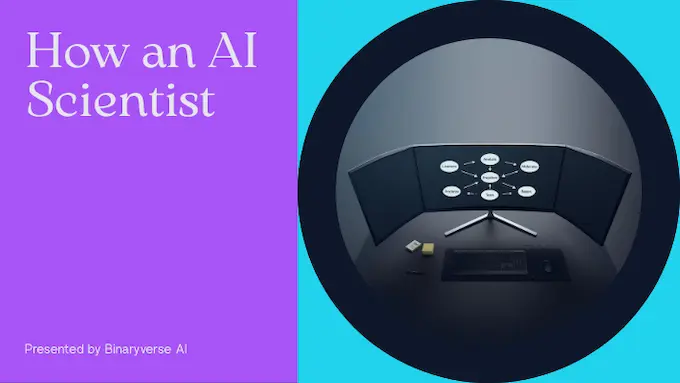
A Kosmos run feels like a well-managed sprint rather than a monologue. Here is the short tour, from prompt to report.
Step 1, Define The Objective. You provide a dataset and a high-level goal. Examples include identifying validated Type 2 diabetes protective mechanisms, or mapping environmental variables that kill perovskite efficiency.
Step 2, Launch Parallel Agents. Kosmos AI spawns coordinated literature and analysis tasks. A connectomics run might fit distributions and test scaling laws while a literature agent hunts for mechanistic priors in neurodevelopment.
Step 3, Update The World Model. Every result is summarized into the world model, so the AI scientist can reason over an up-to-date graph of evidence. This prevents thrash and keeps the plan honest.
Step 4, Hypothesize And Test. The system queries its world model, proposes next experiments, writes code, and checks assumptions. If a pipeline fails, as with a finicky colocalization step, the run adapts and tries a different route. The point is not perfection on the first try. The point is persistence with feedback.
Step 5, Deliver A Cited Report. Cycles end with a report that ties claims to notebooks or primary literature. You can reproduce the plots, rerun the code, or hand results to a wet lab. That transparency is the ethos of an AI scientist.
3. Putting Kosmos To Work: Access, Pricing, And Getting Started
Kosmos AI ships through Edison Scientific. Accounts include standard agents such as Literature and Analysis. Full-stack Kosmos runs consume credits. A single complete run costs 200 credits. Founding tiers expand access and priority processing. Users with .edu addresses receive generous starter credits and a month of access to Kosmos.
AI Scientist Pricing Plans
Credit based access options for an AI scientist with clear limits and benefits
| Plan | Monthly Price | Included Monthly Credits | Kosmos Access | Priority Queue | Notes |
|---|---|---|---|---|---|
| Free | $0 | 10 | Trial month for .edu only | No | .edu accounts receive a one time 650 credit bonus and temporary Kosmos access |
| Founding Agents | $50 | 50 | No | Yes | Early access to agents and discounted add on credits at $1 each |
| Founding Kosmos | $200 | 650 | Yes | Yes | Enough for three Kosmos runs plus 50 standard agent runs |
Job Credit Costs
- Kosmos, 200 credits per full run
- Literature, 1 credit
- Analysis, 1 credit
- Molecules, 2 credits
- Precedent, 1 credit
If your team is comparing the best AI for research, begin with a scoped run. Pick a dataset with clear ground truth and a question your group debates. You will learn quickly where the AI scientist shines and where it needs guidance.
4. The Competitive Landscape: Who Is Building The AI Scientists Of The Future
The idea of an autonomous research colleague is in the air. Google has described an AI co-scientist for hypothesis generation. Sakana AI has shown an agent that writes papers about machine learning experiments. Kosmos AI distinguishes itself in two ways. First, a structured world model coordinates dozens to hundreds of activities without losing the plot. Second, Edison Scientific ships it publicly with pricing that a lab can try this week. Those two facts make it a front runner for teams that want an AI scientist they can actually use.
The landscape will move fast. Some groups will prioritize robot integration and closed-loop experimentation. Others will push larger models into literature synthesis. Kosmos AI is betting on orchestration and tooling that let many narrow agents work together in service of a single world model. That bet favors reliability over raw novelty, which is usually what research leaders need.
5. The Human In The Loop: Augmenting, Not Replacing, The Scientist
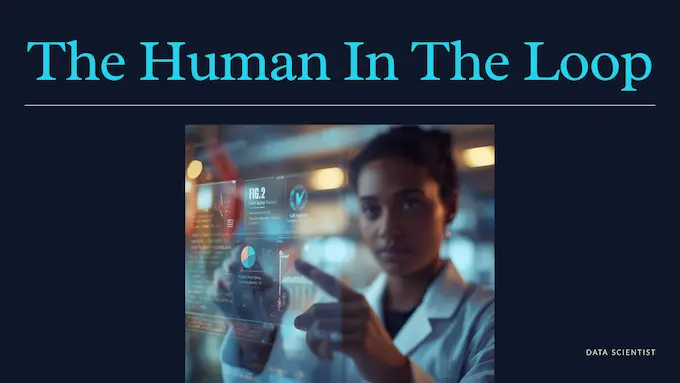
Tools that think change where experts spend their time. The AI scientist handles wide sweeps, repetitive reading, and first-pass modeling. People do what they do best, which is to define objectives, check mechanistic plausibility, design decisive experiments, and connect results to strategy. In evaluations, collaborators judged the outcomes as months of work compressed into a day, yet the key interpretations still benefited from human judgment. That balance is a feature, not a flaw.
For principal investigators, this means faster grant aims and richer figure supplements. For industry scientists, it means decision support you can trace back to code and citations. For students, it is a tutor that explains while it works. In every case, you get leverage without losing rigor because every claim has a pointer you can check.
6. Practical Playbook: When To Use An AI Scientist In Your Lab
When should you reach for an AI scientist rather than a classic notebook and a search query?
- Cross-domain synthesis. You need a single narrative that spans genomics, imaging, and clinical endpoints. The world model keeps threads aligned while the agents dig.
- Exploratory AI data analysis at scale. You want ten different models and diagnostics run in parallel to smoke-test a fragile hypothesis.
- Reproducibility checks. You want to know if a claim survives reanalysis on raw data under different preprocessing choices.
- Method invention. You suspect the right answer needs a small new method. Kosmos AI can propose and test options, like segmented regression along pseudotime.
- Literature triage for new fields. You are entering an area with thousands of papers. The AI scientist can read, cluster, and map the space in an afternoon.
- Decision support. You need ranked hypotheses, confidence, and clear next steps you can hand to a wet lab or a policy team.
If your focus is AI for research, pick one objective per run and treat the system like a junior colleague who moves fast. Give it clean data and a sharp question. The more concrete the objective, the better the AI scientist performs.
7. Risks, Limitations, And Responsible Use
Any tool that writes code and synthesizes literature needs accountability. The evaluated accuracy for Kosmos AI reports sits near eighty percent, which is strong for breadth, yet it still leaves room for error in interpretation. In the SOD2 example, an automated annotation suggested a microRNA binding site that did not match common prediction databases. The fix was simple. Treat every surprising claim like a lab conversation. Ask for the notebook, rerun the test, and check the primary source.
There are operational constraints too. Some pipelines fail for trivial reasons. A column name collision. A malformed p value. The system often recovers by trying an alternative, like skipping a broken colocalization step and running fine mapping instead. That flexibility is useful, yet it can hide brittle edges. Teams should standardize data contracts and smoke-test pipelines before long runs. Keep a short checklist for privacy and compliance when analyzing sensitive data. Treat the AI scientist as a powerful colleague who still benefits from guardrails.
8. The Future: Toward Autonomous Scientific Discovery
The phrase autonomous scientific discovery has floated around labs for decades. It finally feels concrete. A system that can set a plan, read the field, write code, and propose testable hypotheses is more than a search engine. It is the kernel of a new way to work. The meaningful leap is not mystical intelligence. It is sustained attention over many cycles with a world model that stays coherent. When the workflow is stable, the frontier shifts to experimental design, simulation, and robot execution.
Kosmos AI will not be alone for long. As datasets get cleaner and wet labs become more instrumented, the AI scientist will step closer to the bench. Expect closed-loop workflows where models design experiments in the afternoon and robots run them overnight. Expect version-controlled world models that capture the state of a field the way a well maintained codebase captures a product. That is how AI discoveries turn into durable knowledge rather than viral demos. If you care about the best AI for research, this is the path that compounds value.
9. Conclusion: The Scientific Revolution Will Be Automated
There are moments when a field flips. Compute meets data. A new abstraction makes old work feel slow. Kosmos AI and Edison Scientific have pushed us into one of those moments for R and D. An AI scientist that compresses months of work into a day, cites its claims, and scales with runtime is not a curiosity. It is infrastructure. The labs that embrace it will read more, test more, and discover more. The ones that wait will look slow.
If you lead a team, pick one dataset that matters and put a run on the calendar this week. If you are a student, sign up, claim your credits, and learn by doing. If you run a lab, set a goal for a reproducible AI scientist report per quarter and track how often it changes your next experiment. The work will still be yours. The acceleration will be real. Start now.
Call To Action. Create a free Edison Scientific account, queue a Kosmos AI run with a focused objective, and see whether your next breakthrough appears in hours rather than months.
1) What is an “AI scientist” and how is it different from an AI assistant?
An AI scientist is a system that plans a long-term research objective, reads literature, runs AI data analysis, updates a world model, and generates testable hypotheses. An assistant handles single tasks. An AI scientist like Kosmos AI manages hundreds of coordinated actions to produce new findings, not just summaries.
2) What are the most significant discoveries made by the Kosmos AI scientist?
Kosmos AI reproduced unpublished results, identified a probable mechanism for neuronal aging in the entorhinal cortex, proposed an Alzheimer’s timing method using segmented regression, and flagged candidate drivers of myocardial fibrosis. These examples show the shift from automation to genuine AI discoveries that researchers can test and extend.
3) How does Kosmos’s performance compare to a human scientist?
In a single run, Kosmos AI reads roughly 1,500 papers, executes tens of thousands of lines of code, and outputs a fully cited report. Independent checks put statement accuracy near 79.4 percent. Collaborators report that a full multi-cycle run often equals about six months of expert human research time.
4) How can I use the Kosmos AI scientist for my own research?
Sign up at Edison Scientific and start with a scoped objective plus a clean dataset. A full Kosmos run is priced via credits, with 200 credits per run. Founding subscriptions offer monthly credits, and academic users with .edu emails receive generous starter credits to try AI for research before scaling.
5) Will AI scientists like Kosmos replace human researchers?
No. An AI scientist augments people. It handles large-scale reading, coding, and preliminary analysis so humans focus on framing questions, interpreting mechanisms, and designing decisive experiments. The result is faster progress with traceable evidence, not a replacement of human judgment.